
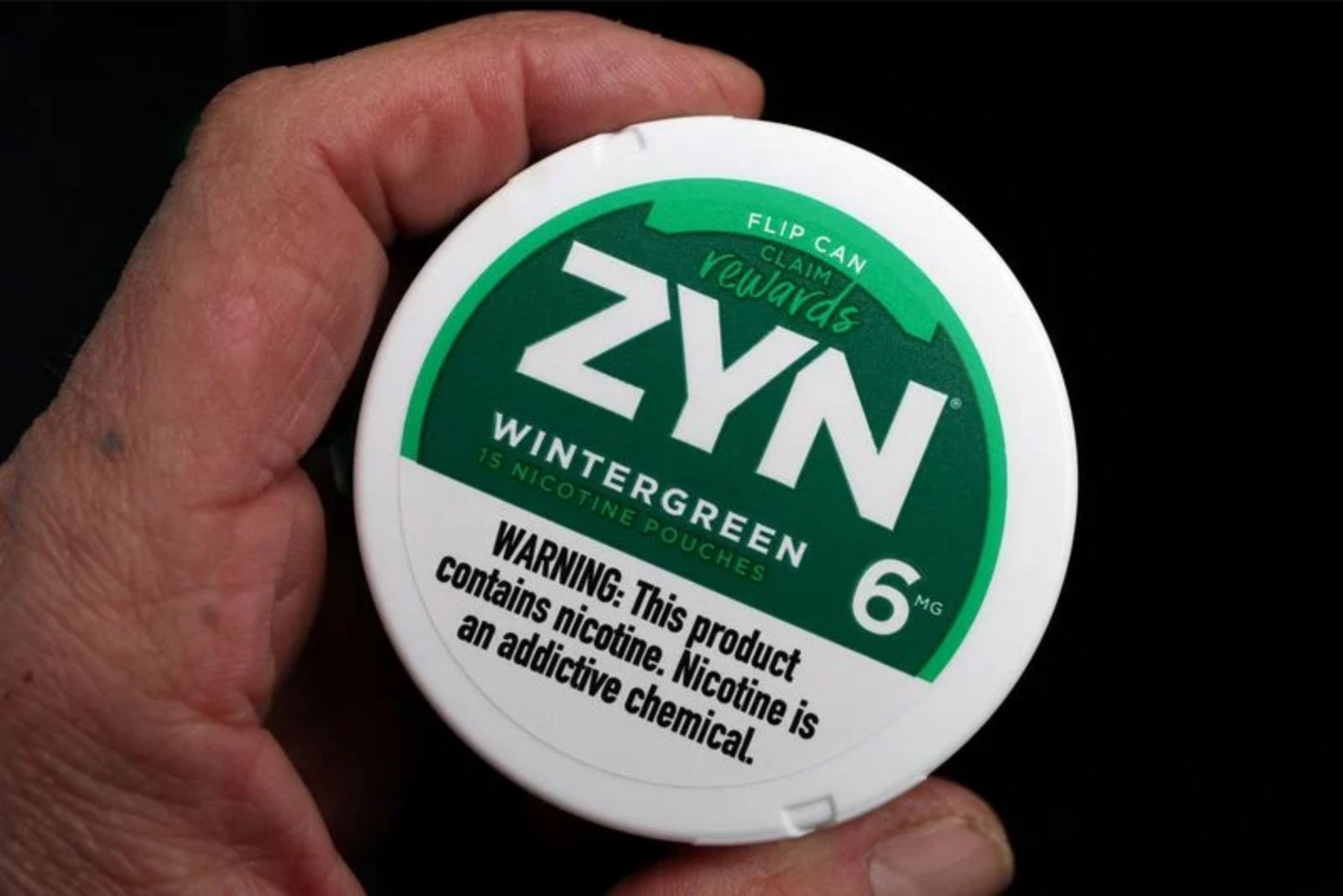
Philip Morris on Tuesday said the U.S. Food and Drug Administration will permit the company to market its Zyn nicotine pouches with a claim that they are less harmful to human health than traditional cigarettes. The authorization applies to 20 variants of Zyn, the company said.
Zyn pouches are small sachets that users place under the lip to obtain nicotine without combustion. Philip Morris noted that pouches of this kind are the fastest-growing nicotine product category in the United States and are used by millions of people.
In its announcement, Philip Morris said the FDA allowed the company to use a specific health claim across the cleared Zyn variants: "Using ZYN instead of cigarettes puts you at a lower risk of mouth cancer, heart disease, lung cancer, stroke, emphysema, and chronic bronchitis."
The company said the permitted claim covers 20 Zyn product variants. The development was first reported earlier on Tuesday by Axios, according to Philip Morris. The FDA did not immediately respond to a Reuters request for comment.
Public discussion around nicotine pouches has included both commercial momentum and scientific caution. While the products have rapidly grown in popularity, some scientists have expressed hesitation about broad marketing and uptake because of potential risks for new users, notably children. That concern contributed to attention on whether and how regulators would allow reduced-risk claims.
This authorization marks a regulatory step that allows a major tobacco company to promote a comparative health message for a non-combustible nicotine product. Philip Morris characterized the FDA decision as enabling a specific reduced-risk statement for its Zyn line across the approved variants; the company provided the full wording of the permitted claim in its announcement.
Context and next steps
The FDA response to the request for comment was not immediate. Philip Morris has framed the agency permission as a marketing allowance tied to defined product variants; the broader implications for consumer behavior, public health, and market dynamics will depend on how the claim is used and received.