
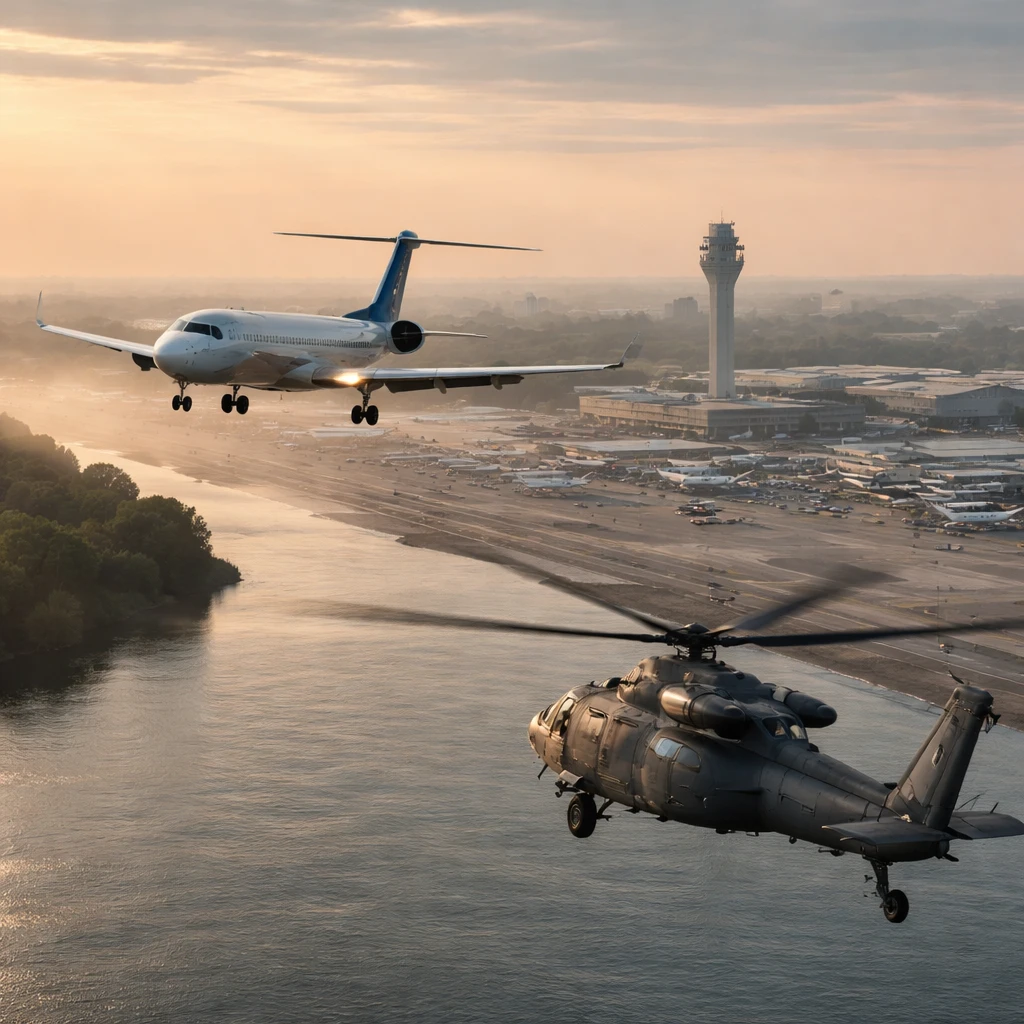
The Federal Aviation Administration's deputy administrator who directed the agency's response to the fatal January 2025 collision between an Army helicopter and an American Airlines regional passenger jet will leave the agency next week, the FAA confirmed internally.
Chris Rocheleau, who had been elevated to acting FAA administrator days before the January crash that killed 67 people near Reagan Washington National Airport, informed staff by email that he was departing for a new opportunity. The FAA's general counsel, Liam McKenna, has been named to serve as acting deputy administrator.
The National Transportation Safety Board concluded the collision resulted from the FAA allowing helicopters to operate close to the airport without safeguards to separate them from airplanes and from the agency's failure to review data and act on recommendations to move helicopter traffic away from the airport. In congressional testimony last year, Rocheleau - who served as acting head of the FAA until July and has since continued to oversee safety matters as deputy administrator - acknowledged the agency's data was troubling, telling lawmakers: "Clearly something was missed."
The NTSB reported that since 2021 there were more than 15,200 recorded events at Reagan National in which commercial airplanes and helicopters were within a lateral separation of less than 1 nautical mile and a vertical separation of less than 400 feet. Those findings underscored the agency-level issues the NTSB cited in assigning cause to the January collision.
In response to the crash, the FAA has moved to alter operational procedures. The agency has revised helicopter routes at several airports and in March suspended the use of visual separation between airplanes and helicopters near major airports. The FAA also took action last year to bar the Army from helicopter flights around the Pentagon after a May 2025 close call that forced two civilian aircraft to abort their landings.
Earlier this year in January, the FAA announced a restructuring that created a new safety oversight office intended to consolidate safety functions previously spread across five separate units. As part of that reorganization the agency is establishing a safety management system and implementing an FAA-wide safety risk management process designed to centralize and standardize how safety issues are identified and mitigated.
The leadership change comes amid that broader transformation. The agency has said it will continue making operational adjustments to helicopter routing and separation practices while it implements the new oversight framework. With Rocheleau stepping away next week and McKenna acting as deputy administrator, the FAA will continue its planned implementation of the safety-focused elements of the restructuring.
Summary
The FAA deputy administrator who led the agency's response to the January 2025 fatal collision near Reagan National is leaving the agency next week. The NTSB found the crash was caused by FAA decisions allowing helicopters to operate too close to airplanes and by a failure to act on data and recommendations. The FAA has revised helicopter routes, suspended visual separation near major airports, barred Army Pentagon helicopter flights after a May 2025 close call, and created a new safety oversight office as part of a broader restructuring.