
Stock Markets July 30, 2026 07:30 AM

EU to Back Seven AI 'Gigafactories' with €10 Billion, Seeks Private Capital to Narrow Tech Gap

Brussels expands plan to fund large-scale AI hubs combining processors, cloud services and data centres as tender moves toward selection in 2027

By Derek Hwang
Share
Twitter Reddit Facebook LinkedIn
AMD NVDA QCOM

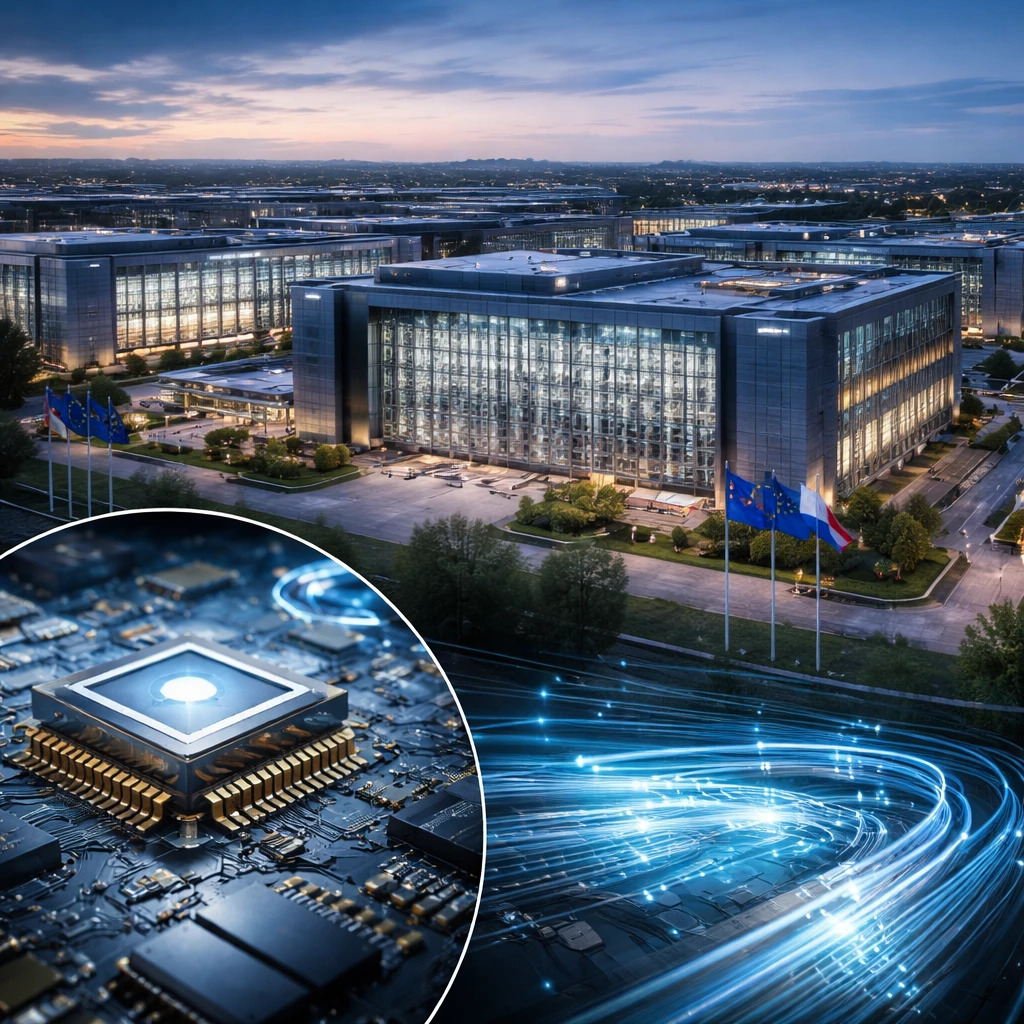
The European Commission has unveiled plans to finance seven AI gigafactories across the European Union with a budget of €10 billion, up from an initial five, and aims to attract at least €20 billion in private investment. The facilities will integrate advanced AI processors, software, cloud infrastructure, high-speed connectivity and data centres, adding to 19 existing AI factories in the bloc. The tender closes on November 12, with successful bidders expected to be named in early 2027 and operations slated to begin within 18 months of contract signing. AMD, Nvidia and Qualcomm have submitted letters of intent to supply chips for participating groups.

EU to Back Seven AI 'Gigafactories' with €10 Billion, Seeks Private Capital to Narrow Tech Gap
AMD NVDA QCOM
Summarize with
ChatGPT Perplexity Claude Grok Gemini

Key Points

  • The European Commission will fund seven AI gigafactories with €10 billion, up from five after heightened interest from member states.
  • The Commission aims to leverage at least €20 billion in private investment to complement public funding.
  • Facilities will integrate AI processors, software, cloud services, high-speed connectivity and data centres, and will add to 19 existing AI factories in the EU.

The European Commission announced on Thursday that it will provide €10 billion in funding to establish seven artificial intelligence gigafactories across the European Union, part of a stepped-up effort to close the technology gap with the United States and China. The number of planned facilities was increased from five to seven after EU member states showed strong interest.

The Commission said the public financing is intended to be catalytic: it aims to draw in at least €20 billion in private investments to support the projects. The planned gigafactories will integrate a range of capabilities - advanced AI processors, software, cloud services, high-speed connectivity and data centre capacity - into large-scale facilities designed to provide substantial computing resources.

These new installations will be added to 19 AI factories that are already located in various EU countries. In a statement, EU technology chief Henna Virkkunen said, "Access to the raw scale of computing power within AI Gigafactories is a strategic necessity for Europe as AI development accelerates."

Applications to take part in the gigafactory projects will be accepted from consortia or special purpose vehicles. Eligible applicants can include technology providers, cloud service providers, public entities and investors working together. The Commission set November 12 as the deadline for tenders.

The selection process is expected to conclude in early 2027, when the Commission anticipates announcing successful bidders. Once contracts are signed, the facilities are planned to become operational within 18 months.

Chipmakers AMD, Nvidia and Qualcomm have signed letters of intent with the Commission indicating they would provide chips to consortia involved in the gigafactory projects. The announcement also noted the exchange rate used for reference: $1 = 0.8715 euros.


Context and implications

The Commission frames the gigafactory programme as a strategic push to secure large-scale compute capacity inside the EU. The combination of processors, cloud platforms, connectivity and data-centre infrastructure in each site is designed to offer integrated resources for AI development.

The tender timeline establishes clear milestones: a submission cutoff on November 12, selection announcements in early 2027 and a target for operational readiness within 18 months of contract signing. Participation by major chip suppliers is signalled by letters of intent from AMD, Nvidia and Qualcomm, but the projects remain contingent on the tender outcomes and the attraction of private capital.

Risks

  • Tender and selection uncertainty - the tender closes on November 12 and successful bidders will not be announced until early 2027, leaving project outcomes and timelines dependent on the competition process.
  • Private financing gap - the initiative relies on attracting at least €20 billion in private investment, creating a funding risk if that capital is not secured.
  • Project timeline dependence - while the Commission expects facilities to be operational within 18 months of contract signing, actual delivery hinges on contract finalisation and subsequent implementation steps.

More from Stock Markets

Colliers International Shares Jump After Q2 2026 Beat and Unchanged Guidance Jul 30, 2026 Mastercard Q2 Profit Climbs as Steady Consumer Spending Keeps Transactions Rising Jul 30, 2026 Nuclear Concentration or Broad-Spectrum Capacity - Choosing Between CEG and VST for AI-Era Power Jul 30, 2026 Leonardo DRS Pops After Strong Q2 Results and Raft Acquisition Announcement Jul 30, 2026 Mastercard Shares Jump After Strong Q2 Results and Supportive Analyst Calls Jul 30, 2026