
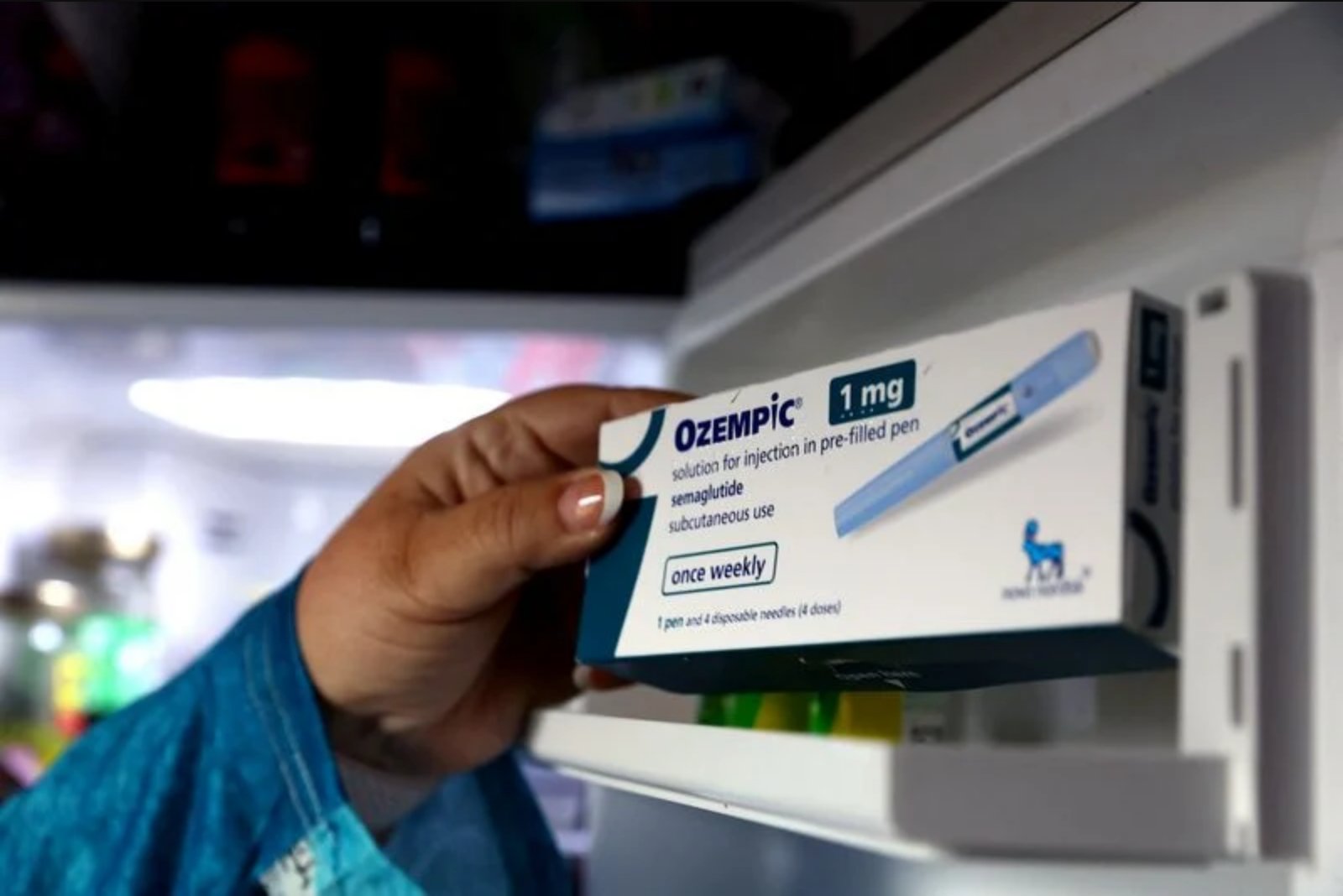
The race to capture a slice of the rapidly expanding market for weight-loss drugs has drawn broad participation from both established pharmaceutical companies and smaller biotech developers. Analysts cited in industry commentary expect the sector could generate about $100 billion a year within the next decade, and that scale is reflected in the sheer volume of candidates now in clinical testing or approaching regulatory submission.
Two Danish and U.S. incumbents - Novo Nordisk and Eli Lilly - have led the clinical and commercialization surge, but an array of rivals are mounting sustained efforts to challenge their early foothold. Recent regulatory moves have underscored the shift in the market: a British regulator approved a pill form of Novo Nordisk's Wegovy in June, reaffirming the company's lead in first-to-market positioning, while Eli Lilly won U.S. approval in April for its oral agent, orforglipron, marking it as the second pill to gain clearance in the United States and signaling a broader industry pivot toward oral therapies.
Pipeline highlights by company
Novo Nordisk - Novo has pursued both immediate market access and next-generation approaches. In May the European Medicines Agency recommended approval of the Wegovy pill, which would open a route into European markets for the company's oral formulation. Beyond that, Novo is advancing a set of experimental therapies: a next-generation injectable dubbed amycretin, and CagriSema, presented as a more potent successor to Wegovy.
Amycretin, which targets both GLP-1 and amylin pathways, produced statistically significant weight reduction of up to 14.5% at 36 weeks in patients with type 2 diabetes in a mid-stage study. CagriSema produced mixed results: in two separate late-stage trials it fell short of the company's highest expectations, delivering weight loss of 22.7% in one trial versus Novo's internal target of 25%.
Regulatory activity around CagriSema has continued: Novo filed a U.S. marketing application for the compound in December. The company has also struck licensing agreements for earlier-stage assets, including a transaction with China-based United Laboratories that could be worth as much as $2 billion for a "triple-G" candidate that targets three hormones.
Pfizer - Through an acquisition last year Pfizer secured Metsera's obesity portfolio, bringing in compounds such as MET-097i, now referred to as PF-3944. That candidate is being developed as a once-monthly GLP-1 injection, which contrasts with the once-weekly regimens offered by some competitors. Pfizer reported that PF-3944 produced up to 12.3% weight loss in non-diabetic patients and that no plateau in weight reduction was observed at week 28 when administered monthly.
Pfizer has set a commercial target of 2028 for its first approval in the obesity market. Safety findings presented at a June medical meeting indicated a tolerability profile for berobenatide similar to Novo's weekly Wegovy injection, with mean nausea reported at about 38% and mean vomiting at about 23.3% in the study cited. The company plans to run more than 20 clinical trials involving obesity treatments over the course of the year.
Eli Lilly - Lilly's oral agent orforglipron, branded as Foundayo, gained U.S. approval in April and became the second oral weight-loss pill authorized in the United States. The company reported that orforglipron helped maintain weight reductions when patients switched from its own GLP-1 injection, Zepbound, and from Novo Nordisk’s Wegovy.
Lilly is also developing next-generation injectable and multi-receptor candidates. Retatrutide, a multireceptor molecule, showed substantial reductions in blood glucose and body weight in a late-stage trial result released in March. In May, Lilly reported that retatrutide enabled patients to lose more than 28% of their body weight over approximately 18 months in a key trial, positioning the compound for potential regulatory submission and possible launch next year. Additional data presented in June indicated retatrutide also reduced sleep apnea severity while enhancing weight loss and alleviating knee pain. Investors noted that a lower 4 mg dose produced about 19% weight loss, a result comparable to the highest dose of Lilly's existing injectable, Zepbound.
Separately, Lilly advanced an amylin-based injectable, eloralintide, into late-stage testing after mid-stage results showed up to 20.1% weight loss. The company also entered a deal worth up to $1.3 billion with Superluminal Medicines to discover and develop small-molecule obesity and cardiometabolic therapies using artificial intelligence-enabled approaches.
Roche - Roche has been moving to catch up with market leaders, advancing injected candidates with substantial efficacy signals. One experimental drug it acquired, CT-388, produced as much as 22.5% weight loss in a mid-stage trial, according to results reported in January; CT-388 was brought into Roche’s portfolio through a $2.7 billion acquisition of U.S. biotech Carmot Therapeutics in 2023.
Roche's collaboration with Denmark-based Zealand Pharma yielded another compound that produced up to 10.7% weight loss in a mid-stage study reported in March. In June Roche reported results from a mid-stage trial of a dual-acting experimental obesity drug showing 22.7% mean body-weight loss, and noted that more than a quarter of patients receiving the highest dose achieved at least 30% weight loss.
Amgen - Amgen has concentrated resources on MariTide, running six late-stage trials across obesity and related conditions including cardiovascular disease and sleep apnea. The firm anticipates initiating a late-stage program in diabetes patients this year. Extension data published in January indicated that MariTide could help sustain weight loss when delivered at lower doses or with less frequent dosing. Earlier mid-stage data from 2024 showed MariTide produced up to 20% weight loss over a year-long study.
Merck - Merck has entered the oral obesity race through a licensing agreement signed in 2024 for Hansoh Pharma’s experimental oral GLP-1 candidate HS-10535. The deal, potentially worth up to $2 billion, positions Merck as a later entrant pursuing a pill-based therapy intended to compete with approved injectables and newly authorized oral agents.
Viking Therapeutics - Viking reported in June that it began an early-stage trial of VK3019, an experimental treatment for metabolic disorders and obesity. The company said in February that it plans to run a late-stage study of its experimental oral obesity drug later this year and intends to advance a tablet formulation of VK2735 into late-stage studies in the third quarter. Viking's mid-stage data last year showed VK2735 produced 12.2% body-weight loss after 13 weeks in a study of 280 overweight adults, a result that failed to meet Wall Street's top-end expectation of 15%.
Scholar Rock - Scholar Rock reported results indicating that apitegromab, when combined with Lilly’s tirzepatide-based Zepbound, helped patients preserve more lean mass than tirzepatide alone. In the study, participants who received the combination lost 3.4 pounds of lean mass after 24 weeks, compared with a 7.6-pound lean mass loss in those receiving tirzepatide alone.
AstraZeneca - AstraZeneca expanded its obesity portfolio via an agreement announced in January to license candidates from CSPC Pharmaceutical Group and to collaborate on development programs. The upfront payment for that agreement was $1.2 billion, with the potential for up to $17.3 billion more in milestone payments. The in-licensed candidates include SYH2082, designed for once-monthly dosing, and AstraZeneca also licensed an experimental weight-loss pill from China’s EccoGene.
In June AstraZeneca reported mid-stage results for elecoglipron, noting a 10.5% mean body-weight reduction at 26 weeks; patients receiving the highest dose experienced progressive weight loss out to 36 weeks, achieving a mean reduction of 11.8% at the full duration of the trial.
Structure Therapeutics - Structure has pushed forward a once-daily oral GLP-1 candidate, aleniglipron. In a mid-stage trial reported in March, an 180 mg dose delivered up to 16.3% weight loss, equivalent to about 39 pounds, after 44 weeks compared with placebo. In another study a lower dose achieved 16.2% weight loss at 56 weeks. The company said these outcomes support progression to late-stage development, expected to begin in the second half of 2026 after an FDA meeting in the second quarter. In June, Structure reported no signs of drug-induced liver injury in its program and noted continued weight loss at lower doses. The company also reported a 10.4% discontinuation rate among patients taking the experimental small-molecule drug.
Boehringer Ingelheim - The company reported late-stage data showing its injectable compound survodutide, licensed from Zealand Pharma, reduced visceral and liver fat while limiting loss of lean mass. Survodutide, which mimics GLP-1 and glucagon proteins to promote satiety, produced an average 16.6% body-weight loss over 76 weeks in results disclosed in April.
Kailera Therapeutics - Kailera announced in July that its oral agent HRS-7535, known outside Greater China as KAI-7535, led to an average 10.9% reduction in body weight after 44 weeks compared with 2.5% for placebo, with a mean loss of up to 11.1% at week 50. The firm is advancing HRS-7535 in a global mid-stage trial that began in April, with data expected next year.
In February, another Kailera candidate, the once-daily ribupatide, showed up to 12.1% weight loss at 26 weeks in a mid-stage study in China. Partner Hengrui Pharma will pursue oral ribupatide in a late-stage trial in China, while Kailera plans a global mid-stage program this year. An injectable form of ribupatide is also in a global late-stage study.
Market implications and concluding observations
The number and variety of programs now in mid- and late-stage testing underline how quickly the obesity treatment landscape is evolving. Developers are pursuing multiple strategies - higher-efficacy injectables, once-monthly dosing, and oral small molecules - with the explicit aim of differentiating on convenience, durability of weight loss, tolerability and metabolic benefits such as improved glycemic control and reductions in sleep apnea severity. Licensing deals, acquisitions and multimillion- to multibillion-dollar collaborations have become common, reflecting both the potential market size and the strategic priority companies assign to establishing a foothold in this category.
At the same time, trial results across the field are mixed: some agents have delivered robust, multi-week reductions in body weight and favorable secondary outcomes, while others have fallen short of internal or external expectations. Safety and tolerability signals - including rates of nausea and vomiting reported in some studies, and discontinuation rates in others - remain key determinants of commercial viability as regulators and payers evaluate these new therapies.
The combination of sizeable market potential, rapid regulatory developments, and an increasingly crowded development landscape makes the obesity therapeutics space one of the most closely watched areas in pharmaceuticals today.