
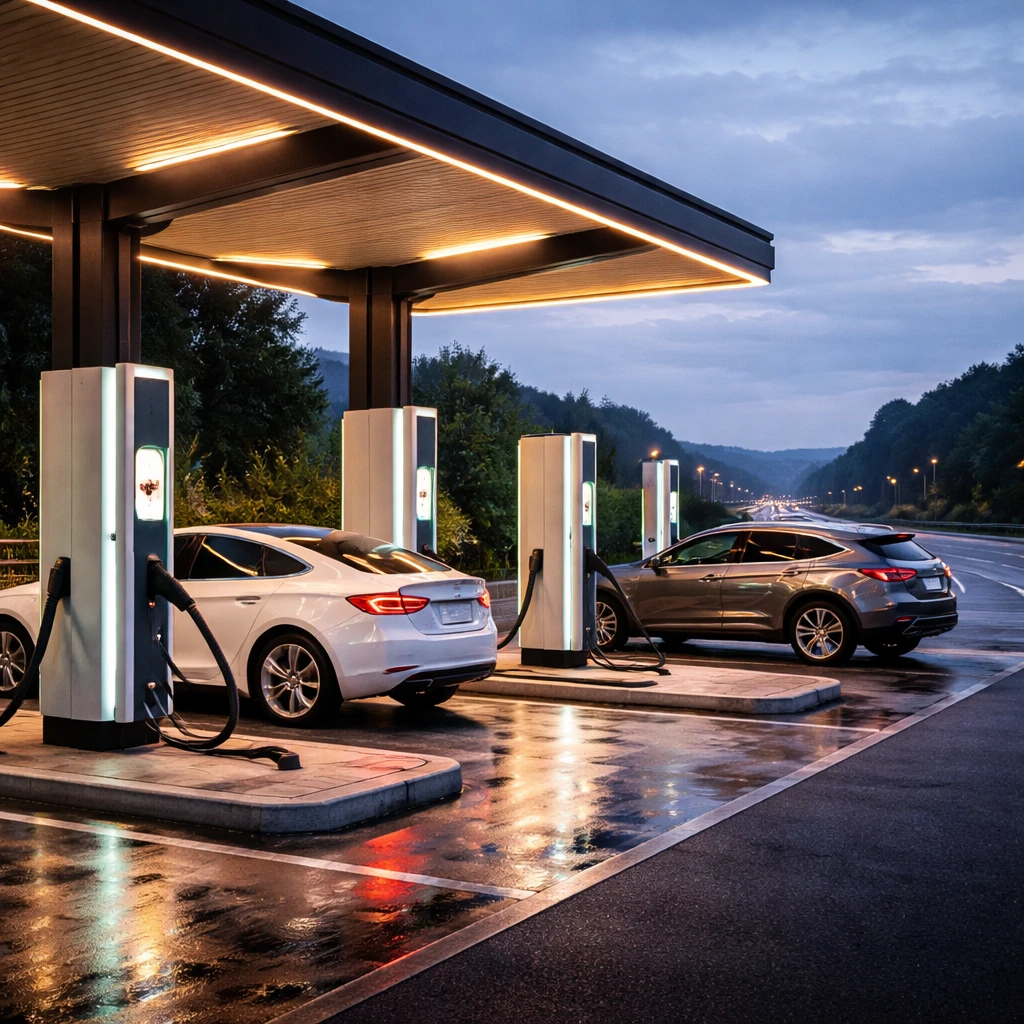
Deutsche Bank has revised its stance on Fastned, lowering the recommendation from buy to hold while simultaneously lifting the 12-month target price to €33 from €30. The firm said that although recent market signals indicate greater use of electric vehicle charging, it does not anticipate this will trigger a faster expansion of charging networks.
Rationale and market signals
The brokerage pointed to headlines suggesting a shift toward battery electric vehicles following the recent oil price shock. It said that this trend appears to be supported by comments from European automakers that have reported elevated BEV order intake in Europe.
Still, Deutsche Bank does not infer that higher order intake equates to an immediate acceleration in new BEV registrations or used-BEV demand in Germany - a market it uses as a proxy for Europe. The bank highlighted limits on visibility from the order-to-sale process in Europe. As Deutsche Bank analyst Nikita Papaccio observed, the order-to-sale cycle in Europe typically spans two to three months, which constrains clarity on whether stronger order books will translate into sustained vehicle deliveries and longer-term demand.
"For now, we observe rising charging demand, signaling a higher utilization rate of the existing BEV fleet," Papaccio said. Deutsche Bank views that rise in charging activity as likely to deliver higher revenue to charge point operators, including Fastned, through more intensive use of existing infrastructure.
Outlook for charging network expansion
Despite the uptick in charging consumption, Deutsche Bank does not expect a faster rollout of public charging networks. The broker cited prolonged permitting and construction timelines as a key constraint, along with what it described as a lack of sustainability in the current trend. Together, these factors are expected to limit additional sector-wide investment and slow the pace at which new charging stations are brought online.
Implications
- Rising charging demand should boost utilization and near-term revenue for existing charge point operators.
- Permitting and construction delays are likely to restrain expansion of charging infrastructure, reducing incentives for faster capital deployment in the sector.
- Germany is being used as a bellwether for broader European BEV registration trends, though current data do not show an acceleration in registrations or used-BEV demand in that market.
Conclusion
Deutsche Bank's adjusted rating reflects a view that while usage of current BEV charging infrastructure is rising, the underlying indicators required to justify a renewed, accelerated investment cycle in charging networks are not yet present. The broker expects existing infrastructure to capture benefits from higher utilization, but it remains cautious about a sustained expansion driven by the recent uptick in order intake.