
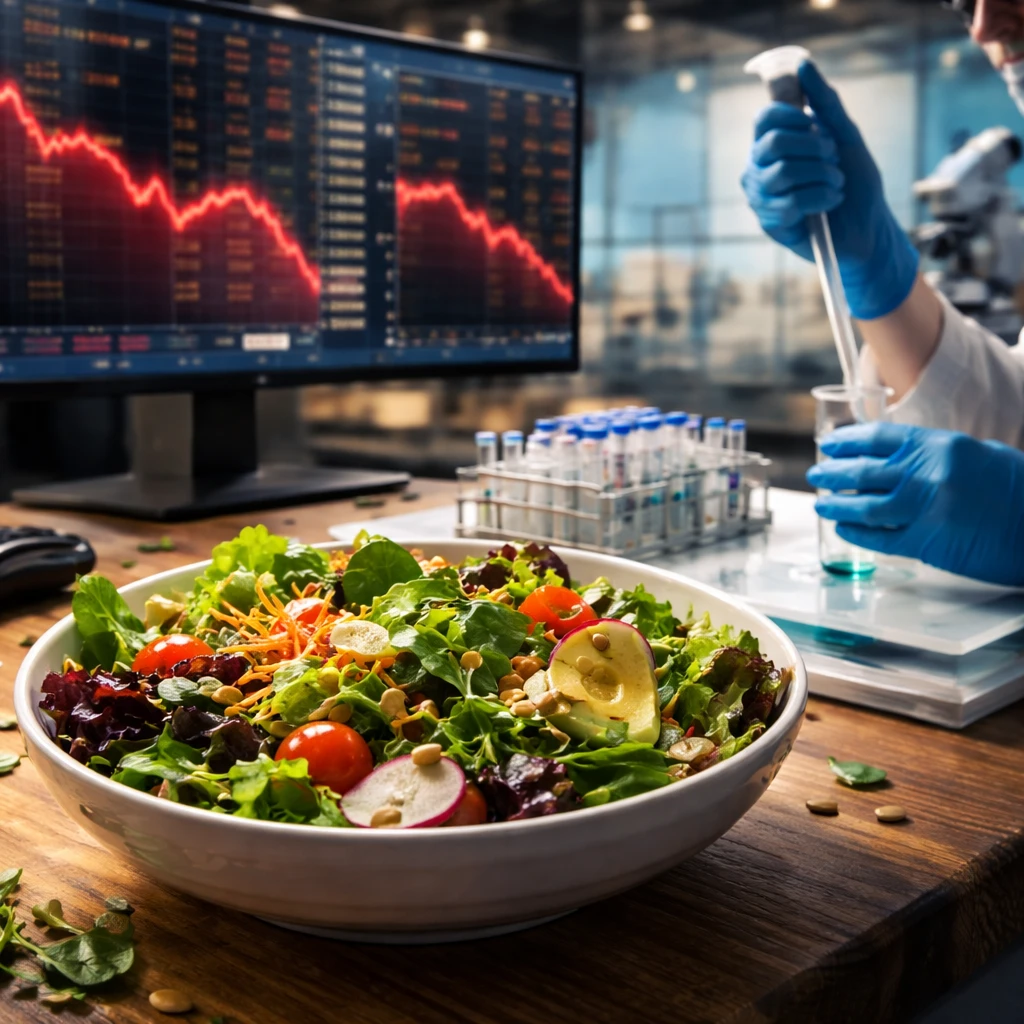
The FDA's Jul 22 cyclospora advisory shook restaurant stocks, producing uneven impacts across the sector. Sweetgreen registered the largest single-session decline, falling 10.4% as investors reacted to an outbreak now associated with a Taylor Farms lettuce recall tied to Taco Bell. The public health situation has grown quickly: since May 2026 authorities have recorded more than 1,600 confirmed cases and more than 7,000 potential reports to the CDC.
How the situation unfolded
- Since May 2026 - More than 1,600 confirmed cases and over 7,000 potential reports to the CDC.
- Jul 14 - FDA traceback work spanned Michigan, Ohio, West Virginia and Kentucky, signaling a Michigan lettuce link.
- Jul 16 - A recall by Taylor Farms was connected to lettuce supplied to Taco Bell; the White House indicated CDC and FDA resources would be deployed.
- Jul 22 - The FDA issued a new cyclospora alert that triggered broad selling across restaurant shares.
Market movers and price action
Stocks with prominent exposure to fresh produce took the steepest hits on Jul 22. The largest moves reported were:
- Sweetgreen (SG): single-day drop -10.4%; 1-month return -33.15%; price today $6.13.
- Chipotle (CMG): single-day drop -3.5%; 1-month return -1.11%; price today $32.99.
- CAVA Group (CAVA): single-day drop -2.0%; 1-month return -24.52%; price today $63.15.
- Yum! Brands (YUM): single-day drop -0.7%; 1-month return -4.32%; price today $149.68.
The divergence in market response reflects investor sensitivity to firms' exposure to the implicated product and their broader brand portfolios. Sweetgreen's proposition is centered on salads and leafy greens, directly aligning its core product with the lettuce-focused probe, which helps explain the sharp, almost reflexive sell-off. CAVA's positioning around Mediterranean bowls and fresh produce contributed to a pronounced 1-month decline of -24.52%.
Chipotle's reaction was more muted, in part because investors have previously navigated high-profile food-safety episodes involving the chain; that history appears to have tempered panic selling. Yum! Brands, while connected through the Taco Bell supply chain named in the Taylor Farms recall, saw a limited single-day drop as its multi-brand footprint provides diversification across KFC and Pizza Hut, moderating the equity impact.
Unintended beneficiary: diagnostics exposure
Qiagen (QIA) surfaced as an unexpected beneficiary. The company, whose QIAstat-Dx Gastrointestinal Panel 2 is FDA-cleared to detect Cyclospora cayetanensis, has seen investor interest rise. Shares were quoted at $36.52, and the name has gained approximately 6.4% over the past month. That diagnostic relevance is layered atop reports of private equity interest from firms including EQT, Advent and KKR, which has added speculative momentum to the stock.
Key risk factors and recovery considerations
Several uncertainties will determine how the market and affected companies navigate the coming period. First, as of the Jul 22 FDA alert no single product has been definitively confirmed as the sole vector, leaving room for additional recalls and further pressure on restaurant equities. Taylor Farms, the supplier central to the recall, is a privately held company, so its direct equity exposure is limited; however, restaurant customers face reputational and operational risk.
Sweetgreen entered the alert in a fragile equity position. Trading at $6.13 against a 52-week high of $14.96 and carrying a -58.7% one-year return, the company had been under pressure before the outbreak, indicating it is contending with multiple headwinds.
Bull and bear scenarios
Supporters of the bulls note that market memory for outbreaks can be short-lived if regulators quickly identify and remove the source. The article references past precedent in which Chipotle recovered from a 2015 E. coli episode over the course of roughly two years. If the present investigation leads to rapid remediation, some equities could rebound.
Conversely, the bear case emphasizes scale: with over 7,000 potential reports and active White House monitoring, the outbreak is unusually large. A protracted investigation would prolong headline risk, particularly for businesses whose consumer proposition is tightly linked to fresh produce.
Bottom line
The FDA cyclospora advisory has produced a clear split in market outcomes: fresh-focused restaurant concepts have been penalized, while a diagnostics company with direct testing capability has attracted investor interest. Key near-term developments - including any additional product confirmations or recalls - will likely dictate whether this episode remains a short-term market shock or a sustained source of negative pressure for affected restaurant equities.