
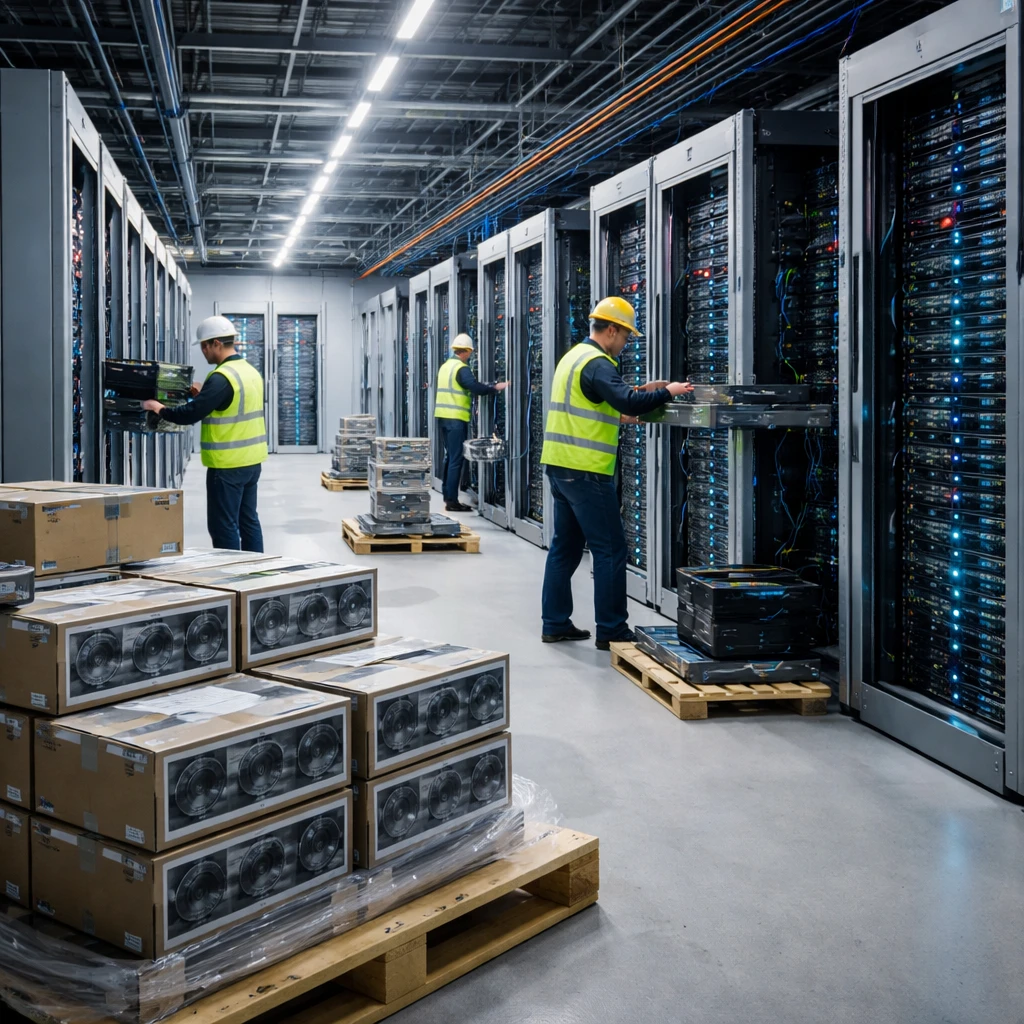
Underwriting banks for CoreWeave Inc (NASDAQ:CRWV) are lining up a $4.5 billion debt sale that could launch as early as next week, using the cloud provider's artificial intelligence infrastructure agreement with Meta Platforms Inc (NASDAQ:META) as the credit support for the transaction. Sources familiar with planning say Morgan Stanley and Mitsubishi UFJ Financial Group Inc. are building the financing around graphics processing units that will be shipped to a Meta-only data center in Dalton, Georgia.
The proposed structure would deposit proceeds into an escrow account, enabling CoreWeave to draw funds over time to pay for hardware rollouts while the loan is amortized over its life. That staged draw approach is intended to match capital deployment to deployment timing for the GPU hardware.
Although CoreWeave's corporate credit rating sits in the speculative, or junk, category, the deal team expects the backing provided by Meta's counterparty credit to be sufficient for the facility itself to receive investment-grade ratings. Early pricing conversations indicate the lending package could carry a coupon in the neighborhood of 7% to 7.5%. Market participants report initial demand levels already meeting the full $4.5 billion size under discussion.
The financing comes at a moment of heightened attention on the capital intensity of AI infrastructure and on whether long-term returns will justify large upfront technology investments. Sentiment in the wider sector has been rattled after billions of dollars in loans tied to Chinese technology firms were put on hold in the wake of recent U.S. restrictions on chip access, raising questions about the viability of AI-related debt markets in Asia.
CoreWeave's publicly traded corporate debt has experienced notable selling pressure even after the company exceeded its own guidance and Wall Street revenue forecasts for the full year earlier this month. On Wednesday, the cost to insure CoreWeave's debt against default over a five-year horizon spiked by the largest margin on record, with credit default swap pricing implying a greater than 70% probability of default within that five-year window.
Secondary market trace data cited by planners shows a sharp divergence between CoreWeave's unsecured paper and asset-backed borrowing capacity. Specifically, the company's 9% senior notes due 2031 dropped to record low prices on Wednesday, pushing yields to about 18% - a level roughly double the anticipated yield on the Meta-linked facility. At the same time, CoreWeave's delayed-draw term loans continued to trade close to par.
While the timetable for syndication and the final pricing and covenant terms remain subject to adjustment, arrangers view the transaction as a crucial test of institutional demand for structured financings tied to AI infrastructure. How readily the market absorbs the offering will be watched closely as an indicator of whether contracts with hyperscalers can reliably insulate specialist cloud operators from skepticism about their broader balance sheets.
Context and mechanics
The intended financing combines physical asset collateralization - GPUs destined for a single-use data center - with an escrow and staged draw mechanism to reduce immediate cash deployment and to align repayment with the operational life of the deployed hardware. This legal and cashflow architecture is designed to separate the credit profile of the loan from CoreWeave's standalone corporate rating by leaning on Meta's role as the contract counterparty.
Outlook and market implications
Execution and pricing will depend on investor appetite for asset-backed AI infrastructure paper at a time when market participants are weighing both the growth potential of generative AI and the heavy capital commitments it requires. The outcome of this syndication could influence appetite for similar transactions and signal whether institutional investors will accept hyperscaler-backed structures as a reliable credit mitigant.