
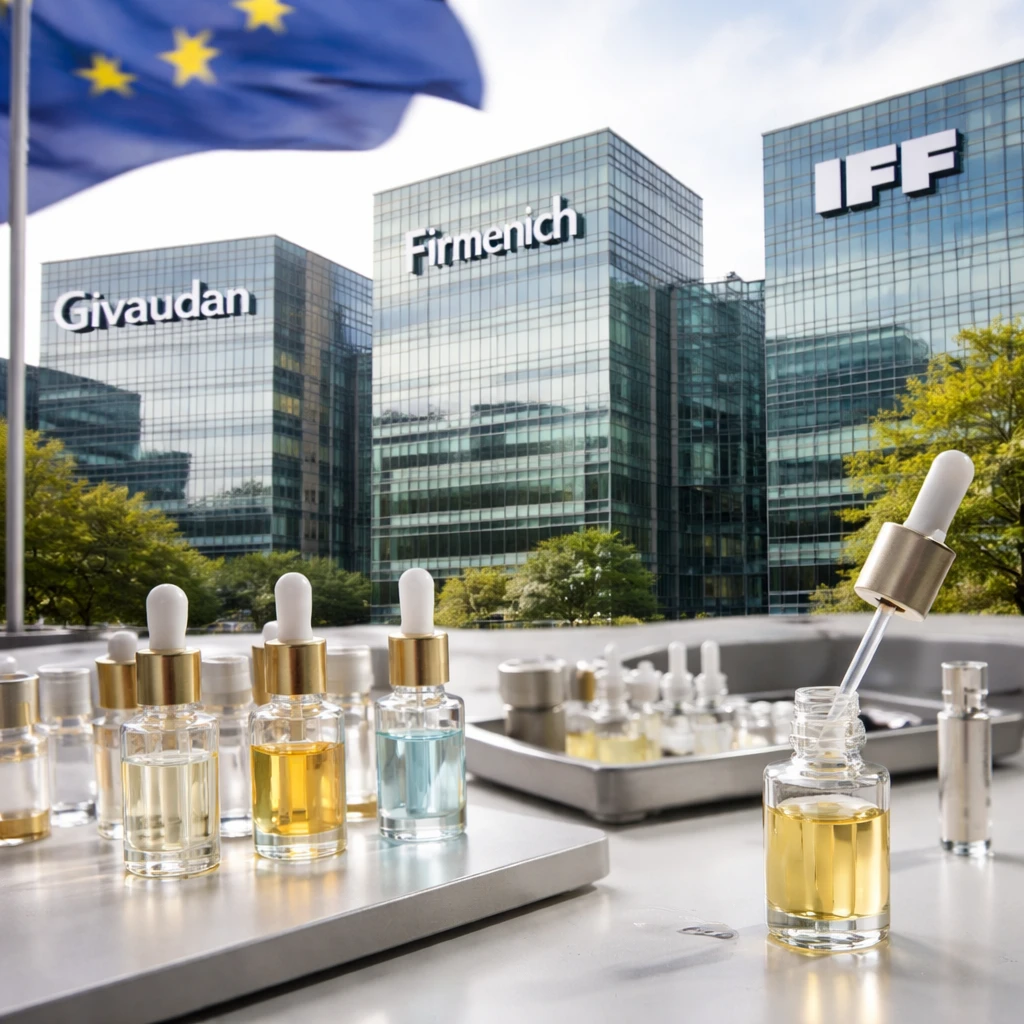
European Union antitrust authorities have fined the three leading fragrance manufacturers a total of €471.9 million for participating in a coordinated scheme to share commercially sensitive information and to align approaches to a major buyer. The Commission concluded that Swiss-based Givaudan SA, DSM Firmenich AG and International Flavors & Fragrances Inc engaged in anti-competitive conduct over a period of more than four years.
According to the Commission, the improper conduct extended from March 2019 until the start of inspections by regulators in March 2023. Investigators found repeated exchanges of commercially sensitive material connected to the firms' dealings with Unilever, identified in the decision as the single largest purchaser of consumer fragrances.
The exchanges covered a range of tactical and commercial matters. They included discussions about planned price increases, negotiation tactics to employ with Unilever, potential energy surcharge mechanisms, and coordinated responses to Unilever’s requests for greater transparency on ingredient costs and fragrance formulas. The Commission also recorded an agreement among the companies not to actively recruit or poach one another’s personnel who were assigned to the Unilever account.
Beyond the Unilever-focused coordination, the Commission found that Givaudan and IFF went further by sharing information about price-increase targets and negotiation strategies across their wider consumer and fine fragrance activities. The agency said senior executives at all three companies were aware of the contacts, and that senior staff at Givaudan and IFF began participating directly in the broader information exchanges in November 2021.
Financial penalties were handed down in line with the firms’ respective involvement. Givaudan received the largest fine at €252.4 million, reflecting its broader participation in the scheme. Firmenich was fined €137.7 million and IFF was ordered to pay €81.9 million. Each of the three companies benefited from reductions under the Commission’s leniency framework, which provides discounts based on the timing and evidential value of cooperation. The discounts applied ranged from 20% to 50%.
In addition to those leniency reductions, each company received an extra 10% discount for formally acknowledging liability and agreeing to settle the EU administrative case. Firmenich obtained a further 5% mitigating reduction, a concession the Commission attributed to the company’s more limited role in the wider market exchanges.
The enforcement action arose from an independent inquiry opened by the European Commission and was supported by coordinated investigative steps with competition authorities in the United Kingdom, Switzerland and the United States. While the settlement resolves the Commission’s administrative investigation within the EU, the decision constitutes binding proof of illegal conduct under EU law.
The Commission underscored that the firms remain exposed to follow-on civil damages claims by affected customers in national courts as a result of the finding of anti-competitive conduct. The administrative settlement does not preclude private litigation by businesses who claim to have suffered harm.
Contextual notes
This administrative decision details the specific areas of coordination identified by the Commission and the proportional fines applied after consideration of cooperation and admissions of liability. It reflects multi-jurisdictional investigative work but leaves open the prospect of subsequent national court actions brought by customers or other harmed parties.