
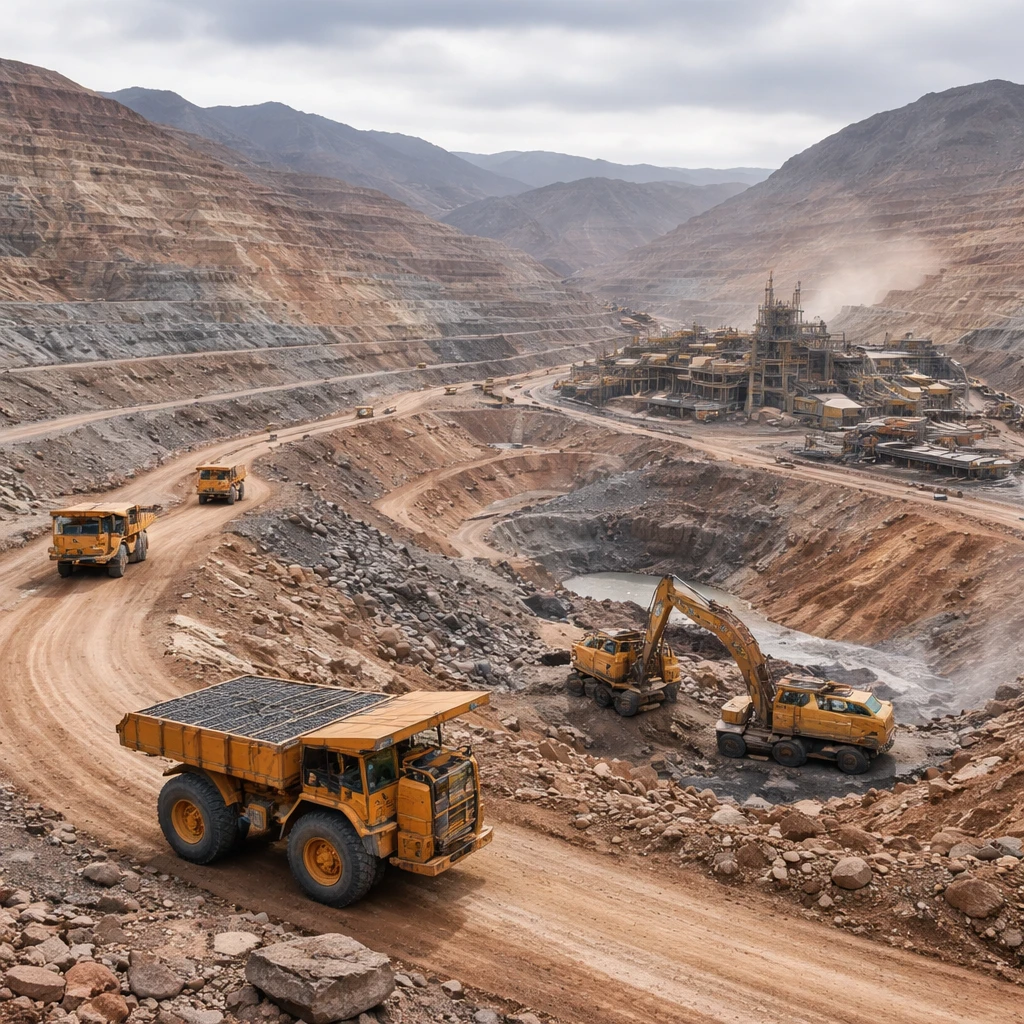
Chile's state-owned copper company reported a marked rise in first-half earnings on Friday as stronger copper prices largely offset weaker production and climbing costs, while the new chief executive emphasized restoring mine productivity as a top priority.
Codelco recorded pre-tax profit of $1.97 billion for the first half of 2026, a significant increase from $429 million in the same period a year earlier.
At the same time, the company's own copper output fell 11% to 564,000 metric tons, down from 634,000 metric tons a year earlier. Management attributed the decline mainly to operational restrictions at El Teniente, reduced output at Chuquicamata, and weaker ore grades at Ministro Hales.
The production shortfall fed into higher unit costs. Codelco's direct cash cost increased 7% to 231.6 cents per pound. That rise in cost per pound was largely counterbalanced by a substantially higher realized copper price, which rose to 653.2 cents per pound from 461.7 cents in the prior-year period, bolstering the company's earnings performance.
The company's report did not restate its full-year 2026 production forecast. Earlier guidance had targeted annual output between 1.33 million tons and 1.36 million tons. Chairman Bernardo Fontaine has indicated this month that the current production trajectory makes that target difficult to reach.
New Chief Executive Jorge Gomez framed his immediate mandate around restoring productivity after setbacks at several key mines. He is confronting the twin tasks of trying to reverse years of production declines and managing the consequences of the operational disruption at El Teniente, alongside a review of the miner's investment priorities and debt position.
Key operational and market dynamics in Codelco's update include:
- Profit growth driven primarily by a higher realized copper price despite lower volumes.
- An 11% decline in own copper production year-on-year, with specific pressures at El Teniente, Chuquicamata, and Ministro Hales.
- Rising direct cash cost per pound alongside material gains in the realized selling price for copper.
The company faces a near-term focus on productivity restoration while balancing investment and debt considerations as it navigates a production environment that has weakened versus last year.