
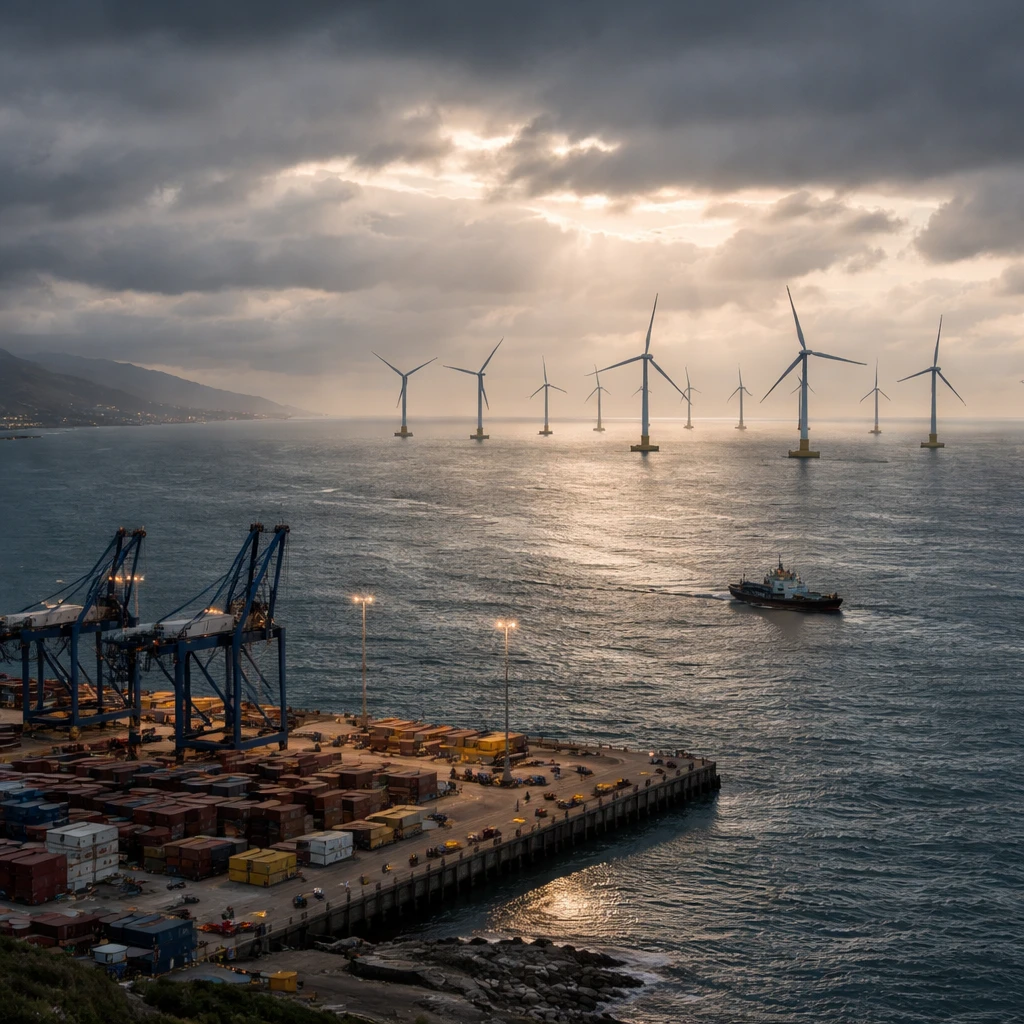
Aug 28 - California filed suit on Friday in the U.S. District Court for the Northern District of California against the U.S. Department of the Interior and Golden State Wind, challenging a deal that terminated a planned floating offshore wind project off the state's Central Coast.
The complaint, lodged by California Attorney General Rob Bonta, contends that an April agreement unlawfully used $120 million in taxpayer funds to reimburse Golden State Wind for surrendering a lease it acquired at a 2022 federal auction. The state asks the court to invalidate the agreement on the grounds that it ran afoul of federal statutes.
Golden State Wind is a joint venture composed of Ocean Winds - itself a partnership between France's ENGIE and Portugal's EDP Renewables - and Reventus Power, an offshore wind investment firm based in London. The company had been developing a 2-gigawatt floating offshore wind facility for waters off California's central coast.
According to the state complaint, Golden State Wind had committed more than $30 million toward workforce training, supply-chain development and community benefits associated with the project. California argues that the lease cancellation jeopardizes thousands of jobs and puts at risk more than $100 million in state investments that are linked to offshore wind planning and infrastructure, including port upgrades, transmission planning and supply-chain projects.
The lawsuit alleges specific statutory violations. California claims the Interior Department breached the Outer Continental Shelf Lands Act and the federal Judgment Fund Act because the $120 million payment was not tied to an actual lawsuit as required by law, making the disbursement improper under those statutes.
An Interior Department spokesperson declined to comment on pending litigation but said the agreement had been approved by the Department of Justice and was processed through the appropriate channels. Ocean Winds was not immediately available for comment.
California first warned of legal action in June, asserting that the lease buyout could set back the state's offshore wind industry by years and undermine its target to develop 25 gigawatts of offshore wind capacity by 2045. The complaint reiterates that concern and details the state's view that the agreement will have wide-reaching effects on the regional offshore wind supply chain.
The Trump administration has executed comparable agreements with other offshore wind developers, the complaint notes, citing deals with TotalEnergies and Invenergy in which the termination of federal offshore wind leases was contingent on investments in conventional energy projects.
The state is seeking relief in federal court to invalidate the April agreement and to prevent further use of taxpayer funds in similar arrangements, framing the litigation as a legal challenge to the administration's approach to managing offshore wind lease cancellations and associated payments.