
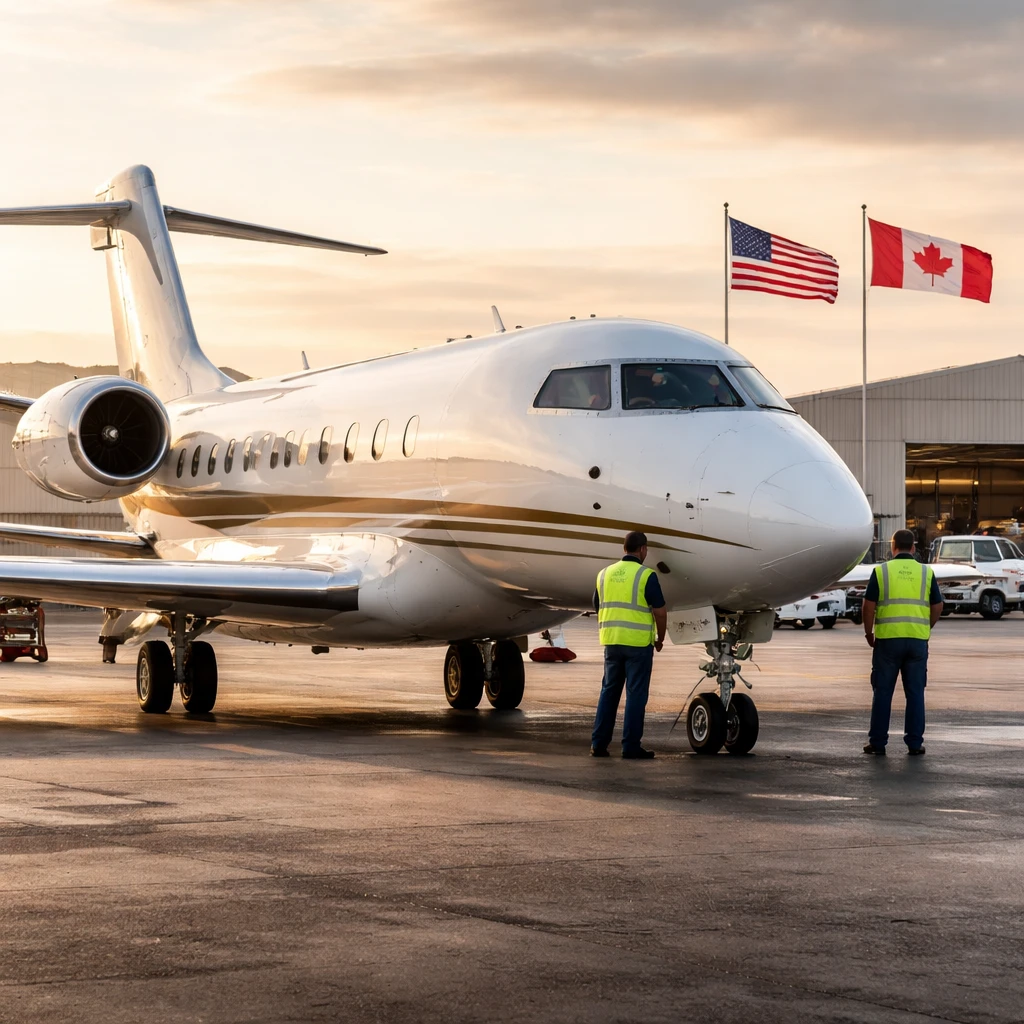
Bombardier shares trimmed initial declines on Tuesday after comments from President Donald Trump on Monday that threatened the Canadian aircraft maker's access to the U.S. market. The U.S. market accounts for about half of Bombardier's sales, a fact that magnified investor concern after the presidential post.
The stock opened down 6.4% but was trading around 3% lower in morning trade as losses were pared.
The president's remarks arrived as a trade confrontation between Washington and Ottawa intensified. Canada has announced counter-tariffs on $20 billion worth of U.S. goods, and the exchange where Bombardier is listed in Toronto was closed on Monday, limiting immediate market reaction there.
Observers noted a practical complication in implementing a ban on deliveries to American customers - Bombardier's private jets are approved by the U.S. Federal Aviation Administration. How a presidential directive would block delivery of FAA-certified aircraft to U.S. buyers was not specified.
Aerospace has so far been relatively less affected by the broader tariff measures that have been imposed in other sectors, but the president's statement placed the industry squarely in the spotlight for potential escalation. The White House was not immediately available for comment on the president's post.
The dispute has also prompted reaction from within the president's own party. Republican lawmakers have pushed back at the prospect of further action, with the issue surfacing in states where trade policy figures in voter considerations ahead of the November midterm elections.
Bombardier maintains a U.S. workforce of 3,500 and a supplier network of 2,800 firms across the country, and it produces components in states that have traditionally voted Republican, including Texas. The company also operates a U.S.-based defense unit in Wichita, Kansas, where a facility outfits business jets built in Canada for defense contracts.
On Monday night the congressman representing Kansas's fourth district, Ron Estes, posted on the social media platform X that he opposes tariffs on aerospace and highlighted the planemaker's contributions to his state.
Implications and context
- Bombardier's substantial U.S. sales exposure and domestic supply chain footprint make the company sensitive to shifts in U.S.-Canada trade policy.
- Legal and regulatory questions remain about the mechanism that could be used to bar delivery of FAA-certified aircraft to American customers.
- Political pushback from U.S. lawmakers, including representatives from states hosting Bombardier operations, has emerged in response to the president's comments.