
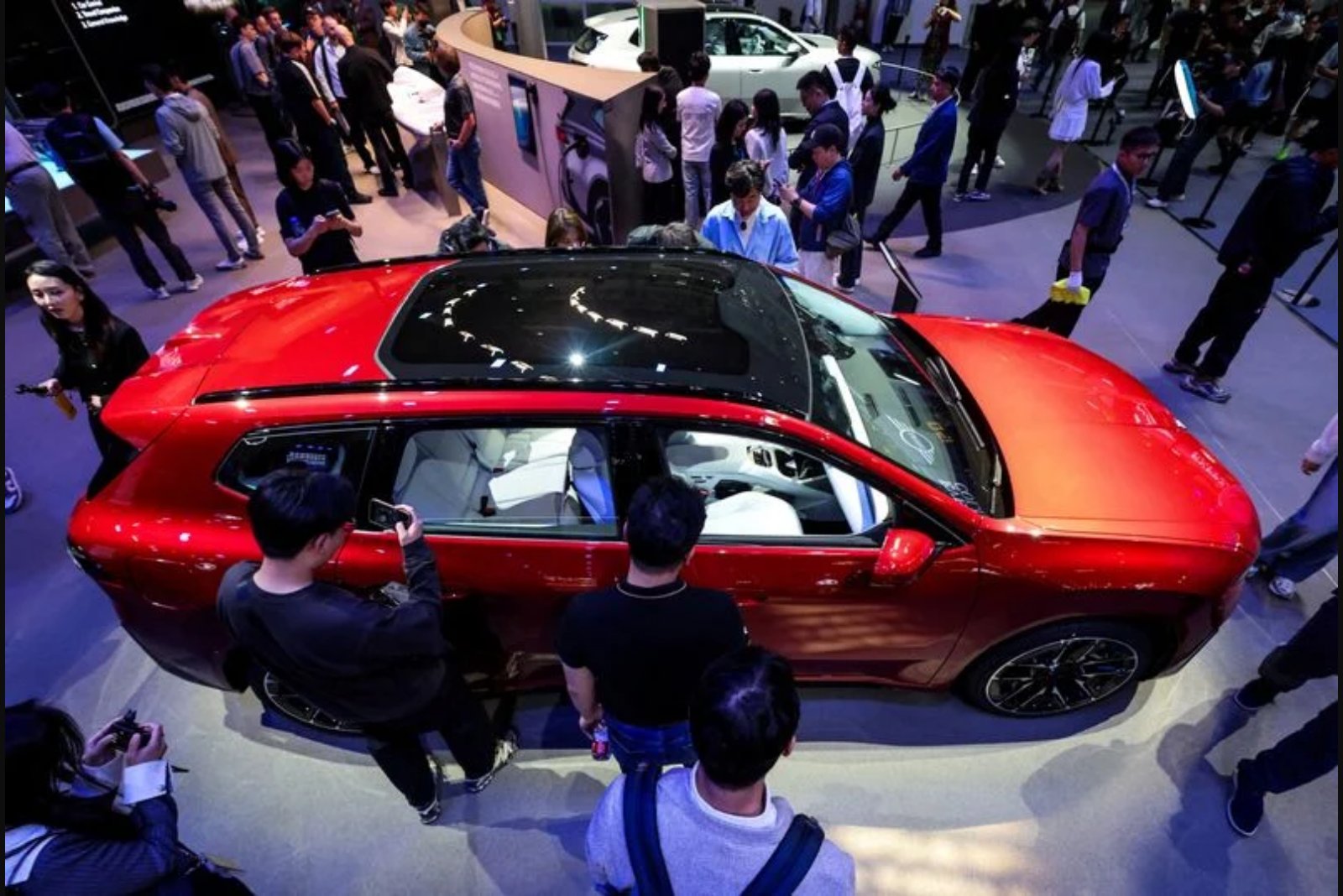
BMW is placing a major strategic bet on its Neue Klasse electric vehicle program to arrest a slide in its China performance that has stretched across two years. The German luxury group, which in recent months warned on profits and pointed in part to China as a contributing factor, reported a 30% drop in Chinese sales in the second quarter.
The broader challenge is that China’s EV ecosystem is evolving at a pace BMW did not match. Domestic manufacturers are iterating and shipping sophisticated electric models in timeframes measured in months - sometimes as rapidly as 18 months - a cadence that stands in contrast to the development cycles of legacy automakers. Observers and some investors argue this tempo has left BMW on the back foot as Chinese buyers increasingly prize software, connectivity and new feature sets alongside traditional vehicle attributes.
A delayed launch and market expectations
BMW’s long-awaited first Neue Klasse model for the Chinese market, the iX3 SUV, is scheduled to go on sale in November. The company has framed the Neue Klasse platform as central to a broader product program that will support dozens of launches. But the timing of that entry into China — which came after several delays and a decision to adopt a Chinese partner for assisted-driving technology rather than rely on in-house systems — has led some analysts and shareholders to argue the automaker moved too slowly.
Yale Zhang, managing director at Shanghai research firm Automotive Foresight, said the window for a decisive, market-defining move has narrowed. "If this had launched two years ago it could have been a game-changer," he said. "In today’s Chinese auto market ... it is hard to stand out."
That assessment reflects a shift in how many Chinese consumers evaluate premium vehicles. Where engineering heritage and combustion-engine credentials have long underpinned pricing power for German marques in Europe and the U.S., in China those strengths are less determinative. Instead, buyers often emphasize integrated digital services, advanced connectivity, intelligent driving aids and features tailored to local preferences.
Local rivals and changing buyer priorities
Home-grown brands such as Nio, Zeekr and Xiaomi have pushed aggressively on feature sets aimed specifically at Chinese customers. Nio, for example, has sought to demonstrate advanced vehicle suspension and comfort through public stunts designed to showcase ride quality, signaling a marketing approach that highlights product capabilities beyond traditional performance metrics.
Industry watchers say that dynamic has contributed to local brands encroaching on the customer base of established premium makers. Wang Xianbin, vice president of the Gasgoo Research Institute, said Chinese consumers do not place the same weight on combustion-engine engineering pedigree as they once did. Instead, they are drawn to the intelligent functionality and design competitiveness of domestic models.
Data cited for 2025 indicate that only about 5% of BMW’s sales in China were fully electric, while electric vehicles as a category accounted for 46% of vehicle sales in the market. That gap underscores the scale of the transition BMW faces to align its local lineup with prevailing consumer demand.
Price moves and dealer flexibility
BMW has adjusted pricing in China. The company’s average transaction price in China in 2025 was reported at 341,000 yuan, below some local premium competitors such as Nio, Aito and Denza, and only Audi among German premium brands was priced lower at 287,000 yuan. BMW lowered some list prices in coordination with local authorities in the first quarter, while independent dealers retain flexibility to set their own discounts and sales prices.
Yet analysts warn that price reductions alone may not be sufficient. While discounts can affect near-term demand, Chinese consumers increasingly expect value through up-to-date feature sets and rapid product iteration. Zhang of Automotive Foresight said local rivals are "armed to the teeth with cutting-edge features," and that deep discounts do not substitute for modern capability and relevance.
Internal perspectives and governance questions
Some investors have questioned whether BMW’s senior leadership and supervisory board have the hands-on China experience necessary to fully appreciate and respond to the market’s dynamics. Hendrik Schmidt of DWS, one of BMW’s top-10 investors, said the scale of the challenge posed by China had not been fully grasped internally. He noted that direct China experience among the company’s top executives and supervisory board members was limited.
BMW responded by saying its senior management has substantial China experience and that the company pursues a China-specific product strategy emphasizing highly integrated digital services, advanced connectivity features and rear-seat comfort — attributes the automaker said are tailored to local customer preferences.
Product development choices and timing
BMW’s shift from in-house assisted-driving software to a partnership with a Chinese technology provider, Momenta, was one factor in the postponement of the Neue Klasse’s China debut. The company has defended a rigorous approach to development and testing, emphasizing thorough validation to ensure customer safety rather than pursuing faster, less-tested rollouts.
Still, commentators point out that market concerns have evolved. Chang Yan, founder of a prominent EV-focused blog on China’s social media platform, said earlier marketing themes such as range anxiety resonate less today than they did several years ago. He argued that attributes historically celebrated as technological superiority in Europe - handling and performance - do not necessarily carry the same weight with many Chinese buyers, who now encounter domestic vehicles that are aggressive on design and feature content.
Gasgoo’s Wang summarized the competitive posture succinctly: he believes BMW is currently "one step behind" in addressing fast-moving Chinese consumer preferences.
What remains uncertain
The pending market test will be how the Neue Klasse models, starting with the iX3 SUV, perform once on sale in China. BMW has signaled confidence in its differentiated approach to development and to a China-focused product roadmap. Observers, however, stress that timing and the feature mix will determine whether the brand can arrest its recent sales decline and win back relevance amid local competition that has become both technologically sophisticated and rapidly iterative.
Summary
BMW is counting on the Neue Klasse EV family to reverse declining sales in China, but delays and a product-development pace slower than many Chinese rivals have left the company confronting a market where buyers heavily value features, software and rapid innovation. The iX3 SUV is due in November, and its reception will be a key test of BMW’s China strategy.
Key points
- BMW reported a 30% fall in China sales in the second quarter and has experienced two years of declining sales in China.
- Only about 5% of BMW’s China sales were fully electric in 2025, while EVs comprised 46% of vehicle sales in the market.
- Local Chinese brands such as Nio, Zeekr and Xiaomi are offering fast cycles of feature development and products tailored to Chinese buyers, pressuring incumbent premium brands.
Risks and uncertainties
- Timing risk - the delayed launch of Neue Klasse models may limit BMW’s ability to capture share if market preferences continue to evolve rapidly in favor of local offerings. This affects automotive and EV supply-chain sectors.
- Product-market fit risk - BMW’s historical emphasis on driving dynamics and combustion-engine heritage may not align with Chinese buyer priorities for digital services and advanced connectivity, impacting luxury vehicle demand and related software suppliers.
- Governance and local insight risk - concerns about limited direct China experience among top executives and board members could slow strategic response, affecting investor confidence and premium auto sector valuations.