
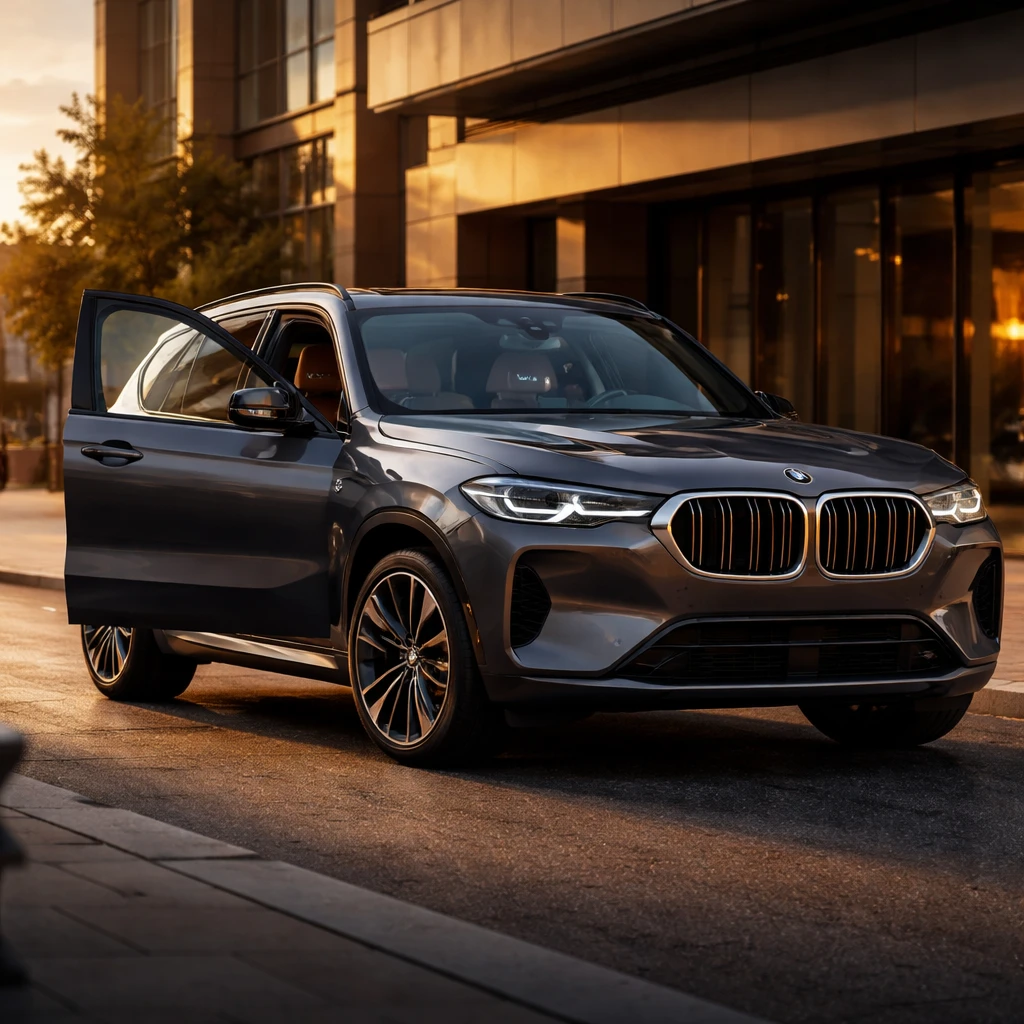
BMW has unveiled the G65, the fifth-generation X5 luxury SUV, marking a comprehensive redesign and the addition of five propulsion choices across its production lineup - gasoline, diesel, plug-in hybrid, electric and hydrogen. The company said the X5 will be the first BMW production model to offer all five propulsion types when it launches on November 28.
Styling shifts to the Neue Klasse design language are immediately apparent. The front end incorporates a double "X" motif within the headlights and a vertical interpretation of the signature kidney grille. At the rear BMW has replaced the multi-piece tailgate used on the previous four generations with a single-piece configuration, and the taillights now extend across the full width of the vehicle.
The interior moves toward larger, consolidated displays and a new interaction paradigm. A 17.9-inch central touchscreen runs BMW's new iDrive X software. In place of a conventional digital instrument cluster the G65 adopts Panoramic Vision, a windshield projection system that relocates driver information into the occupant's forward field of view.
Powertrain details span conventional and emergent technologies. The fully electric iX5 60 xDrive is offered with a usable battery capacity of 141 kWh in Europe and 144 kWh in the United States, and BMW is targeting up to 525 miles of range under WLTP testing. The dual-motor electric model develops 570 horsepower and 593 pound-feet of torque, and BMW reports a zero to 62 mph sprint time of 4.6 seconds. The iX5 supports up to 460 kW peak charging power, with the battery capable of charging from 10 to 80 percent in 22 minutes under BMW's stated conditions.
The X5 M60e xDrive plug-in hybrid pairs a six-cylinder combustion engine with an electric motor to deliver 603 horsepower and 590 pound-feet of torque, and BMW states the hybrid provides 61 miles of electric driving range under WLTP testing. For customers preferring conventional internal combustion, the gasoline X5 40 in the United States is rated at 394 horsepower and 428 pound-feet of torque, representing increases of 19 horsepower and 45 pound-feet versus the previous generation.
BMW also confirmed plans to introduce a hydrogen fuel cell variant later in the vehicle's life cycle. The company projects that the hydrogen model will offer 466 miles of range and refueling in less than five minutes.
Pricing and production timing were disclosed for U.S. buyers and BMW's assembly operations. In the United States the 2027 X5 begins at $71,250 for the rear-wheel-drive X5 40, inclusive of destination and handling fees, while the electric iX5 60 xDrive has a starting price of $81,250. Manufacturing at BMW's Spartanburg plant in South Carolina is set to begin in August for gasoline and diesel versions; plug-in hybrid variants and the iX5 EV will join the assembly line in December.
The G65 X5 represents BMW's strategy to offer a broad set of propulsion options within a single model family, combining design updates, new user interface elements and a range of drivetrain technologies. Exact availability by market, customer delivery timing and detailed specification packages were not expanded beyond the pricing and production windows provided above.
Summary - BMW's fifth-generation X5 (G65) introduces sweeping exterior and interior changes and becomes the company's first production model to be offered with gasoline, diesel, plug-in hybrid, electric and a planned hydrogen fuel cell option. Key technical specifications include a 141/144 kWh usable battery in the iX5, up to 525 miles WLTP range, a 603-horsepower PHEV M60e and U.S. entry pricing from $71,250. Production will be staged in Spartanburg, with gasoline and diesel models starting in August and hybrids and the iX5 joining in December ahead of the November 28 launch.