
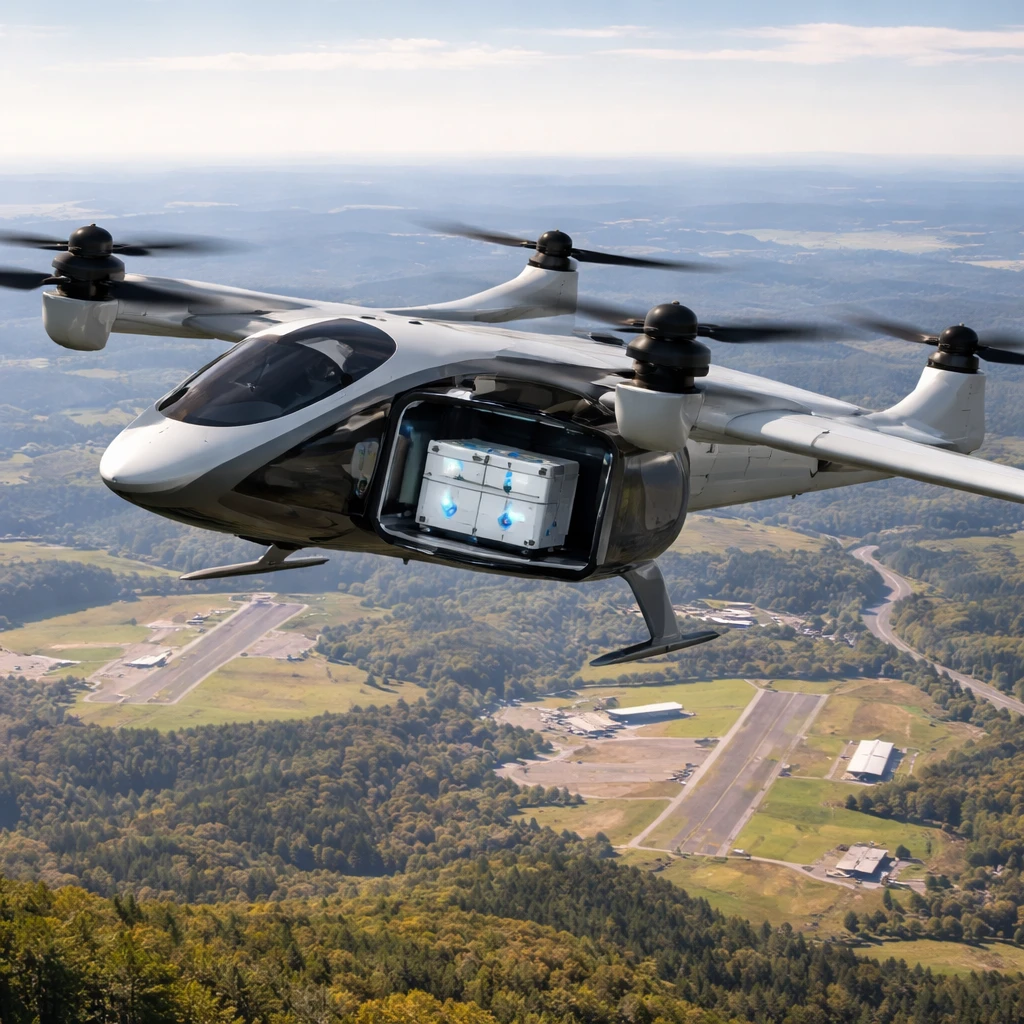
BETA Technologies Inc reported a milestone for its electric aviation operations after completing the first flights under the Federal Aviation Administration's eVTOL Integration Pilot Program (eIPP) that carried manufactured organs being developed by United Therapeutics. The company said the missions, conducted in partnership with state aviation authorities, demonstrated the practical application of electric aircraft for specialized cargo delivery.
Shares of BETA rose 5.1% on Friday following the announcement.
Multistate mission and partners
The inaugural campaign showed operations across a corridor linking Virginia and Maryland, executing legs that spanned approximately 275 nautical miles in total. Aircraft flew between Virginia Tech/Montgomery Executive Airport in Blacksburg, Virginia; Charlottesville-Albemarle Airport in Charlottesville, Virginia; Frederick Municipal Airport in Frederick, Maryland; and Martin State Airport in Baltimore County, Maryland.
BETA conducted the flights in collaboration with the Pennsylvania Department of Transportation, the Virginia Department of Aviation, and the Maryland Aviation Administration.
Program participation and commercial linkages
BETA has been selected to take part in seven of the FAA's eight eIPP launch programs, a greater number of selections than any other electric aircraft developer, the company said. The firm also has an agreement with United Therapeutics Corporation to develop and operate electric aircraft for delivery of manufactured organ products when those products become commercially available.
The eVTOL Integration Pilot Program was created by the U.S. Department of Transportation and the FAA to accelerate safe integration of Advanced Air Mobility. The program uses operational demonstrations to inform future certification policy, operational frameworks, and commercialization pathways for Advanced Air Mobility across the United States.
Operational footprint and infrastructure
BETA reported more than 160,000 nautical miles flown by its aircraft fleet to date and said it has established charging infrastructure at 123 sites across the United States and Canada. The company manufactures both conventional fixed-wing electric aircraft and electric vertical takeoff and landing aircraft, positioning itself across multiple aircraft configurations.
Implications for markets and sectors
The flights represent an operational demonstration intended to inform regulatory and commercial pathways for Advanced Air Mobility. The missions involved aviation regulators and state agencies and included a healthcare logistics element through the transport of manufactured organ products.