
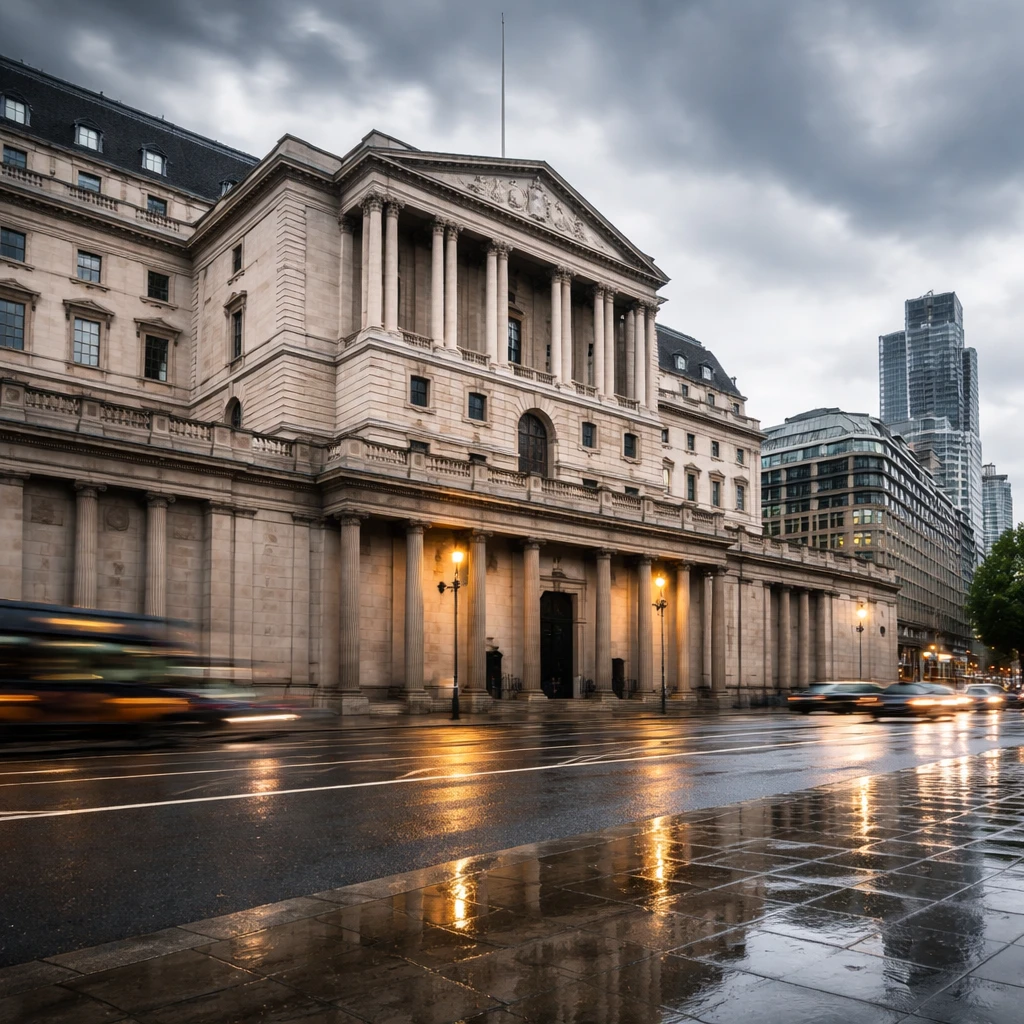
The Bank of England left its main policy rate unchanged at 3.75% on Thursday, but its statement made clear that policymakers remain prepared to raise borrowing costs if the recent energy price shock proves persistent and pushes inflation higher.
In the committee vote, three members supported a 25 basis-point increase to take the Bank Rate to 4% - a minority position that highlights internal division over the outlook for energy prices and inflation. The Bank Rate itself has remained at the same level since December.
The central bank noted that prices for crude oil and refined energy products have been volatile and continue to trade above the levels seen before the outbreak of the Iran war in late February. The effect of that shock is described as clouded in uncertainty by the Bank, which cautioned that the scale and duration of the shock will shape the policy response.
On the current inflation trajectory, consumer prices growth in the U.K. has slowed to 2.6% since the Bank's previous meeting in June. However, the Bank expects inflation to pick up later in 2026 as higher energy costs pass through to the broader economy. The statement explicitly observed that the inflation rate remains above the Federal Reserve's 2% medium-term goal.
On the role of monetary policy, the Bank said: "Monetary policy cannot influence energy prices but is being set to ensure that the economic adjustment to them occurs in a way that achieves the 2% inflation target sustainably." It added that the policy stance required to achieve that objective "will depend on the scale and duration of the shock, and how it propagates through the economy including via financial conditions."
The Bank also flagged limited evidence so far of what it called "material second-round effects" in price- and wage-setting, while warning that the risk of such effects becomes greater the longer elevated energy prices persist. Overall, the risks to the inflation outlook are described as "tilted to the upside."
Reflecting that assessment, the Bank affirmed it stands "ready to act as necessary" to make sure consumer price inflation is pulled back to 2%.
Market commentators noted the importance of upcoming meetings. Nick Saunders, CEO of online investment platform Webull UK, warned that "September's meeting will be pivotal with the arrow tilting closer to a rate hike. This is the calm before the storm. In the meantime, markets will be reactive to every inflation and energy price move between now and then so this is not an environment for complacency."
Investors and businesses will be watching energy price movements and inflation data closely in the weeks ahead, given the Bank's emphasis that future policy will hinge on how the energy shock evolves and whether it feeds into wages and broader price-setting. The combination of persistent energy costs, uncertainty over their economic transmission, and a commitment by the Bank to act if needed sets the scene for potentially higher volatility in financial markets until more clarity emerges.
In sum, the Bank of England's decision to hold the Bank Rate at 3.75% came with a clear caution: while immediate action was not taken, the door remains open for tightening should the energy-driven inflation shock prove lasting and materially raise price pressures across the economy.