
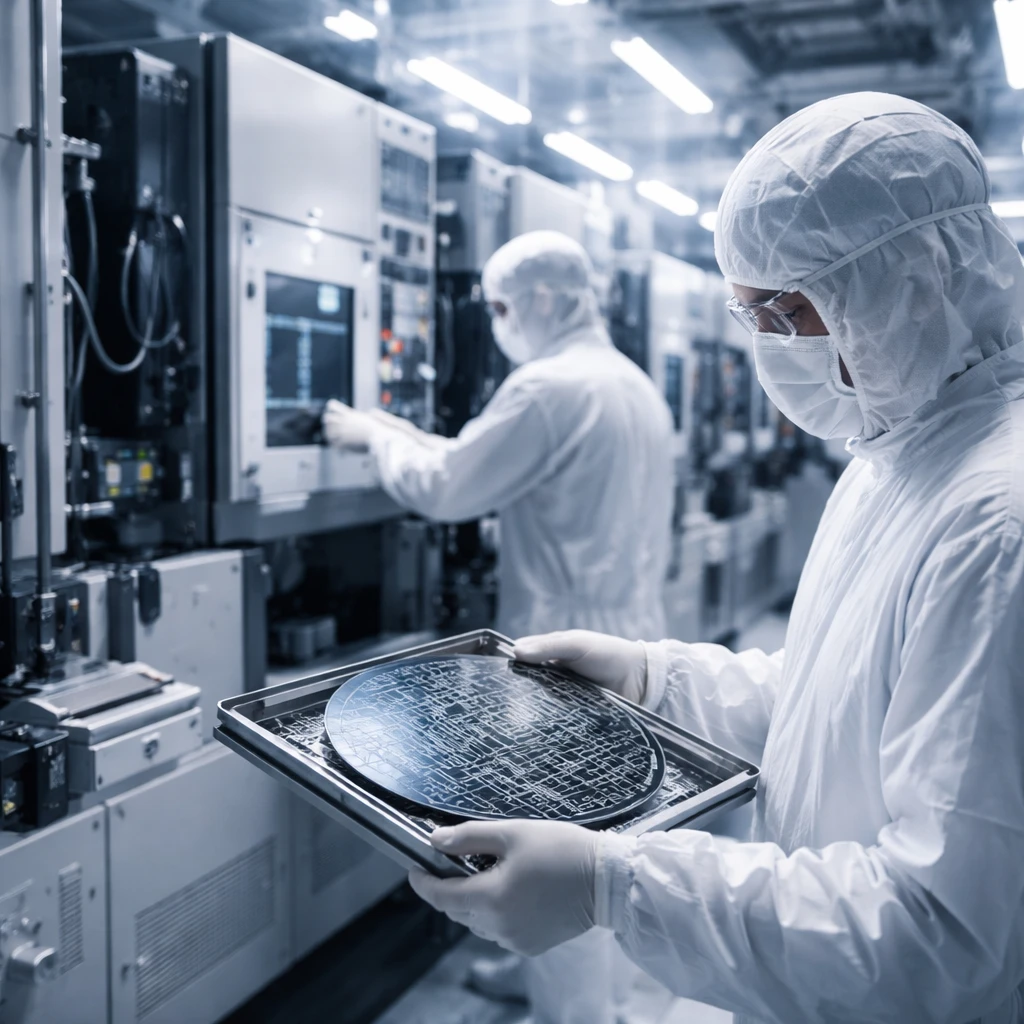
ASML's stock fell sharply in morning trading, dropping 4.5% to $1,677.71 after a report said an unnamed, state-backed Shanghai company has begun limited mass production of native immersion deep ultraviolet (DUV) lithography machines. The revelation removed pre-market gains that had been above 2% and pushed shares down alongside U.S. chip-equipment names Applied Materials, Lam Research, and KLA Corp.
The Chinese firm is said to be aiming to produce about five systems this year and close to 20 units in 2027, with initial deliveries slated for major domestic chipmakers including SMIC, Hua Hong, and CXMT. According to the report, the new machines currently lag ASML's equipment on performance and build quality and may need months of testing before they are ready for use on production lines. Still, the milestone is noteworthy because China makes up roughly 20% of ASML's projected 2026 revenue and DUV tools represent a meaningful slice of that exposure.
U.S.-led export controls already prevent ASML from shipping its most advanced extreme ultraviolet (EUV) systems and high-end DUV tools to China. That regulatory environment means the remaining DUV business that ASML can serve in China is a potential vulnerability if domestically developed alternatives gain traction over time.
Market context did not offer obvious macro reasons for the move: the S&P 500 climbed 0.6% and the Nasdaq also rose 0.6% during the same trading window, indicating the downward pressure on ASML was driven primarily by the competitive and geopolitical angle rather than a broad risk-off market swing.
ASML's underlying business drivers, as described in the report, remain broadly intact. The company has lifted its full-year 2026 revenue outlook and retains strong EUV order visibility stretching into 2028. Analysts on Wall Street have largely maintained Buy ratings in recent weeks, reflecting that the firm's longer-term fundamentals and order backlog were not altered by the report.
Nonetheless, the combination of the report about a Chinese DUV manufacturing milestone and ASML's elevated valuation after a strong year-to-date performance created conditions for a pronounced single-session pullback. With China accounting for a structurally important portion of ASML's revenue but also being subject to contestation via domestic alternatives, investors appear to be reassessing the medium-term risk that Chinese-built DUV equipment could gradually erode ASML's share of that market segment - even if the immediate competitive threat is limited based on current performance and qualification timelines.
Shares of U.S. equipment peers moved lower in sympathy with ASML's drop, underscoring the sector-level sensitivity to developments that affect China-focused equipment demand.