
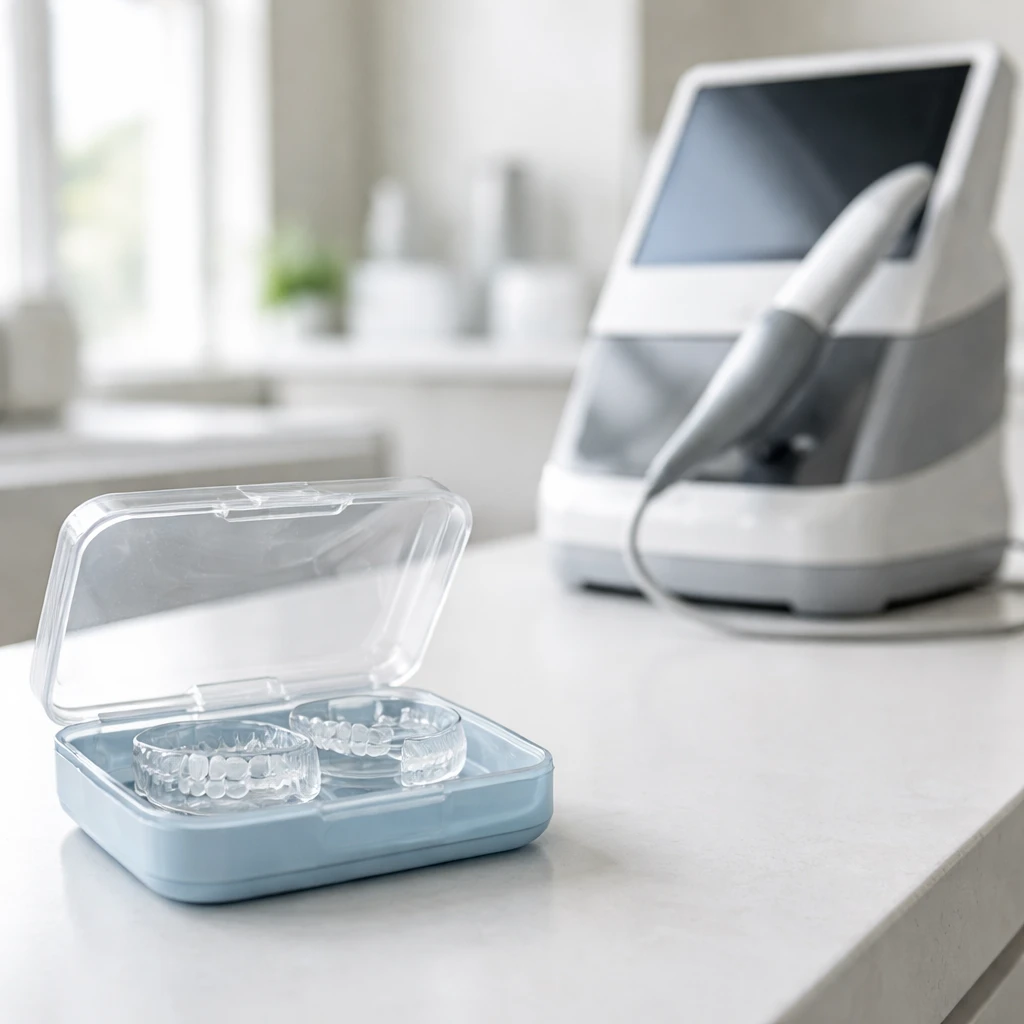
Shares of Align Technology declined 5.3% in pre-open trading after the maker of Invisalign clear aligners issued a third-quarter 2026 revenue outlook that came in below analysts' consensus. The guidance, released with the company's Wednesday evening earnings report, put Q3 worldwide revenue in a $1.00 billion to $1.02 billion range - under the rough analyst midpoint range of about $1.02 billion to $1.05 billion.
The quarterly results themselves delivered several mixed signals. Adjusted earnings per share for the quarter were $2.64, narrowly topping estimates, and total revenue reached $1.06 billion - a 4.3% increase year-over-year. The company also reported record clear aligner case volumes of 691,800 units, underscoring demand for its core product line.
However, parts of the business showed notable pressure. Systems and Services revenue fell 10.8% year-over-year, declining to $185.3 million. Management attributed that decline to a strategic shift toward lower-cost scanner configurations and expanded leasing programs. GAAP net income was further reduced by a $37.5 million UK VAT liability charge disclosed in the quarter.
Following the results, Needham analysts maintained a Hold rating on the shares. In parallel with the earnings release, Align said it expanded its 2026 share repurchase program to a range of $400 million to $500 million after engagement with activist investor Elliott Investment Management. The company also announced plans to appoint three new independent directors to its board.
The market backdrop offered no clear reason for the single-name weakness: the S&P 500, Dow Jones and Nasdaq were trading higher on the same day, indicating the pullback in Align stock was driven by company-specific developments tied to the earnings reaction rather than a broad market sell-off.
In summary, the combination of a softer-than-expected Q3 revenue guide, ongoing weakness in the scanner-related business, the one-time VAT charge and the prospect of additional restructuring costs weighed on investor sentiment. Those headwinds overshadowed the quarter's record aligner volumes and an expanded buyback program, prompting the pre-market decline.