
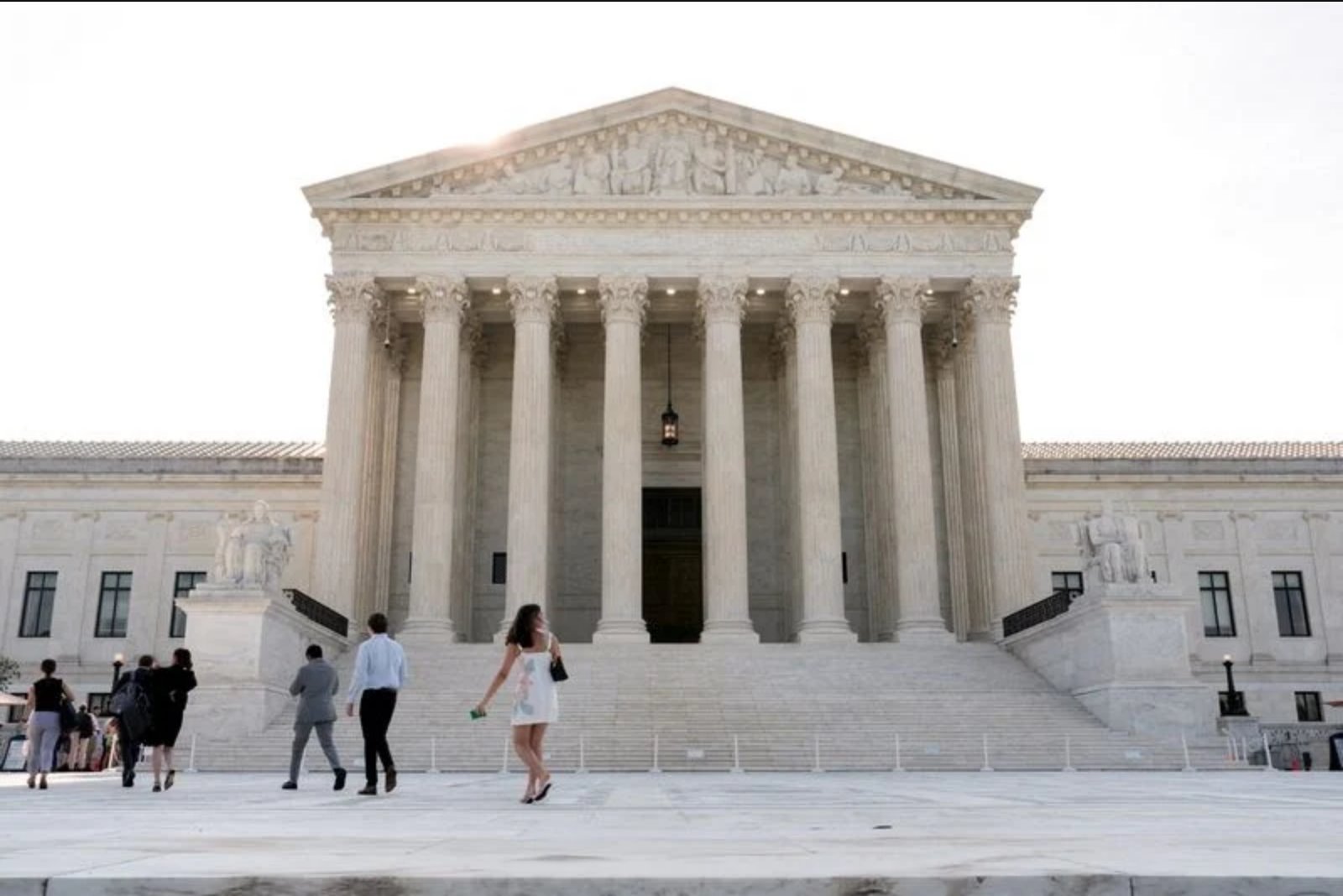
The U.S. Supreme Court on Tuesday turned away a Justice Department request to lift a court injunction that temporarily prevents President Trump from removing Shira Perlmutter as the U.S. register of copyrights and director of the U.S. Copyright Office while her challenge to the termination is litigated.
The court issued an unsigned order stating that the action did not decide the merits of the broader legal dispute, leaving intact the lower court’s decision that restored Perlmutter to her post pending the outcome of her lawsuit.
Perlmutter was notified in May 2025 by an administration official that she had been fired. In her role as the government’s top copyright official, she has served as Congress’ principal adviser on copyright matters. The administration’s move to terminate her came one day after the Copyright Office circulated a report concluding that certain unauthorized uses of copyrighted works by technology firms for the purpose of training generative artificial intelligence systems may be unlawful.
Perlmutter’s lawyers have argued in court filings that the president sought to remove her because he disagreed with the report’s conclusions regarding AI training practices. Later in the same month, the president also dismissed Librarian of Congress Carla Hayden. The president then sought to replace Hayden with Todd Blanche, identified in court filings as his former criminal defense attorney and his acting U.S. attorney general at the time. Blanche, acting as head of the Library of Congress - the body that oversees the Copyright Office - purported to ratify the president’s decision to remove Perlmutter.
Perlmutter filed suit seeking to block the firing. A central element of her claim is that the president lacked authority to designate Blanche as acting Librarian of Congress because the Library of Congress is a legislative branch office rather than an executive branch agency. Her suit emphasizes the constitutional separation of powers among the executive, legislative and judicial branches, arguing that the president’s move improperly reached into the legislative branch.
The procedural history of the case has been contested. In July 2025, U.S. District Judge Timothy Kelly, who was appointed by President Trump, denied Perlmutter’s request for a preliminary injunction to prevent her removal, concluding that she had not shown "irreparable harm" sufficient to warrant immediate reinstatement.
On appeal, a divided three-judge panel of the U.S. Court of Appeals for the District of Columbia Circuit in September 2025 accepted Perlmutter’s argument and reinstated her while the case continued. Judge Florence Pan, a Biden appointee, wrote that the president’s attempted removal of Perlmutter amounted to an "attempt to reach into the legislative branch to fire an official that he has no statutory authority to either appoint or remove." Judge Pan added that "the president’s purported removal of the legislative branch’s chief adviser on copyright matters, based on the advice that she provided to Congress, is akin to the president trying to fire a federal judge’s law clerk." She was joined in that opinion by J. Michelle Childs, another Biden appointee on the panel.
The D.C. Circuit’s decision prompted the administration to ask the Supreme Court to step in. In its filings, the Justice Department argued that the president’s appointment of Blanche as acting Librarian of Congress was authorized by federal statute. The administration also urged that the president’s constitutional authority under Article II permitted him to remove Perlmutter directly, on the ground that her office is part of the executive branch.
In November 2025 the Supreme Court delayed acting on whether to permit the removal, leaving Perlmutter in place. At that time, the court said it would await resolution of related disputes it had recently decided - rulings issued on Monday that allowed the president to remove a Federal Trade Commission Democratic member, Rebecca Slaughter, but declined to permit the removal of Federal Reserve Governor Lisa Cook.
With the justices’ new unsigned order turning aside the administration’s immediate request, Perlmutter remains restored to her position while the underlying constitutional and statutory questions are litigated in the lower courts and considered by the higher courts. The order does not resolve whether the president ultimately had the authority to remove her, only that the injunction blocking the removal remains in effect for now.
Context and legal posture
The litigation centers on competing claims about the identity of the Library of Congress as a legislative-branch institution versus an executive-branch agency and on the scope of presidential removal powers under Article II of the Constitution. That dispute intersects with administrative oversight of copyright policy and a contentious report on whether certain technology industry practices in training generative AI systems infringe on copyrighted works.
For the moment, the Supreme Court’s action preserves the status quo established by the appellate panel, leaving Perlmutter to continue in her role as Congress’ lead copyright adviser while the courts resolve the dispute over appointment and removal authority.
What to watch next
- The progress of Perlmutter’s case through the federal courts and any further petitions to the Supreme Court.
- Whether the administration pursues additional legal arguments or legislative remedies to support its position on acting appointments to the Library of Congress.
- Any subsequent administrative actions related to the Copyright Office’s report on AI training practices that prompted the dispute.