
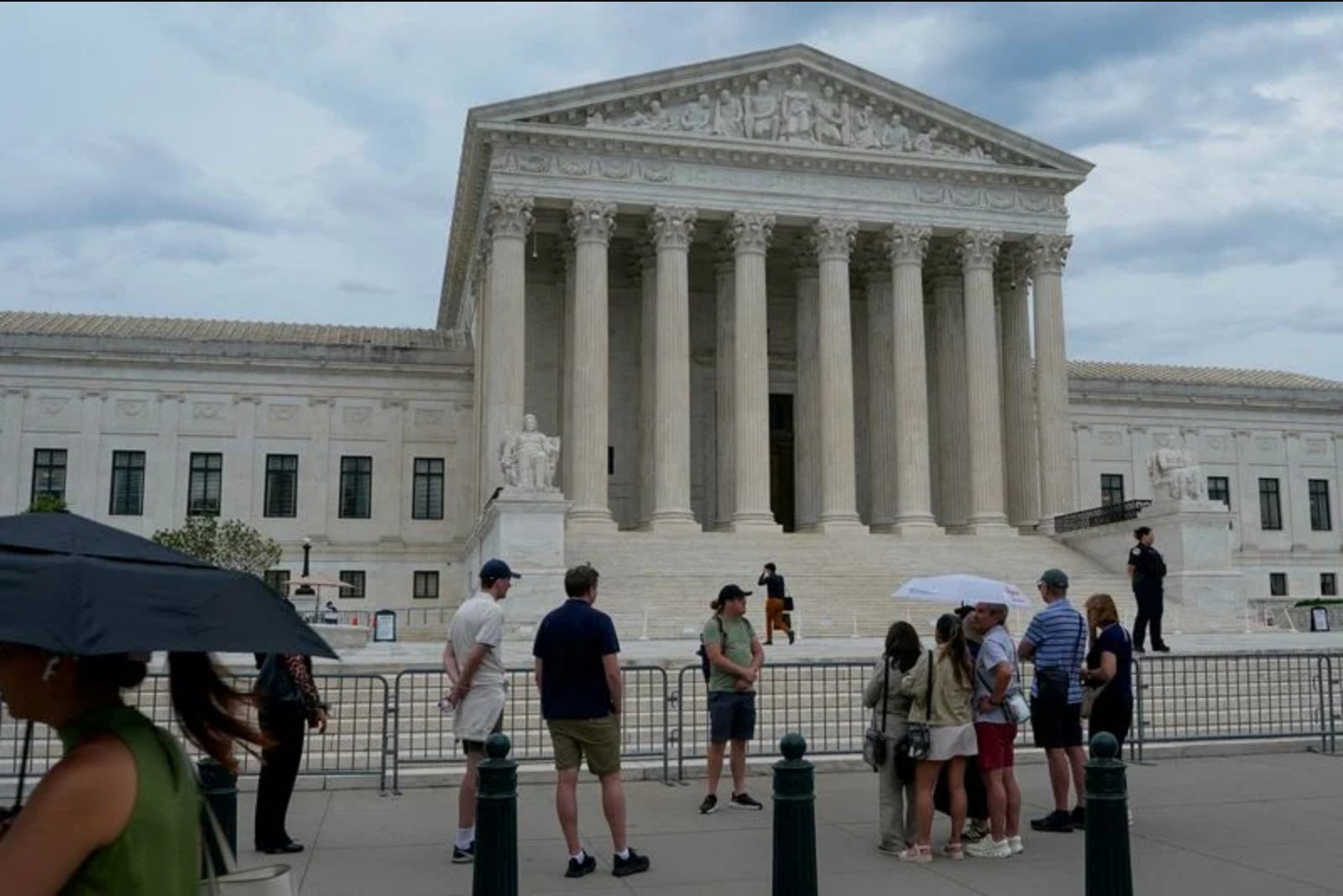
Since President Donald Trump returned to the White House last year pledging an aggressive crackdown on immigration and a campaign of mass deportation, the conservative-majority U.S. Supreme Court has largely accommodated those priorities. Over the last week the court handed the administration three substantive victories, each decided by a 6-3 margin and each advancing limits on both legal and illegal immigration.
Legal advocates and immigration experts say the cumulative effect of the rulings is to expand the government’s ability to remove people or deny them entry to the United States, including some who currently hold recognized legal status.
The decisions and their contours
In one of the rulings, the court by a 6-3 vote allowed the administration to terminate Temporary Protected Status, or TPS, for hundreds of thousands of immigrants from Haiti and Syria. TPS is a humanitarian designation that permits people from countries affected by war, natural disaster or other extraordinary conditions to live and work in the United States while return to their countries is unsafe.
Legal analysts were blunt about the practical consequences for those losing TPS: they now face a stark choice between remaining in the United States and risking detention and possible removal, or returning to nations that U.S. government travel advisories warn against because of pervasive violence, crime, terrorism and kidnapping.
As Tirana Hassan, CEO of Doctors Without Borders USA, said on Thursday about Haiti: "These are not conditions to which people should be returned."
Also on Thursday the justices ruled 6-3 in favor of government authority to block asylum seekers from entering the country at the U.S.-Mexico border when officials consider crossings to be overburdened - a practice known as "metering." The Trump administration has indicated it may seek to reinstate metering after the policy was discontinued by the Biden administration.
Earlier in the week, again by a 6-3 split, the court eased the burden on border agents seeking to refuse reentry to lawful permanent residents returning from travel abroad. The justices held that officials do not need to meet the heightened "clear and convincing evidence" standard to show that a green-card holder committed a crime in order to deny admission back into the United States following a foreign trip.
Reactions and legal perspectives
Critics describe the court as having become an enabler of the administration’s removal-focused agenda. "The Trump administration has turned the immigration system into a deportation machine," said Elora Mukherjee, director of the Immigrants’ Rights Clinic at Columbia Law School in New York. "In most cases, the Supreme Court has been a rubber stamp for Trump’s mass deportation agenda," she added.
Ahilan Arulanantham, an immigration law specialist at UCLA and counsel for the Syrian plaintiffs in the TPS litigation, characterized the decision as part of a pattern. "The Supreme Court has consistently ruled against the rights of immigrant communities in important cases in the last several years, and this case fits that pattern," he said. He added that the ruling gives the administration - and elements of the anti-immigrant movement - a victory they have been unable to secure through Congress.
From the administration’s perspective, officials framed the rulings as restorations of legal clarity and practical tools. Department of Homeland Security General Counsel James Percival said the decisions were "all victories for the rule of law and common sense," and noted that TPS "was always supposed to be temporary." Percival added that the rulings provide "several more important tools to continue securing our borders."
Procedural context - emergency decisions and the shadow docket
Many of the court’s recent immigration actions have come via emergency orders issued on the so-called shadow docket, where the justices can resolve urgent disputes outside the court’s regular merits calendar and without the lengthy briefing and oral argument typical of routine decisions. The court used that procedure in multiple instances to allow the administration to pursue enforcement measures while litigation continued in lower courts.
Among the measures the court has permitted on an emergency basis are deportations to countries where migrants have no substantial ties, aggressive immigration raids that advocates say can target individuals based on race or language, and the termination of other humanitarian protections such as TPS and parole for hundreds of thousands of immigrants.
Wider pattern since Trump's return to office
Since the president took office in January 2025, the high court has frequently sided with the administration when lower courts blocked or limited enforcement steps tied to deportation efforts. Scholars and clinic directors say the court’s current ideological composition has been central to those outcomes.
Ashley Sanchez, director of the Immigration Clinic at the University of Notre Dame Law School, noted the continuity of the court’s composition since October 2020, when a conservative justice joined the bench to replace a liberal justice. Sanchez said that the more conservative court appears more disposed to agree with the president’s legal positions in immigration matters.
Sanchez pointed to a contrast with an earlier period: in June 2020, when the court had a 5-4 conservative majority, Chief Justice John Roberts joined the court’s liberal members to block President Trump’s effort to end a program that protects hundreds of thousands of so-called Dreamers from deportation. Sanchez observed that it is difficult to imagine the current court reaching the same result.
Limits the court has imposed
The justices have not sided with the administration without restraint. On several occasions the court has required that migrants receive fair treatment under constitutional due process protections. For example, last year the court twice limited an administration attempt to invoke the Alien Enemies Act of 1798 to effect rapid expulsions of Venezuelan migrants accused of gang membership. The Alien Enemies Act historically has been used only in wartime; the justices placed checks on its application in those cases.
Pending, high-stakes case on birthright citizenship
As the current term draws to a close, the court has yet to issue a decision in what may be the most far-reaching challenge to the administration’s immigration agenda: whether an executive order that seeks to deny birthright citizenship to children born on U.S. soil to parents who are neither citizens nor lawful permanent residents is constitutional.
The president’s order directed federal agencies not to recognize citizenship for those children if neither parent is a U.S. citizen or a green-card holder. A lower court determined the order is inconsistent with the Citizenship Clause of the 14th Amendment, which has long been interpreted to grant citizenship to nearly everyone born in the United States, except for narrow categories such as children of foreign diplomats or members of an occupying enemy force.
The clause at issue reads in part: "All persons born or naturalized in the United States, and subject to the jurisdiction thereof, are citizens of the United States." Based on the questions posed by the justices at oral arguments in April, observers saw signs the court might rule against the administration on that issue. A decision could come as soon as Monday.
Implications and outlook
The recent decisions collectively expand administrative latitude to pursue removals and to restrict entry at the border, while the unresolved and potentially determinative case over birthright citizenship remains pending. Advocates for immigrant communities warn the consequences will be severe for people losing legal protections and for families facing separation or return to unstable conditions. Legal observers emphasize that litigation and lower court challenges continue to play out and that the shadow-docket process has accelerated how quickly high-stakes rulings reach the court and impact policy.
Those developments leave substantial uncertainty for affected individuals and families, and for lawyers and service providers who work with immigrant communities. They also sustain debate about how far executive authority can reach in shaping immigration policy absent congressional action.
In the near term, the three rulings this week mark a further consolidation of judicial backing for the administration’s stated objective of sharply reducing both illegal and legal immigration through enforcement measures and narrower interpretations of existing protections.
Correction note: No corrections noted.