
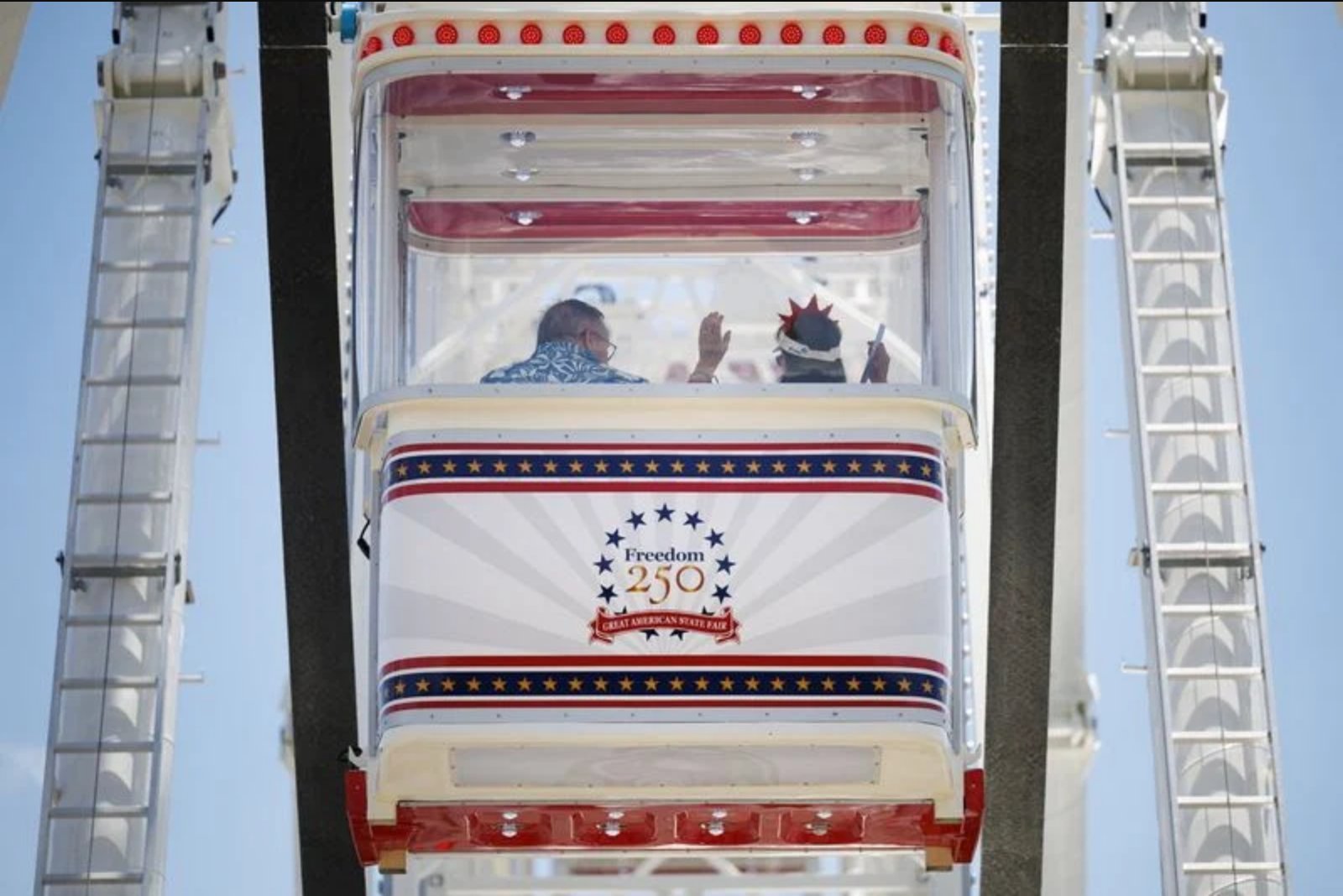
Washington, June 25 - The Great American State Fair debuted on the National Mall on Thursday, bringing a 110-foot (33.5-meter) Ferris wheel, a rodeo demonstration and an expansive assortment of traditional fair food to the capital as the first major event in a 16-day program marking the United States' 250th anniversary.
The fair occupies much of the 1.5-mile (2.5-km) promenade that links the U.S. Capitol to the Washington Monument. Organizers fenced off large stretches of the Mall to host temporary pavilions located between the Smithsonian museums, creating a seasonal fairground rather than permanent installations.
President Donald Trump formally launched the festivities on Wednesday night with a campaign-style rally, an event that followed the withdrawal of many scheduled performers who cited concerns that the celebration had taken on a partisan tone.
Visitors on opening day described a family-oriented scene centered on leisure and spectacle. "We are here to just celebrate America, a long journey that she has had," said Ashley, a visitor from Ohio who declined to give her last name. "My kids have been wanting that aerial view from the Ferris wheel. They are excited."
The fair is styled as a tribute to the state fairs that run across the country each summer, the sort of gatherings known for homemade quilts, butter sculptures and oversized pumpkins. It is one element in a broader set of events leading into the July 4 holiday, which marks the Declaration of Independence in 1776.
Unlike some policy changes proposed or pursued by the administration in Washington, the fair's pavilions are temporary. The president has been associated with a number of more permanent or large-scale projects, including a plan to remove the East Wing of the White House to construct a large ballroom, a rapid renovation of the National Reflecting Pool that faces the Lincoln Memorial and a proposed 250-foot (76-meter) arch near Arlington National Cemetery.
Politics and participation
Crowds at the fair included many people wearing red "Make America Great Again" hats, a frequent sight at political events in the capital. Public opinion data this month indicate widespread concern that the anniversary events have become politicized: a Reuters/Ipsos poll showed that a majority of Americans, including three-quarters of Democrats and half of Republicans, believe the 250th anniversary celebrations have grown too political.
Seven U.S. states, all governed by Democrats, declined to send official delegations to the Great American State Fair. Freedom 250, the organizers responsible for coordinating anniversary activities, said it would represent all 50 states at the event. Freedom 250 is a public-private partnership created by the White House to coordinate celebrations of the nation's 250th anniversary alongside federal agencies.
Among the states that opted out was Oregon. A spokesman for Governor Tina Kotek said: "The State of Oregon will not be participating in the Great American State Fair due to both the cost of participating in the Fair and growing concerns that the event in Washington, D.C., is shaping up to be a more partisan affair than originally presented."
Performer withdrawals and state boycotts have been linked by critics to a broader debate about how the anniversary should depict U.S. history. Civil rights advocates and other critics have said the administration is promoting a revisionist narrative that downplays episodes such as slavery, the abuse of Native Americans and the adverse effects of U.S. foreign policy. Observers at the fair noted that those chapters received little attention in the event's displays. The administration has argued that prior to this presidency there was too great a focus on those issues.
Attendee perspective and atmosphere
Despite the political backdrop, many attendees said their primary focus was on the fair's attractions and the social experience. "It’s a good family time on a nice summer day is how I see it," said Sarah Parker, who was visiting with her husband from neighboring Virginia. "It’s a good way to get a feel of the country."
For central-city operations and cultural institutions, the event represents a concentrated, short-term use of the Mall. The fencing and temporary pavilions alter usual access along the promenade and create a seasonal micro-economy of vendors, concessions and entertainment programming tied to the 16-day run.
The Great American State Fair is the first visible element of a nationwide schedule of commemorations leading up to Independence Day. Organizers, elected officials and visitors alike are now watching how attendance, state participation and public reaction evolve over the course of the multi-day celebration.