
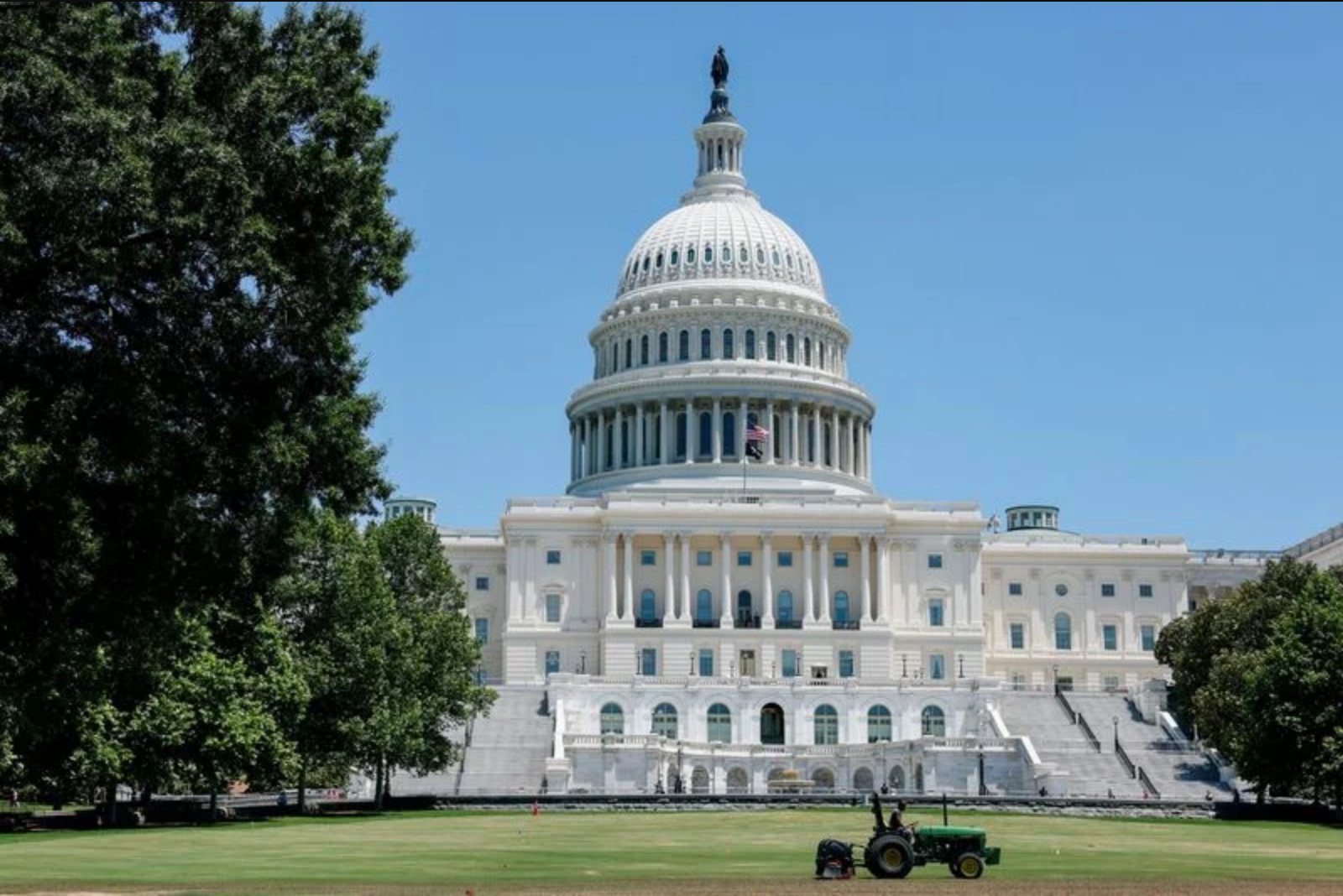
This week the U.S. Congress took the rare step of passing a War Powers concurrent resolution directing President Donald Trump to withdraw U.S. forces from hostilities with Iran. The Republican-led House approved the measure weeks ago and the Senate followed on Tuesday, marking the first occasion since Congress enacted the War Powers law in 1973 that both chambers have passed such a resolution.
The measure seeks to halt U.S. military activity tied to a conflict that began on February 28. Supporters argue the votes reaffirm Congress’ constitutional authority to authorize the use of force. Opponents counter that the resolution is symbolic and does not bind the president, setting up a confrontation over the relative powers of the legislative and executive branches.
How the War Powers law works
Congress adopted the War Powers Resolution in 1973 as a statutory constraint on presidential authority to commit U.S. troops without legislative authorization. Under the statute, the president must notify Congress within 48 hours of initiating hostilities. Military action begun without explicit congressional approval must be terminated within 60 days unless an emergency or other exception applies.
In the case of the Iran conflict, that 60-day window expired on May 1. President Trump responded by asserting that hostilities had been "terminated" through a ceasefire, a determination critics say is inconsistent with ongoing attacks and a blockade of Iranian ports. Legal experts cited in connection with the debate have said that the argument the hostilities were terminated could face skepticism in court.
The 1973 law also created a mechanism permitting Congress to bring privileged War Powers resolutions aimed at ending hostilities that have not been authorized by lawmakers. Privileged status allows those measures to be called up for a vote even without the backing of chamber leaders.
Legal and practical obstacles
Despite the bipartisan passage, opponents note that a concurrent resolution differs from a joint resolution or statute because it is not submitted to the White House for the president to sign or veto. That leads many critics to argue the measure lacks the force of law.
Legal scholars, however, say the question of whether such a resolution can be enforced remains unsettled. "The executive branch will likely ignore it on constitutional grounds, and it's not clear who might have standing to sue to enforce it," said Scott Anderson, a senior fellow at the Brookings Institution and senior editor of the online legal publication Lawfare, although he added that he expected someone would.
Representative Gregory Meeks of New York, who filed the House resolution, has maintained the view that the concurrent resolution is legally binding and has said he will pursue legal options to press the administration to comply with Congress’ decision.
Why lawmakers pursued the resolution
Sponsors contend the U.S. Constitution vests in Congress alone the power to authorize military engagements. They acknowledge, however, that there is substantial precedent for presidents ordering short-term military operations to address immediate threats without prior congressional authorization. Even so, supporters say the recent close votes underline lawmakers’ desire to reclaim their war-declaring authority and to check the pace and scope of the White House’s military decisions.
Backers also view the measures as a political and institutional signal. Multiple war powers measures have been filed in both chambers since the onset of exchanges between the United States, Israel and Iran, and while many have failed, the recent narrow margins are being cast by proponents as evidence that Congress is attempting to reassert oversight.
Not all in Congress agree. As recently as late Wednesday night, Senate Republicans narrowly blocked a resolution, with two members switching their votes after an angry lunch meeting at which President Trump criticized them. Opponents of the War Powers measures describe the votes as political posturing they say could embolden U.S. adversaries and improperly encroach on the president's commander-in-chief authorities.
Voices from the legal and policy community
Katherine Yon Ebright, a war powers expert at the Brennan Center for Justice at New York University, said the House-passed war powers resolution "sends a strong signal to the president that lawmakers across the aisle think that this war has gone on for too long and violates the war powers resolution as well as the Constitution."
That perspective captures why the concurrent resolution has drawn support from both parties even as its legal effect is disputed. Advocates see it as a formal expression of congressional will; critics see it as an institutional overreach with limited practical consequence.
Political stakes and public opinion
The conflict and the congressional response arrive in the lead-up to November elections that will determine whether Republicans retain control of Congress. Polling released this week by a national survey found that only one in four Americans believe the war is worth its costs, and a majority of respondents said they doubted a truce with Tehran would endure. The poll also showed President Trump's approval rating had fallen to 34% amid the hostilities and the political debate over U.S. engagement.
Those numbers illustrate the political risk the dispute presents for both legislative and executive leaders as they weigh legal options and public messaging in the months ahead.
Key points
- Both the House and the Senate have approved a War Powers concurrent resolution directing President Donald Trump to end U.S. military activity tied to hostilities with Iran that began on February 28.
- The 1973 War Powers Resolution requires presidential notification within 48 hours of hostilities and termination of unauthorized military actions within 60 days, a deadline that supporters say was not credibly met when President Trump declared hostilities "terminated" by a ceasefire despite ongoing attacks and a blockade of Iranian ports.
- Legal enforceability of a concurrent resolution is contested; experts say the executive branch could ignore it and that it is unclear who would have standing to sue to force compliance.
Risks and uncertainties
- Legal uncertainty - Courts may be asked to weigh in, but who could sue to enforce a concurrent resolution is unclear; this affects defense and legal services sectors.
- Continued hostilities - Ongoing attacks and a blockade of Iranian ports despite congressional action could sustain geopolitical and market volatility, with implications for shipping and trade sectors.
- Political fallout - The dispute could influence voter sentiment and election outcomes in November, affecting political risk assessments for industries sensitive to policy shifts.
Tags: Iran, Congress, War, Law, Elections