
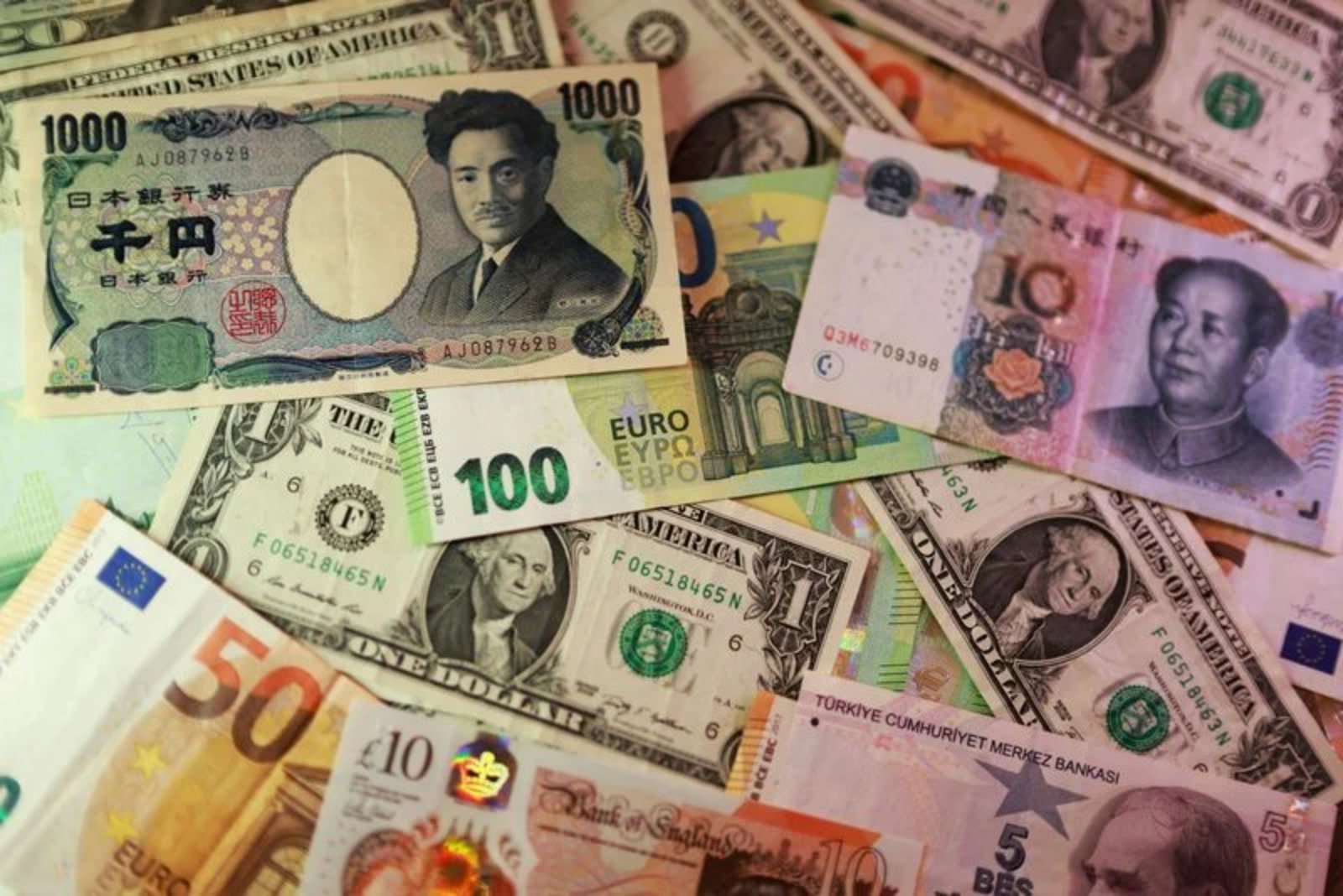
The Japanese yen hit its weakest level in four decades on Wednesday, slipping to 162.77 against the U.S. dollar as the greenback gained momentum from surging Treasury yields. Market participants are preparing for a critical U.S. employment report while simultaneously increasing their wagers that the Federal Reserve will implement a rate hike in the near future. This peak in the dollar-to-yen exchange rate surpasses the threshold that previously triggered Japanese government intervention to support the struggling currency.
Chidu Narayanan, who serves as the head of macro strategy for Asia-Pacific at Wells Fargo, indicated that the market is approaching a zone where action becomes likely. Narayanan emphasized that the focus is not on a specific numerical target but rather on exchange rate levels where the Ministry of Finance might feel compelled to step in to preserve its credibility. Traders are speculating that the upcoming U.S. public holiday on Friday could provide an ideal window for Tokyo to execute a yen purchase, noting that thinner liquidity during this period could amplify the impact of any intervention.
The dollar maintained its aggressive stance across broader markets, propelled by an overnight jump in U.S. Treasury yields. The euro declined by 0.07% to trade at $1.1413, while the British pound slipped 0.09% to $1.3252. Against a basket of major currencies, the dollar remained steady at the 101.24 mark. This strengthening of the greenback followed a notable intraday rise of 9 basis points in the 10-year U.S. Treasury yield on Tuesday, with the yield ultimately closing the session approximately 4.8 basis points higher. The 2-year yield also advanced by 3 basis points in the prior session, standing at 4.1702%.
Analysts have not identified a single clear catalyst for these rapid market moves, suggesting that month-end positioning may have contributed to the volatility. Ahead of the U.S. nonfarm payrolls report scheduled for Thursday, overnight data revealed that U.S. job openings edged up to a two-year high in May. Despite this increase, subdued hiring figures have negatively influenced consumers' perceptions of the labor market.
Ray Attrill, head of FX strategy at National Australia Bank, noted that all available evidence and the Federal Reserve's own assessment indicate that the labor market remains resilient. Consequently, Attrill argued that the labor market is not providing any signals that would justify rate cuts. This perspective is reflected in trader behavior, with the CME FedWatch tool showing a 67% probability of a Fed rate hike in September, a significant increase from the 20.5% probability recorded just a month ago.
Prashant Newnaha, a senior rates strategist at TD Securities, observed that the window for advocating no policy change is narrowing. He highlighted that the Fed's stance is viewed as hawkish, inflation remains well above target levels, and U.S. economic data continues to exceed expectations. Attention for the upcoming trading day shifts to Federal Reserve Chair Kevin Warsh's scheduled appearance at the European Central Bank Forum on Central Banking in Portugal.
Attrill from NAB suggested that market participants will focus heavily on whether Warsh offers any forward guidance. However, given his lack of interest in providing such guidance in June, Attrill believes it is unlikely that Warsh will change his approach. In other currency pairs, the Australian dollar fell 0.18% to $0.6907, and the New Zealand dollar decreased by 0.04% to $0.5674.