
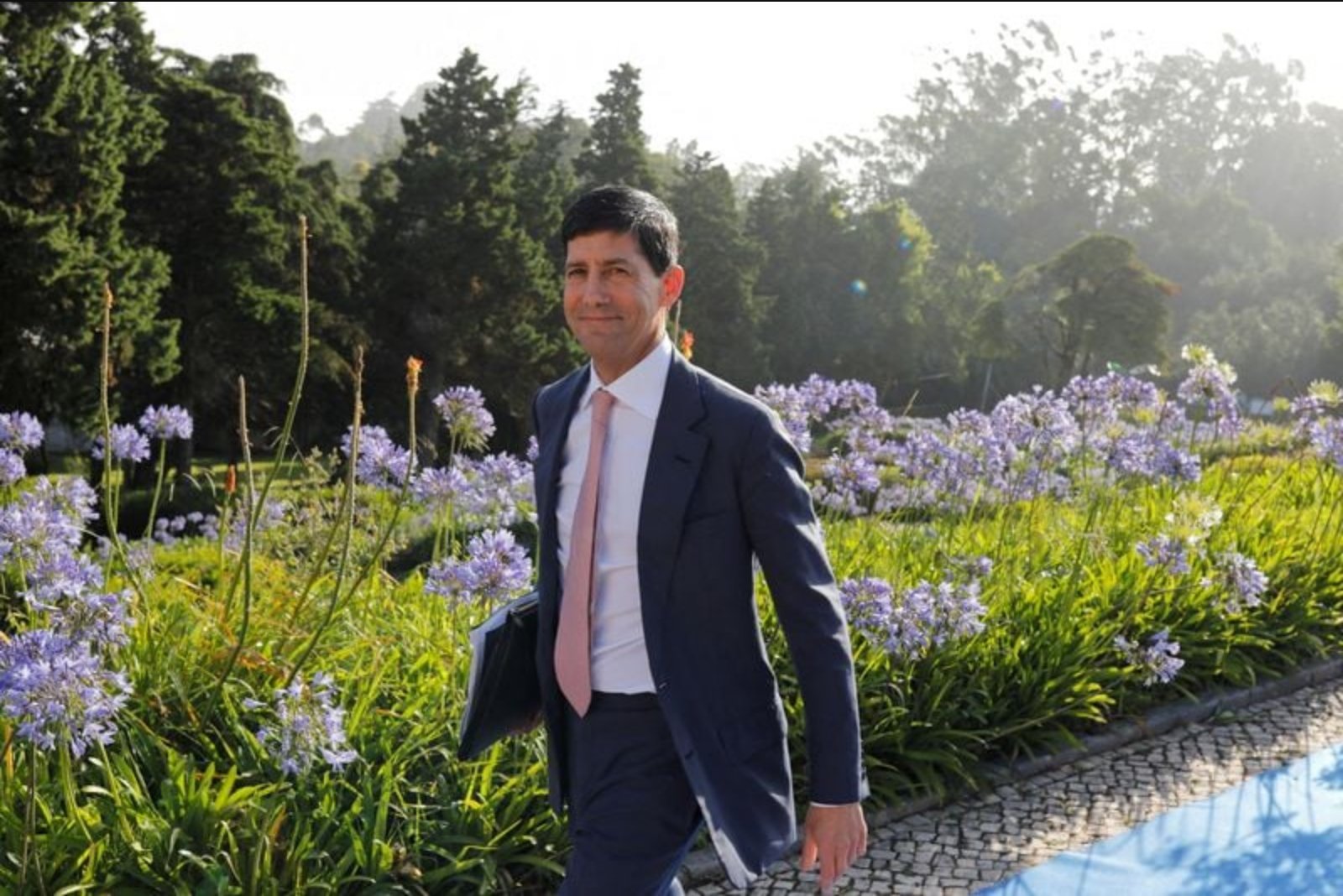
U.S. Federal Reserve Chair Kevin Warsh will make a rare international public appearance when he joins a question-and-answer session at 9 a.m. EDT (1300 GMT) at the European Central Bank's annual economic forum in Sintra, Portugal. He will share the stage with ECB President Christine Lagarde, Bank of England Governor Andrew Bailey and Bank of Canada Governor Tiff Macklem.
The leaders arrive at a moment when lowering inflation is a common objective, but their policy emphases and public stances vary. All three of Warsh's panel counterparts were among signatories to an unprecedented letter earlier this year defending former Fed Chair Jerome Powell in his confrontation with the Trump administration over the institution's independence. That issue resurfaced this week when the U.S. Supreme Court allowed Fed Governor Lisa Cook to remain in her post despite President Donald Trump's announcement last year that he had fired her.
Powell has been widely praised by his peers for standing firm in that episode, and his defenders call his role important to sustaining the Fed as a stabilizing presence in global finance. By contrast, Warsh has generally been reticent about directly addressing the attempted firing of Cook or the legal pressure placed on Powell. President Trump named Warsh to replace Powell; Powell continues to serve as a member of the Fed's Board of Governors while Warsh formally assumed the chairmanship in late May.
Context of Warsh's public positions
Wednesday's Sintra appearance will be Warsh's first substantial public engagement beyond the June 17 press conference that followed his initial policy meeting as Fed chair. At that meeting the central bank left interest rates unchanged. In his subsequent remarks Warsh adopted a hawkish tone, reaffirming a commitment to reach the Fed's 2% inflation objective.
Investors responded to that tone by raising the perceived probability of a U.S. rate increase as soon as September, reflecting a view that the Fed may be on a path distinct from some other major central banks. The Fed's posture has been described as a middle course in the wake of the ECB's recent decision to raise interest rates, while authorities in England and Canada have signaled greater reluctance to tighten policy given domestic economic weakness.
Analysts at Yardeni Research captured market reaction before Warsh's Sintra appearance, writing: "We were surprised by Warsh's hawkishness," and noting he would have an opportunity either to clarify his stance or "more likely reiterate that he is as much as possible exiting the business of 'forward guidance' altogether."
Under Warsh the initial policy statement removed explicit forward guidance on the likely path of rates. In his press briefing the chair expressed a desire to reduce reliance on detailed signaling, saying such guidance can make the central bank less nimble and may lead investors to be less independent in their expectations.
Transparency, communication and differing styles
Warsh's approach represents a break from a long-standing culture at the Fed in which frequent commentary on economic conditions and expectations has been regarded as part of public accountability. Some of his international peers, including ECB officials, have also pared back guidance, yet observers note Warsh went further by declining to offer much detail about his outlook for the economy during his June press briefing, or on how specific developments would alter Fed responses.
"I think it is important that we are transparent in communicating how we make decisions," Cleveland Fed President Beth Hammack said in a CNBC interview on the sidelines of the Sintra conference, adding: "If inflation continues to persist and I don't see any restraint from policy, we may need to raise rates."
That comment underscores a tension present in Sintra's conversations: officials seek to communicate effectively while preserving the flexibility to respond to incoming data.
Scope of central bank work - the climate question
Beyond the short-term fight against inflation, differences also emerge over how far central banks should reach into issues like climate change. Warsh has criticized what he calls Fed "mission creep" and has indicated he plans to set clearer boundaries around the Fed's activities. In contrast, several international peers view climate-related risks as integral to understanding financial stability.
Following President Trump's reelection, Powell reduced the Fed's active involvement in multilateral efforts among central banks to study and manage climate-related risk. That pullback reflects a broader debate in the United States; some Republican officials criticized central bank focus on climate as "woke" and suggested it unfairly targets fossil fuel companies.
The Bank of England explicitly links climate-driven effects to financial stability on its public website, warning: "When left unmanaged, these effects can pose a threat to the stability of the wider financial system, and the safety and soundness of firms we regulate." Such language illustrates why the question of mission scope remains a live policy fault line among major central banks.
What to watch in Sintra
Warsh's session with Lagarde, Bailey and Macklem will test how far the new Fed chair will go in reconciling a more constrained public posture about policy with the need to address shared global concerns. The forum also provides a public stage to observe how political pressures touching the Fed's independence are discussed among peers who have recently defended that principle.
Investors, market participants and financial institutions will be watching for signals about the likely course of interest rates and the role central banks will play in longer-term risks such as climate. Those expectations will feed into borrowing costs, asset valuations and risk assessments across banking, capital markets and energy-sensitive sectors.
End of article.