
Overview
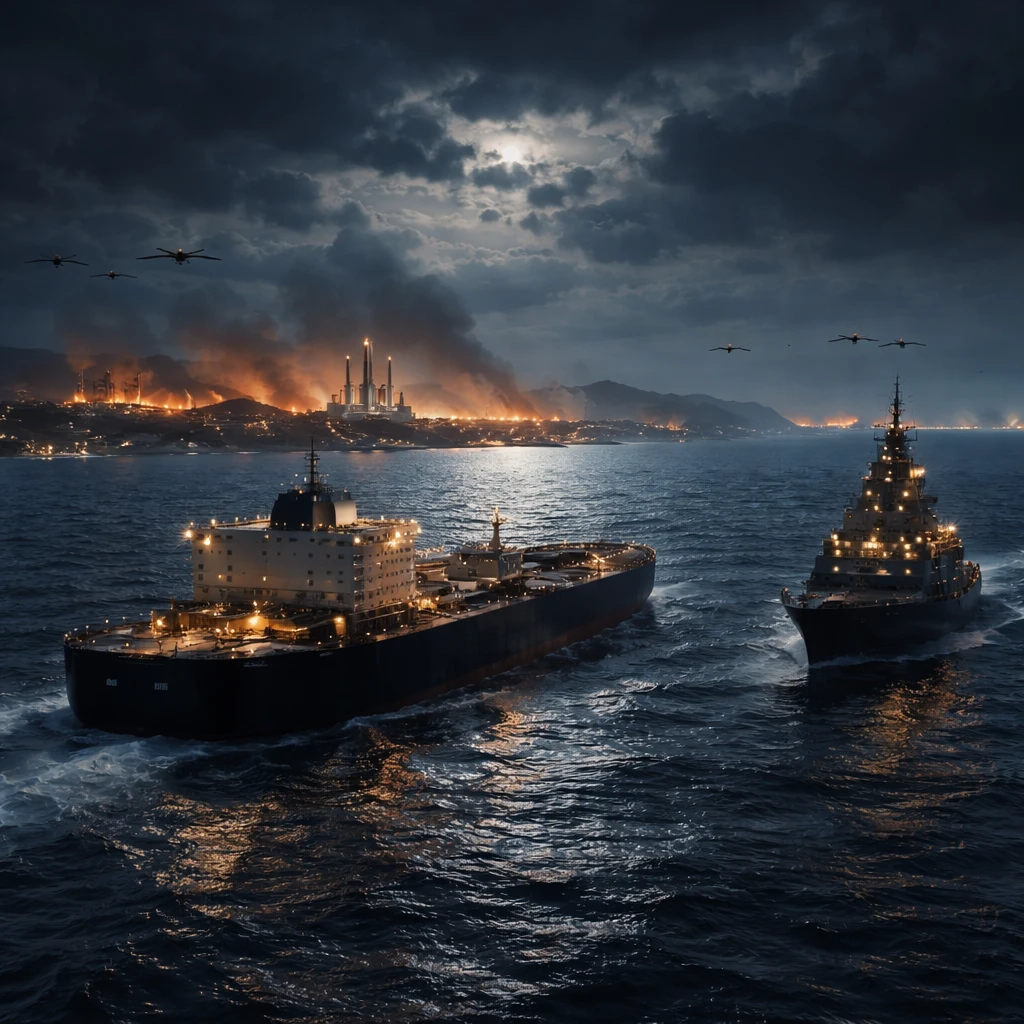
The United States has declared that it will strike bridges and power facilities in Iran in response to any attacks by Tehran on ships in the Strait of Hormuz, according to a statement issued by the president on social media. The conflict has continued to escalate even as third-party mediators press for a ceasefire and diplomatic arrangements.
Presidential warning
"From this point forward, any time the Islamic Republic of Iran shoots at a ship in the Strait of Hormuz, whether it be by Missile, Rocket, Drone, or any other device or weapon, the United States will bomb and destroy ONE BRIDGE OR POWER PLANT, including those located next to, or in, the Capital City of Tehran."
The post lays out a clear tit-for-tat response: any attack on shipping in the Hormuz corridor by Iran would prompt the United States to target a single bridge or power plant, including those near Tehran.
Diplomatic maneuvering
Officials working to secure a diplomatic resolution remain active, with media reports indicating mediators are attempting to revive talks to contain the conflict as it threatens to spread across the Persian Gulf. Iranian Interior Minister Eskandar Momeni traveled to meet Pakistani mediators this week, and a senior Iranian official cited by Reuters said Iran had been presented with a proposal for a 10-day ceasefire. That proposal was framed as an effort to preserve a framework deal intended to halt hostilities which, the report states, the U.S. and Iran had signed in June.
Despite these efforts, there has been no immediate breakthrough. The president indicated skepticism about new negotiations, saying Washington had "no interest in meeting" with Iran. At the same time, U.S. Secretary of State Marco Rubio, speaking at a gathering of Southeast Asian foreign ministers in the Philippines, said the administration remains open to diplomacy but questioned Iran's commitment to talks. He said, "If they’re serious, we’re serious. If they’re not, then we will do what’s necessary to protect our interests, and also the interests of our allies," and cautioned against allowing Tehran to control oil flows through the Strait of Hormuz, which he said could set a dangerous precedent for other global chokepoints.
Continuing military exchanges
Militarily, the confrontation has intensified. U.S. forces completed an 11th straight night of strikes on targets across Iran, carried out in the hours before Wednesday. The president also warned he could strike a suspected Iranian nuclear site known as "Pickaxe Mountain," saying the U.S. could hit the facility "pretty soon, and very heavily." Iranian officials responded that an attack on nuclear facilities would dramatically expand the conflict, and reports indicate Tehran has moved thousands of uranium-enrichment centrifuges to that site, which is located deep inside a mountain.
Tehran has struck back against U.S. interests in the region, with reported attacks on U.S. military locations in Bahrain, Kuwait and Jordan, and an attack on a tanker in the Strait of Hormuz, according to Reuters. Separately, Iran-backed Houthi forces in Yemen have informed shipping companies that vessels loading or discharging Saudi oil could be targeted, a development that could open a new front affecting crude flows through the Bab el-Mandeb Strait into the Red Sea.
The president said the passage through Bab el-Mandeb has not been closed, but vowed the United States would "take care of it" if the strait were to be shut. In response to the threats, three oil tankers carrying Saudi crude altered course on Tuesday, opting to transit the Suez Canal rather than sail past the Yemeni coast.
Market reaction
Concerns over supply disruption have pushed oil prices to roughly six-week highs, magnifying fears of an energy shock that could prompt inflationary pressure and influence central bank policy on interest rates. The movement in crude prices reflects heightened market sensitivity to any escalation that might impede flows through strategic maritime chokepoints.
Cost to date and funding request
At a congressional hearing, Defense Secretary Pete Hegseth told lawmakers the cost of the U.S. campaign against Iran has risen to $37.5 billion. That figure, he said, accounts for payroll, operations, maintenance and other anticipated costs through the end of the fiscal year in September. The testimony occurred as the administration pressed Congress for a substantial supplemental funding package - a $90 billion request in which the bulk of funds were designated for the Iran conflict.
Media reports published before Hegseth’s remarks suggested the eventual price tag could be much larger. NBC News reported that the Pentagon's internal overall estimate ranged between $80 billion and $100 billion, and indicated much of those higher costs would stem from repairing bases damaged by Iranian strikes.
Where things stand
For now, hostilities continue alongside diplomatic outreach. Mediators are reported to be presenting ceasefire proposals, but neither side has credited negotiations with immediate progress. Military operations have continued on both sides, with consequences already visible in regional shipping patterns and energy markets. Lawmakers are weighing a major funding request as officials provide differing estimates of the campaign's fiscal burden.
Reporting note: Additional correspondents contributed to the coverage included in these briefings.