
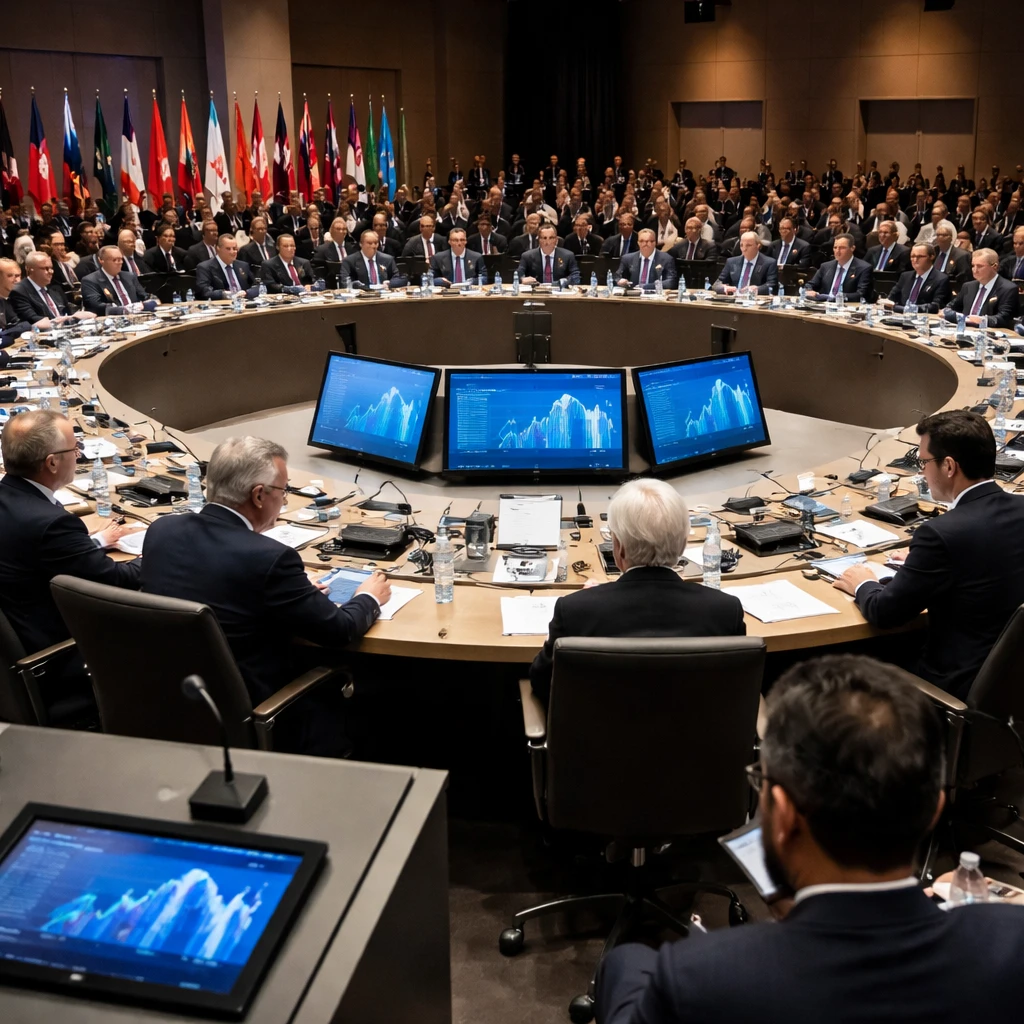
ASHEVILLE, North Carolina, Aug 31 - U.S. officials used the opening of a two-day G20 finance meeting to press fellow finance ministers and central bankers to intensify efforts to lift global growth, arguing expansion is the most effective way to address mounting concerns about worldwide debt levels.
Delegates gathered against a backdrop of multiple stresses on the world economy: a spike in energy prices related to the Iran war, renewed friction over China’s sizeable goods trade surplus, and questions about how a major investment push in artificial intelligence will ultimately affect demand and capital allocation. Global debt reached a near-record of about $353 trillion earlier this year, a figure that has heightened worries about financial stability and prompted some investors to reassess even traditional safe assets such as U.S. Treasuries.
U.S. Treasury Secretary Scott Bessent set a clear tone at the start of the talks, saying growth is the path out of the debt overhang. He framed the problem in historical terms, referencing the post-2007-09 global financial crisis period and the pandemic-era buildup of liabilities, and warned that expansion remains the primary solution. "The world is awash in debt post-GFC, post-COVID, and the only way for us to get out of this is to grow our way out of this," he said, adding that he believed many leaders were open to that message.
Federal Reserve Chairman Kevin Warsh, participating in his first international economic policy meeting since assuming office in May, said he came to the G20 to gain clearer perspectives on growth prospects across member economies. He described the current environment as one marked by a pronounced uplift in investment activity, calling it "one of a global investment surge," and said that trend has reversed what had been characterized as a "global savings glut."
The meeting schedule included a session that paired ministers and central bankers with private sector leaders, underscoring an administration view that private-sector dynamism - supported by deregulation and expanded energy production - is central to stronger growth. At that session, Bessent argued that global growth has lagged potential for too long and said some of those shortfalls are self-inflicted.
He pointed to a set of barriers the U.S. Treasury has flagged for G20 action, listing "excessive regulatory and administrative burdens, poorly designed financial incentives and tax systems, insufficient public and private investment, internal market fragmentation, and gaps in workforce skills and mobility" as obstacles member countries should address.
Bessent also highlighted how strong U.S. growth has been supported by large investments in AI infrastructure. He said those investments have helped lift U.S. Treasury yields by absorbing savings that previously flowed into Treasuries and kept borrowing costs lower.
Against rising commentary about U.S. debt, Bessent downplayed the idea of immediate market stress linked to the country's fiscal position, stressing the ongoing expansion of the U.S. economy as a stabilizing factor. "First of all, I’m not sure where the bond market turmoil is," he told Reuters in a Sunday interview, and added, "What’s important, too, is that we are growing."
A major U.S. objective at the talks is to build support for isolating Iran - including the prospect of secondary sanctions - to try to end a prolonged stand-off around the Strait of Hormuz that has disrupted energy flows. Washington also intends to press G20 members to reassess trade relationships with China in an effort to reduce global imbalances and encourage Beijing to shift the economy away from export-led growth toward domestic demand.
On the trade imbalance with China, Bessent said the scale of the surplus is unsustainable. "The world cannot have a China with a $1.2 trillion trade surplus," he said in the interview, noting both the weakness of China’s domestic economy and the need for rebalancing. He confirmed having had a "very robust meeting" on Sunday with China's central bank governor Pan Gongsheng but declined to provide more detail about that discussion.
Bessent also said he would meet with his Canadian counterpart on the sidelines. That meeting comes as Canada is preparing counter-tariffs set to take effect in the days following the collapse of negotiations to avert U.S. punitive levies.
Contextual note - Delegates at the G20 are confronting a complex mix of cyclical and structural pressures. High global debt, energy market volatility linked to geopolitical tensions, large persistent trade imbalances, and a pronounced surge in investment - particularly in AI infrastructure - combine to shape both near-term market behavior and medium-term policy priorities.
What follows from the discussions - In broad terms the U.S. message focuses on removing policy impediments to private-sector-led growth, pushing for trade rebalancing with China, and seeking coordinated action to address energy disruptions stemming from Iran-related tensions. The outcomes of these conversations will depend on the willingness of other G20 members to engage on each of these fronts.