
Economy June 27, 2026 08:25 PM

U.S., Mexico Launch Sterile Fly Facility to Halt Screwworm Reemergence

Cross-border agricultural initiative aims to eradicate livestock pest threatening billions in production, with funding and capacity ramping up across North America.

By Nina Shah
Share
Twitter Reddit Facebook LinkedIn

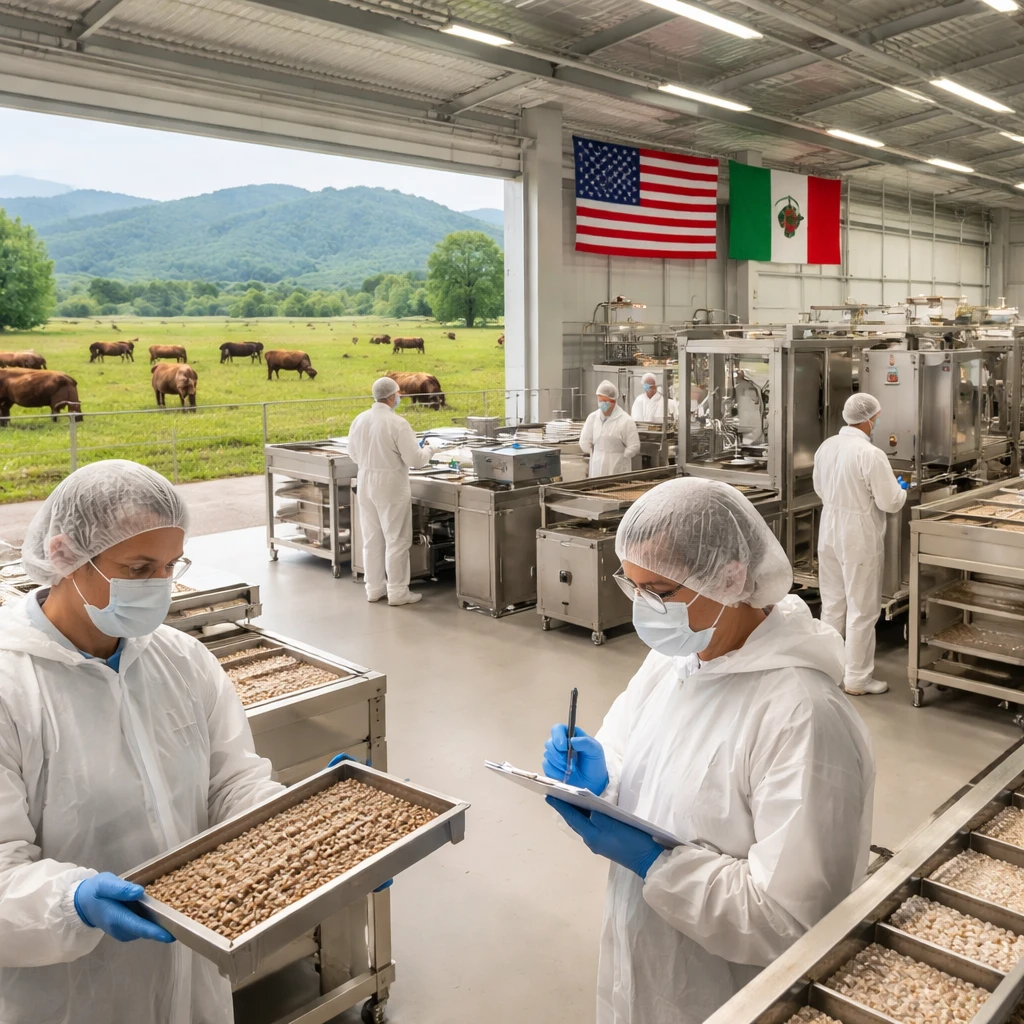
The United States and Mexico have jointly inaugurated a new production facility in southern Mexico dedicated to manufacturing sterile flies designed to combat the reemergence of the New World screwworm. This parasite, which has infested cattle wounds and triggered thousands of cases in Mexico since 2024, recently made its first appearance in U.S. domestic livestock in nearly five decades. The new plant in Metapa is expected to significantly boost regional production capabilities, working in tandem with existing operations to suppress the parasite population through targeted aerial releases.

U.S., Mexico Launch Sterile Fly Facility to Halt Screwworm Reemergence
Summarize with
ChatGPT Perplexity Claude Grok Gemini

Key Points

  • <strong>New Production Capacity:</strong> The opening of the Metapa facility in southern Mexico will add up to 100 million sterile flies per week to the regional supply, combining with Panama's output to reach 200 million weekly. This directly supports the agricultural sector by scaling up biological pest control capabilities.
  • <strong>Significant Funding Allocation:</strong> U.S. authorities have provided an additional $84 million in funding to combat the outbreak. This capital injection is directed toward livestock protection and agricultural trade stability, mitigating potential annual losses of over $700 million for the U.S. agriculture industry.
  • <strong>Phased Implementation Strategy:</strong> Production at the new facility will ramp up from 30 million pupae in July to 60 million in August, and 100 million by November. This structured approach ensures a steady supply of sterile flies for aerial distribution, impacting livestock management practices and veterinary supply chains.

In a coordinated effort to neutralize a growing threat to North American agriculture, the United States and Mexico have opened a specialized facility in Metapa, a location situated near Mexico's southern border. The primary objective of this new center is to mass-produce sterile flies as a biological control measure against the New World screwworm, a livestock pest that has recently resurfaced as a critical risk to cattle herds across the continent, according to reports from Saturday.

The Metapa facility is scheduled to achieve a production capacity of up to 100 million sterile flies per week once it reaches full operational status. This output will be combined with the weekly production from an existing facility located in Panama, bringing the total combined regional supply to approximately 200 million sterile insects per week. Planners have indicated that additional facilities are under consideration to further expand this production ceiling in the near future.

The biological control method employed here is the sterile insect technique, a proven strategy that successfully eradicated the screwworm from North America decades prior. The process involves releasing large quantities of sterilized male flies into affected zones. When these males mate with wild female populations, it prevents the emergence of subsequent generations, effectively breaking the reproductive cycle of the parasite.

The timing of this facility's opening addresses an urgent escalation in the infestation. The New World screwworm larvae attach to wounds on warm-blooded animals, causing severe damage to livestock. Since 2024, authorities in Mexico have documented thousands of infections. More recently, U.S. officials confirmed the first instances of the parasite affecting domestic livestock within the country in approximately 50 years, marking a significant reversal of previous eradication successes.

U.S. Agriculture Secretary Brooke Rollins highlighted the historical precedent of successful pest elimination achieved by both nations in the past. She expressed strong confidence that the current collaborative effort would similarly succeed in driving the infestation out of the region. To support these containment operations, U.S. Ambassador Ronald Johnson announced an additional allocation of $84 million in funding. This financial support is critical given the potential economic fallout, as officials warn that an unchecked, widespread infestation could impose costs exceeding $700 million annually on the U.S. agriculture sector.

The rollout of sterile flies from the Metapa center will follow a phased production schedule. The facility is expected to begin releasing 30 million sterile pupae per week starting in July. Production is then slated to increase to 60 million per week in August before achieving the full target capacity of 100 million by November. These insects will be transported by air to distribute them across the agricultural regions in both the United States and Mexico that are currently impacted.

Parallel to the Mexican operations, the United States is also constructing a separate sterile fly production facility within Texas. However, this domestic installation is not projected to begin its operational phase until late 2027. The joint initiative reflects a broader framework of cooperation between Washington and Mexico City on cross-border agricultural issues, focusing heavily on protecting livestock production networks and maintaining the flow of agricultural trade between the two nations.

Risks

  • <strong>Economic Exposure to Agriculture:</strong> The potential annual cost to the U.S. agriculture sector exceeds $700 million if the infestation spreads widely. This poses a direct financial risk to livestock producers and related agribusinesses, impacting commodity prices and production yields.
  • <strong>Operational Timeline Risks:</strong> The Texas facility is not expected to begin operations until late 2027. This gap in domestic production capacity relies heavily on current and planned international facilities, creating a dependency on cross-border logistics and supply chains during the critical interim period.
  • <strong>Persistent Biological Threat:</strong> The reemergence of the screwworm after a 50-year absence in U.S. domestic livestock highlights the vulnerability of agricultural systems to biological pests. Failure to contain the outbreak could lead to sustained infestations, requiring ongoing financial and operational commitments from both nations.

More from Economy

UK Directs £500 Million Investment Into Commando Force Modernization Jun 27, 2026 World Bank OKs $1.1 Billion Emergency Package for Bangladesh to Offset Middle East Price Shock Jun 27, 2026 ECB executive flags persistent upside inflation risk despite easing oil costs Jun 27, 2026 Bolivia abandons 15-year dollar peg, moves to flexible exchange-rate to tackle dollar shortages Jun 27, 2026 Supreme Court decision and ECB forum to shape Kevin Warsh’s early months at the Fed Jun 27, 2026