
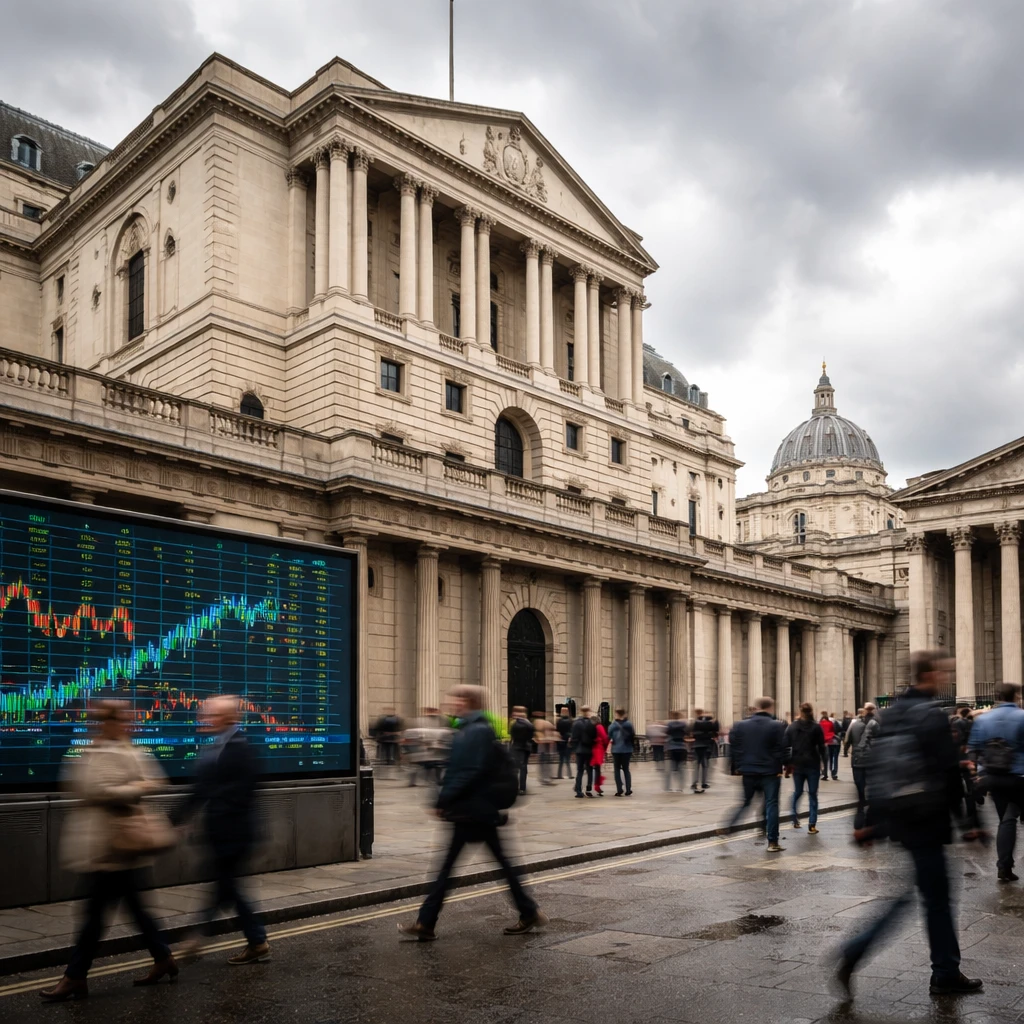
Britain's economy expanded faster than anticipated in September, with gross domestic product rising 0.2% from August, according to data that underscored the resilience of households and businesses even as inflation pressures mount. The reading compared with a forecast of 0.0%, and construction output rebounded by 0.8% after four consecutive monthly declines, while both services and industrial output each grew 0.2%.
The stronger-than-expected monthly figure helped lift third-quarter GDP growth to 0.7% from the previous quarter, matching the Bank of England's own projection. The data landed just days after the central bank raised its base rate for the first time in more than three years, a move that has intensified speculation about the pace of further tightening.
Ruth Gregory of Capital Economics said the September numbers increased the likelihood of a December rate increase, which would mark the Bank of England's second hike in as many meetings. Samuel Fuller, director of Financial Markets Online, noted that the figures allow the Bank to worry less about growth and concentrate on inflation, which it forecasts will reach 4.9% in 2027.
Not all economists see a December move as imminent. James Smith of ING expects another rate rise in February, and if inflation appears less problematic by next summer, he anticipates the Bank will return to cutting rates before the end of 2027, or early 2028 at the latest.
Consumer spending rose 0.6% in the third quarter despite ongoing pressure on household real incomes. Gregory said the increase suggests households are continuing to cushion the blow from higher energy prices by borrowing more and saving less. ING cautioned that utility bills are almost certain to rise by about 25% in January, making it difficult to see how household spending can avoid greater pressure.
Business investment climbed 0.4% in the quarter, its strongest three-quarter run since early 2022, as firms' appetite for artificial intelligence increased. The AI-related boost is concentrated: computer programming, information services and electronics manufacturing account for just 4% of output but contributed about 21% of third-quarter growth. ING noted that IT and professional services make up 14% of output but contribute half of annual growth, yet IT output fell in August and September, and professional services were much weaker in September.
Capital Economics doubts the strength will last, with inflation set to rise above 4% next year. It forecasts 0.2% growth in the fourth quarter and 1% in 2027, with risks skewed to the upside.
Deutsche Bank Chief UK Economist Sanjay Raja said GDP is up 1.8% so far this year, the best first three quarters since the pandemic rebound, and Deutsche Bank will likely revise up its 2026 growth forecast. The UK has lost its fastest-growing Group of Seven title to the United States, he added, but only just.
The mixed signals leave investors and policymakers weighing whether the economy can sustain momentum as borrowing costs rise and energy bills loom. For now, the September data have shifted the debate toward the possibility of another rate increase in December, even as underlying fragilities in certain sectors and the consumer outlook remain in focus.