
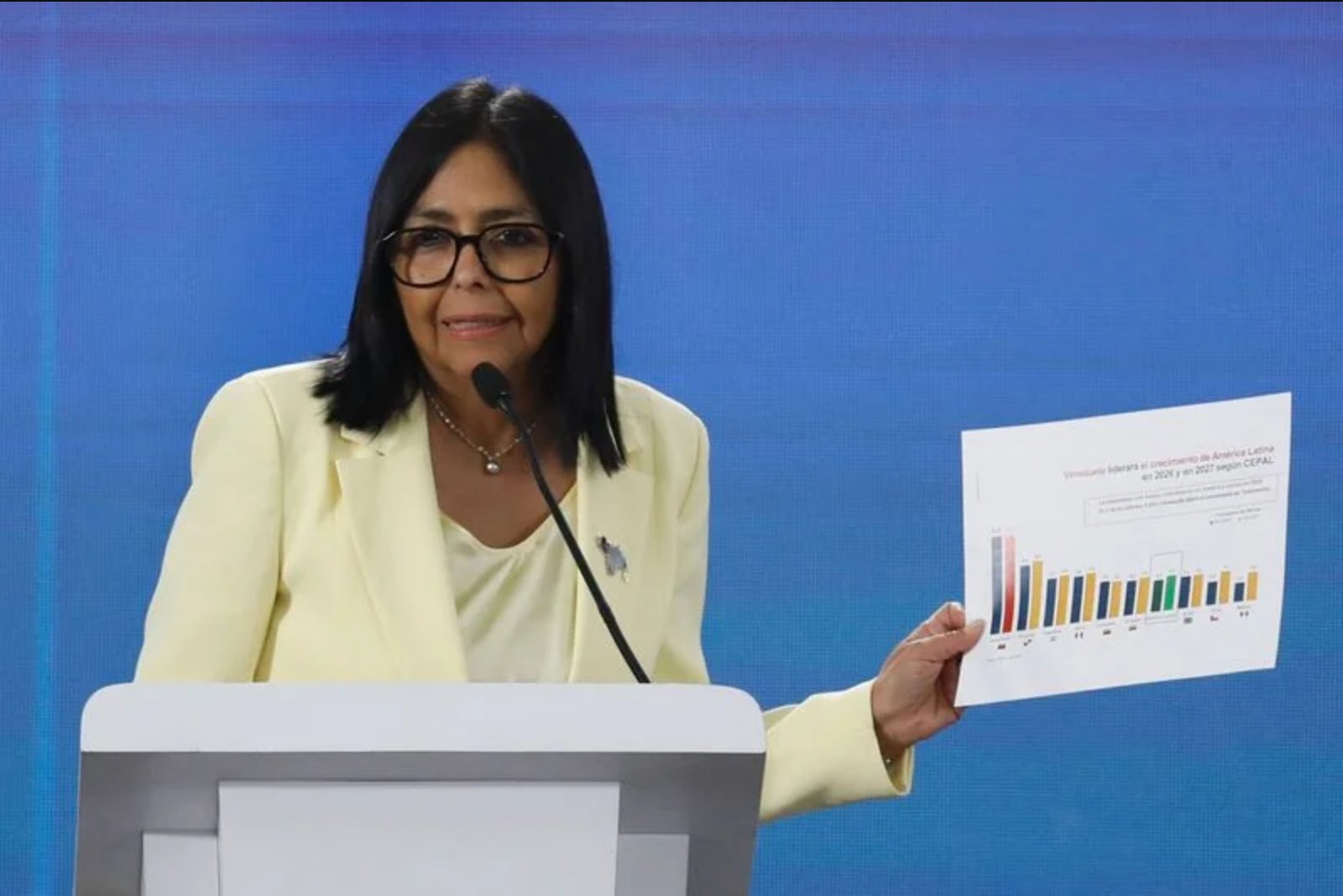
ANTALYA, Turkey, Nov 12 - At the COP31 climate conference being held on Turkey's Mediterranean coast, Venezuela's Acting President Delcy Rodriguez made a public defence of her country's plans to develop its oil industry while stating an acknowledgement of the importance of fighting climate change.
Addressing delegates, Rodriguez framed oil development as a matter of national sovereignty and economic development. "We reaffirm our sovereign right to strengthen our energy and oil industry as a driver of our national development," she said, adding that "it is possible to grow and protect the environment at the same time." Rodriguez also pointed to Venezuela's forests as providing an environmental benefit, saying they act as a "lung for the planet" by absorbing more carbon than the country emits.
Her comments come amid broader COP31 efforts in which many leaders and negotiators have urged governments to speed up transitions away from carbon-emitting fossil fuels. Those appeals aim to reduce global greenhouse gas emissions and limit warming in line with internationally agreed targets.
At the same time, Rodriguez's position aligns with ongoing United States initiatives to raise billions of dollars to boost oil production in Venezuela. Venezuela is a member of the Organization of the Petroleum Exporting Countries and efforts to increase its output have been discussed in the context of shifting energy supplies in the Western Hemisphere.
The Venezuelan acting president did not, in her remarks, address the effect that oil exported from the country has on global emissions.
In a separate intervention earlier in the day, British Prime Minister Andy Burnham emphasised the case for accelerating the move to clean energy, citing recent energy supply disruptions as evidence of vulnerability from reliance on external sources. He pointed to the impact of the US-Israeli war with Iran and Russia's war with Ukraine as examples that, in his view, underline the risks of depending on energy that countries do not control. "It is now plain for everyone to see that if we depend on energy we do not control, then we leave ourselves exposed to prices we cannot control," Burnham said. "The shift to clean energy is the only route to energy security."
Thursday marked the fifth day of the two-week COP31 conference, where representatives from nearly 200 countries are seeking agreement on steps to accelerate progress in tackling climate change. A United Nations report released last month, referenced during the talks, concluded that the world remains on track to exceed the 1.5 degrees Celsius warming limit that countries pledged to aim for under the 2015 Paris Agreement, a threshold identified as critical to avoiding the most severe impacts of climate change.
Contextual note - The day’s interventions highlighted a tension apparent at the talks: statements defending the expansion of national oil industries framed as sovereign development priorities contrasted with calls from other leaders to prioritise rapid decarbonisation and energy-system transformation.