
Economy August 31, 2026 04:06 PM

Trump Voices Support for Fed Chair Warsh, Urges Deep Cuts to Borrowing Costs

President praises Kevin Warsh and repeats call for historically low interest rates as policymakers face persistent inflation above target

By Hana Yamamoto
Share
Twitter Reddit Facebook LinkedIn

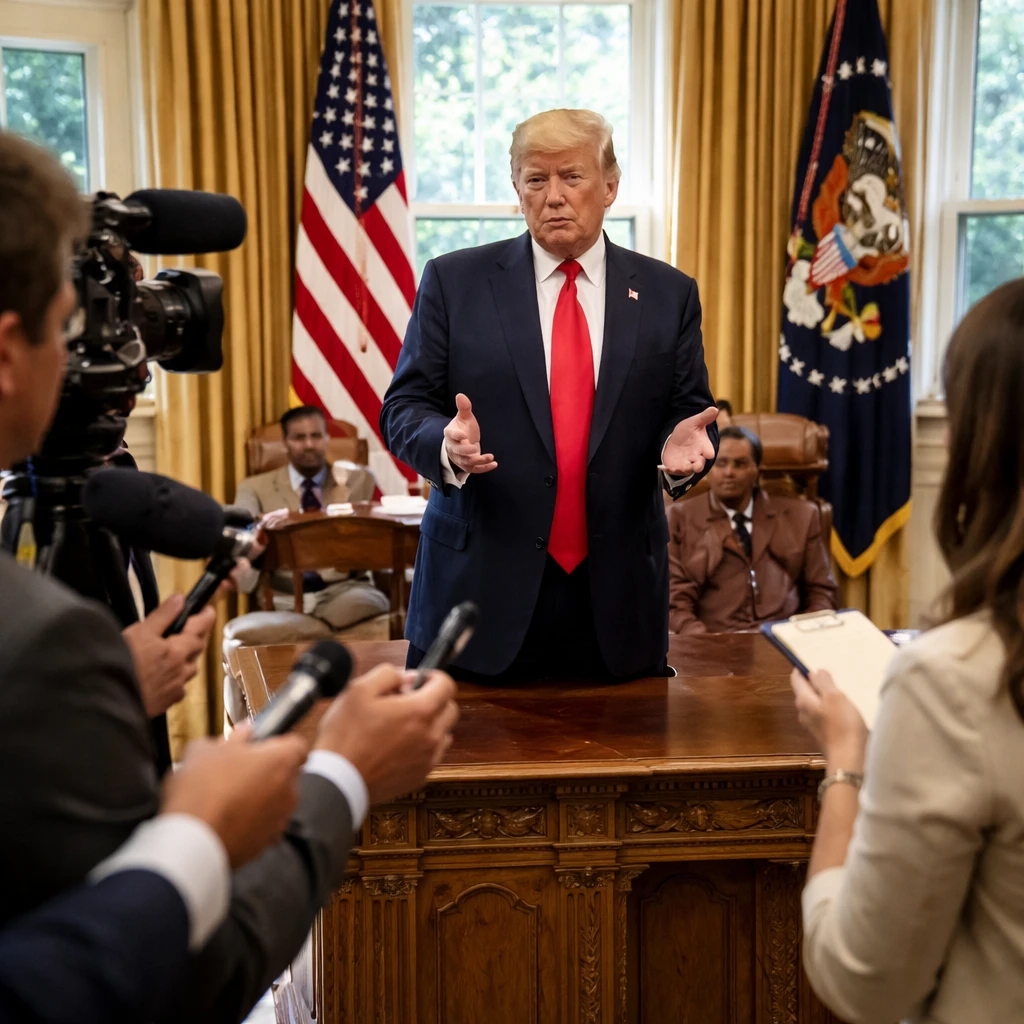
President Donald Trump told reporters in the Oval Office he has significant respect for Federal Reserve Chair Kevin Warsh and said Warsh "will do what he has to do" on interest rates. Warsh recently warned that the Fed will "have work to do" if policymakers do not gain confidence that inflation is on track to reach 2%. The Fed's preferred inflation gauge, the Personal Consumption Expenditures Price Index, remained at 3.7% year-on-year in July. Affordability is a key voter concern ahead of November's midterm elections, and central bankers will meet next month to consider interest rate moves.

Trump Voices Support for Fed Chair Warsh, Urges Deep Cuts to Borrowing Costs
Summarize with
ChatGPT Perplexity Claude Grok Gemini

Key Points

  • President Trump publicly expressed respect for Fed Chair Kevin Warsh and said Warsh "will do what he has to do" on interest rates - impacts political and financial market discourse.
  • Warsh warned the Fed will "have work to do" if policymakers lack confidence that inflation is moving toward the 2% target - directly relevant for monetary policy decisions.
  • The Fed's preferred inflation measure, the PCE Price Index, remained at 3.7% year-on-year in July, keeping inflation above target and influencing sectors such as housing, consumer finance, and broader consumer spending.

WASHINGTON, Aug 31 - President Donald Trump told reporters in the Oval Office on Monday that he holds "a lot of respect" for Federal Reserve Chairman Kevin Warsh and that Warsh "will do what he has to do" when it comes to interest-rate policy.

The president reiterated his long-standing push for lower borrowing costs, saying, "We should pay, in my opinion, the lowest interest rates anywhere in the world by far." Trump has repeatedly called for rate cuts as part of his broader economic messaging.

Chairman Warsh, in a recent public address, cautioned that the U.S. central bank will "have work to do" if officials do not secure the confidence that inflation is moving down toward the Fed's 2% objective. That warning underlines the tension between the Fed's inflation goal and political pressure to reduce rates.

On the inflation data front, the Fed's preferred gauge - the Personal Consumption Expenditures Price Index - remained at 3.7% on an annual basis for July. That reading sits above the central bank's 2% target and is central to policymakers' deliberations on monetary policy.

Affordability has emerged as a prominent concern for voters as the U.S. heads into the November midterm elections. With household budgets sensitive to borrowing costs and price levels, policymakers' choices on interest rates will be watched closely by both markets and political observers.

Officials from the Federal Reserve are scheduled to meet next month to consider any changes to interest-rate policy. That meeting will offer the central bank a forum to weigh recent inflation readings and the broader economic backdrop before deciding on a policy path.


Context and near-term watch points

  • The president publicly expressed respect for the Fed chair and urged substantially lower interest rates.
  • Fed Chair Warsh cautioned that further work is needed if confidence does not rise that inflation is heading to 2%.
  • The personal consumption expenditures price index stood at 3.7% year-on-year in July, remaining above the Fed's stated target.
  • With affordability a voter concern ahead of November's midterms, the upcoming central bank meeting next month will be closely observed.

Risks

  • Inflation remaining above the Fed's 2% target could compel policymakers to maintain tighter policy or delay cuts, affecting borrowing-sensitive sectors such as housing and consumer credit.
  • Political pressure for lower rates ahead of the November midterms may clash with the Fed's inflation objectives, creating uncertainty for markets and financial institutions.
  • The central bank meeting next month is an uncertainty point - its outcome will shape near-term expectations for rates and could influence equity and bond markets depending on the signaling.

More from Economy

SEC Signals Move to Shift Oversight of Shareholder Proposals to States Aug 31, 2026 Warsh’s Retreat from Silence: A Hint of Guidance Shifts Market Expectations Aug 31, 2026 U.S. Pushes Growth Agenda at G20 to Ease Global Debt Worries Aug 31, 2026 SEC Moves to Remove Federal Rule on Shareholder Proxy Proposals Aug 31, 2026 Bank of America Sees Mismatch Between Euro-Area Rate and Inflation Markets Aug 31, 2026