
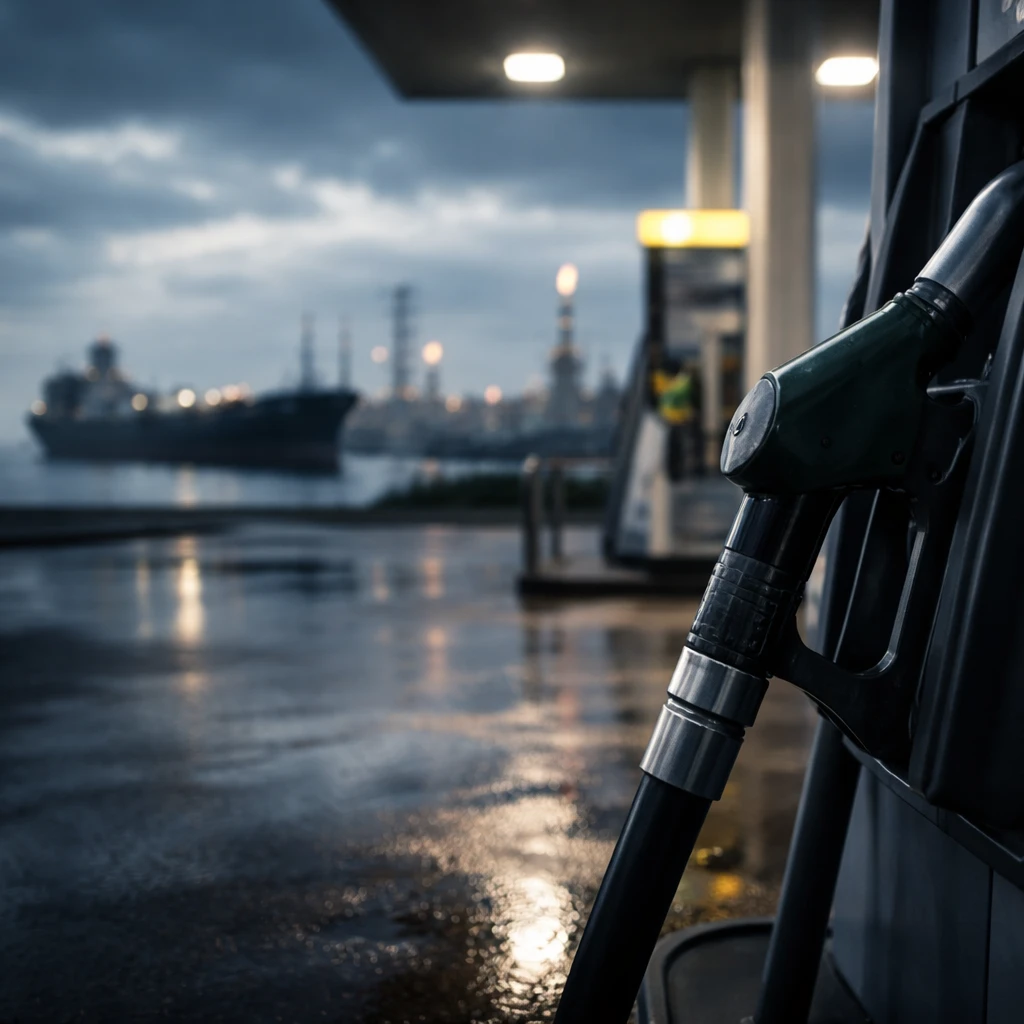
U.S. President Donald Trump said on Wednesday he has instructed the Department of Justice to open a probe into major oil companies, accusing them of failing to pass on lower crude costs to motorists at the pump.
In a social media post, Trump wrote: “The big Oil Companies are not dropping their price at the pump commensurate with the sharply lower prices they are paying for Oil… customers are being “gouged.” I have instructed the DOJ to immediately start looking into this.”
Market context
Oil markets have experienced a notable pullback over the past two weeks, a development the president linked to a diplomatic framework that reopened shipping lanes in the Strait of Hormuz after negotiations between the U.S. and Iran. The article notes Brent crude was trading roughly $6 above levels seen prior to the onset of the war in late-February.
Alongside the decline in crude, U.S. gasoline futures have been moving lower through June, with the most recent trade at $2.9256 a gallon.
Price dynamics at the pump
Gasoline prices had previously surged to a near four-year high following the onset of the U.S.-Israel war on Iran earlier this year, as global crude supply was disrupted by the conflict. Even with the United States operating as a net exporter of oil, the conflict raised the prices that domestic refiners paid for crude, a factor that translated into elevated pump prices.
President Trump’s directive to the DOJ frames the lower crude environment and falling gasoline futures as a backdrop for concerns that retail prices have not adjusted downward in line with input costs.
What to watch
- Whether the Department of Justice launches a formal inquiry and the scope of any review it conducts into pricing practices across oil companies.
- Movements in crude benchmarks and gasoline futures that could further influence retail pump pricing.
- The response from refiners and fuel retailers on price-setting and pass-through of lower crude costs.
Clear summary
President Trump has asked the DOJ to investigate oil companies for not reducing gasoline prices in line with falling crude costs, citing recent declines in oil after a U.S.-Iran framework deal reopened the Strait of Hormuz and noting gasoline futures have been falling, with the latest trade at $2.9256 a gallon. Gasoline had earlier climbed to a near four-year high after the onset of the U.S.-Israel war on Iran disrupted supplies, which pushed up costs for refiners and ultimately retail prices.
Key points
- Presidential directive - The president instructed the Department of Justice to examine whether major oil companies passed lower crude prices through to consumers.
- Market context - Oil prices fell over the prior two weeks after a U.S.-Iran framework deal reopened shipping via the Strait of Hormuz; Brent remained about $6 above pre-war late-February levels.
- Downward pressure on gasoline - U.S. gasoline futures declined through June, last recorded at $2.9256 a gallon, following an earlier near four-year high tied to war-related supply disruptions.
Risks and uncertainties
- Regulatory action - The extent and timing of any DOJ review are uncertain; a formal investigation could affect oil company operations and market sentiment.
- Price pass-through dynamics - It is unclear how quickly and fully refiners and retailers will translate lower crude and futures prices into lower pump prices.
- Ongoing market volatility - Geopolitical developments linked to the conflict referenced in the article could continue to influence crude and gasoline pricing, sustaining uncertainty for refiners, retailers, and consumers.