
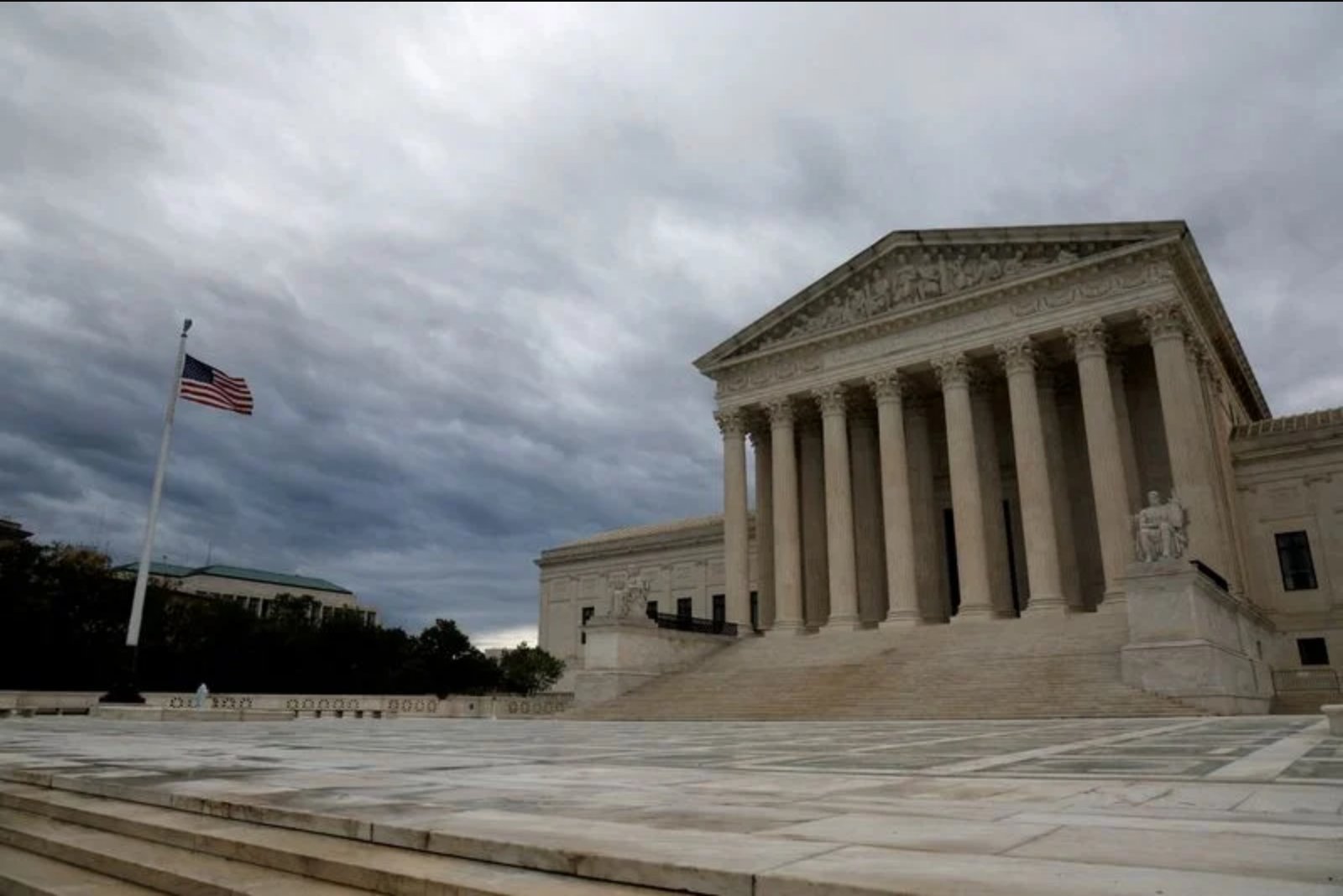
The Supreme Court concluded a nine-month term that produced a sweep of consequential rulings, many favouring conservative positions on an array of issues while also imposing meaningful limits on some presidential powers. The court, operating with a 6-3 conservative majority, issued decisions reshaping the balance between the White House and independent agencies, altering the landscape for immigration enforcement, changing the parameters of election law, and ruling in several high-profile social policy disputes.
Across a raft of high-stakes cases, the justices provided Republican objectives with significant legal momentum, yet they also denied the president unilateral authority in certain areas he had pressed to control more tightly. The outcomes reflect both an expansion of executive reach in parts of the administrative state and a constraint on presidential influence over monetary policy and trade instruments.
Presidential power
The court addressed three major cases in which the president sought substantially broader authority. He prevailed in one, but was rebuffed in two others.
In the most consequential victory for executive control, the justices overturned a longstanding 1935 precedent that had allowed Congress to shield leaders of certain independent agencies from at-will removal by the president. That decision, which arose from the firing of a Federal Trade Commission commissioner, invalidated tenure protections and now allows similar agency leaders to be removed by the president without the previously recognized safeguards. The ruling will permit greater direct political oversight of many regulatory agencies whose leaders had been insulated from summary dismissal.
However, the court denied two other significant requests to broaden presidential powers. The first setback concerned trade authority. The president had sought to rely on the International Emergency Economic Powers Act to impose a global tariff regime, arguing the statute allowed broad import taxes despite the law not using the term "tariff." The justices rejected that expansive reading, but left open the possibility of other legal avenues for imposing tariffs.
The second loss involved the Federal Reserve. The president attempted to remove a Fed governor after public frustration over the central bank's pace of interest-rate reductions. The court held that the governor at issue could remain in office despite the administration's effort to remove her, rejecting allegations that met the statutory "for-cause" standard for removal. The decision preserved the governor's position and limited the president's ability to dismiss Federal Reserve officials for policy disagreements.
Immigration
The court issued a series of three ideologically divided rulings that collectively eased the administration's path to implementing more restrictive immigration measures promised on the campaign trail. In those decisions, the conservative majority permitted the administration to strip temporary protections from hundreds of thousands of Haitian and Syrian nationals, backed the government's authority to physically block would-be asylum seekers at the U.S.-Mexico border, and made it simpler to deny reentry to lawful immigrants who face criminal accusations after traveling abroad.
At the same time, the court rejected a central presidential initiative on birthright citizenship. In a 6-3 decision, the justices declined to endorse the administration's effort - initiated by order on the president's first day back in office - to reinterpret the longstanding principle that anyone born on U.S. soil is a citizen. Chief Justice John Roberts, joined by the majority, wrote that there was "scant evidence" to support what the opinion called the administration's "dramatically revisionist view" of foundational U.S. law, preserving birthright citizenship as established under current legal interpretations.
Voting and elections
The court's decisions this term carry major implications for electoral politics ahead of closely contested midterm elections. On voting rights and election administration, justices produced a mixture of outcomes that will shape how states draw districts, how parties and candidates may coordinate spending, and how mailed ballots are handled.
In a significant rollback of portions of the Voting Rights Act of 1965, the justices allowed states broader latitude to redraw congressional districts. That ruling has been employed by several Southern and Republican-controlled states to eliminate majority-minority districts, a change that election analysts indicate could threaten the re-election prospects of many Black members of Congress.
On campaign finance, the court overturned a 25-year-old precedent that had capped how much political committees could spend in coordination with individual candidates. The decision followed a challenge brought during a 2022 Senate campaign by a high-profile Republican, and the justices concluded that restrictions on coordinated expenditures violated parties' freedom of speech.
Yet the court sided with protections for mail-in voting in an important defeat for the president and his allies. The justices ruled that states may count ballots that are postmarked by Election Day but received after polls close, preserving a practice that had drawn sustained criticism from some Republican quarters. The decision maintained legal space for mailed ballots in jurisdictions that employ them.
Social issues
On several hot-button social issues, the court largely backed conservative positions. In a pair of rulings on transgender issues, the justices upheld state laws in Idaho and West Virginia that bar transgender girls from participating on girls' school sports teams at public schools. In those cases, all three liberal justices joined the conservative majority in finding that the state statutes did not violate the federal civil rights law that prohibits discrimination in education on the basis of sex. The liberal justices dissented, however, from the majority's conclusion that the measures also do not run afoul of the 14th Amendment's equal protection clause.
In another notable decision, the court struck down a Colorado law that had prohibited psychotherapists from engaging in so-called conversion therapy with minors seeking to change their sexual orientation or gender identity. The ruling was 8-1, with two liberal justices joining the conservatives, and the majority found that the state law infringed on free speech protections guaranteed by the First Amendment.
On gun rights, the justices handed conservatives victories in multiple rulings. The court invalidated a Hawaii statute restricting carrying handguns in private businesses and, earlier in the term, unanimously held that a nationwide prohibition on firearm possession by the millions of Americans who use marijuana violated constitutional protections. Those decisions united some right-leaning gun rights advocates and some left-leaning civil libertarians.
What it means
The term's rulings expand presidential leverage over many executive branch agencies by eliminating tenure protections for agency leaders, even as the court limits presidential reach in areas such as the Federal Reserve and trade powers under the International Emergency Economic Powers Act. Immigration decisions provide the administration with new tools to restrict legal protections for certain groups while preserving birthright citizenship. Election-related rulings alter the boundaries of district-drawing and campaign finance coordination, but affirm the continued legality of counting certain late-arriving mailed ballots. And in social policy, the court largely aligned with conservative outcomes on transgender participation in school sports, conversion therapy restrictions, and gun-carrying rules.
Taken together, the term reflects a judicial approach that has bolstered many long-standing conservative aims, while placing clear legal constraints on a subset of presidential ambitions. The balance of these rulings will play out in the months and years ahead as agencies, states, and political actors adapt to the court's newly drawn boundaries.