
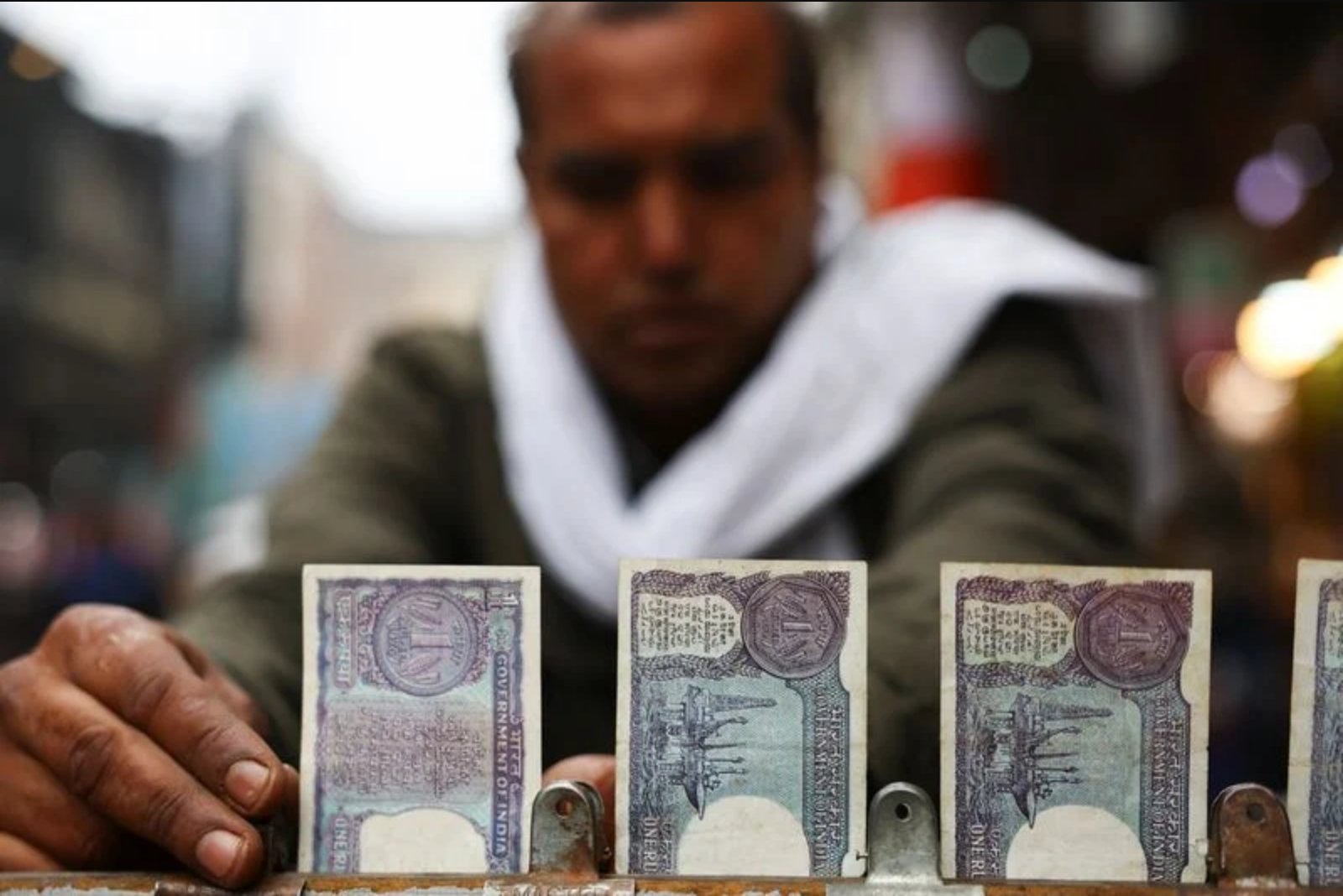
The Indian rupee is anticipated to open in a weaker position on Thursday. This follows a surprise hawkish tone from the U.S. Federal Reserve, which has significantly boosted market expectations for an interest rate hike later this year. Currency traders expect the Indian currency to open within the 94.70 to 94.75 range, a noticeable depreciation from its previous session close of 94.5250.
The Federal Reserve's policy committee demonstrated a sharper outlook on monetary policy than market participants had anticipated late Wednesday. According to their latest projections, nine out of the eighteen policymakers foresee at least one interest rate hike in 2026. This level of hawkishness was not widely expected. Economists at Goldman Sachs had anticipated a much more subdued signal from the Fed, expecting only around three members to indicate a rate hike. Goldman Sachs further highlighted the central bank's inflation outlook, pointing out that the median projection for core PCE inflation in the fourth quarter of 2027 was set at 2.5%. This figure exceeds the 2.3% estimate that was previously in place. Consequently, the bank noted that the risk of interest rate hikes occurring later this year has risen.
Despite the shift in tone, Goldman Sachs maintains that its base case scenario remains unchanged. The firm expects the Fed to keep the policy rate steady for the remainder of the year. The bank suggested that most Federal Reserve voters still lean toward leaving the policy rate unchanged. Furthermore, participants are reportedly treating news regarding a deal with Iran and the subsequent reopening of the Strait of Hormuz with caution at this stage.
U.S. financial markets reacted sharply to these developments. The two-year U.S. Treasury yield jumped by 12 basis points in response to the news. Simultaneously, equity markets dropped, while the dollar strengthened. This market movement was reinforced by robust U.S. economic data. Retail sales in the United States surged by 0.9% month-over-month in May, significantly outperforming the 0.5% growth that economists had expected. Additionally, pending home sales rose by 3.8% month-over-month, surpassing all estimates. This data underscores the underlying resilience of the U.S. economy and follows a period of three consecutive months of robust job growth.
From a currency perspective, the dynamics are shifting. A currency trader at a private sector bank noted that the rupee's performance is no longer primarily driven by oil prices. "After a long time, it's not about oil (for the rupee)," the trader stated. However, assessing the full impact of this Federal Reserve repricing remains challenging. The market must now gauge how much of this new sentiment will actually play out in the coming sessions.
Geopolitical developments have concurrently moved in the opposite direction of the monetary tightening. Oil prices continued their downward trend. This decline occurred after the United States and Iran reached an interim agreement. The deal aims to halt the ongoing conflict, reopen the Strait of Hormuz, and resolve what had been the largest energy supply disruption in history. This resolution has alleviated some of the supply-side pressures that previously weighed heavily on currency markets.