
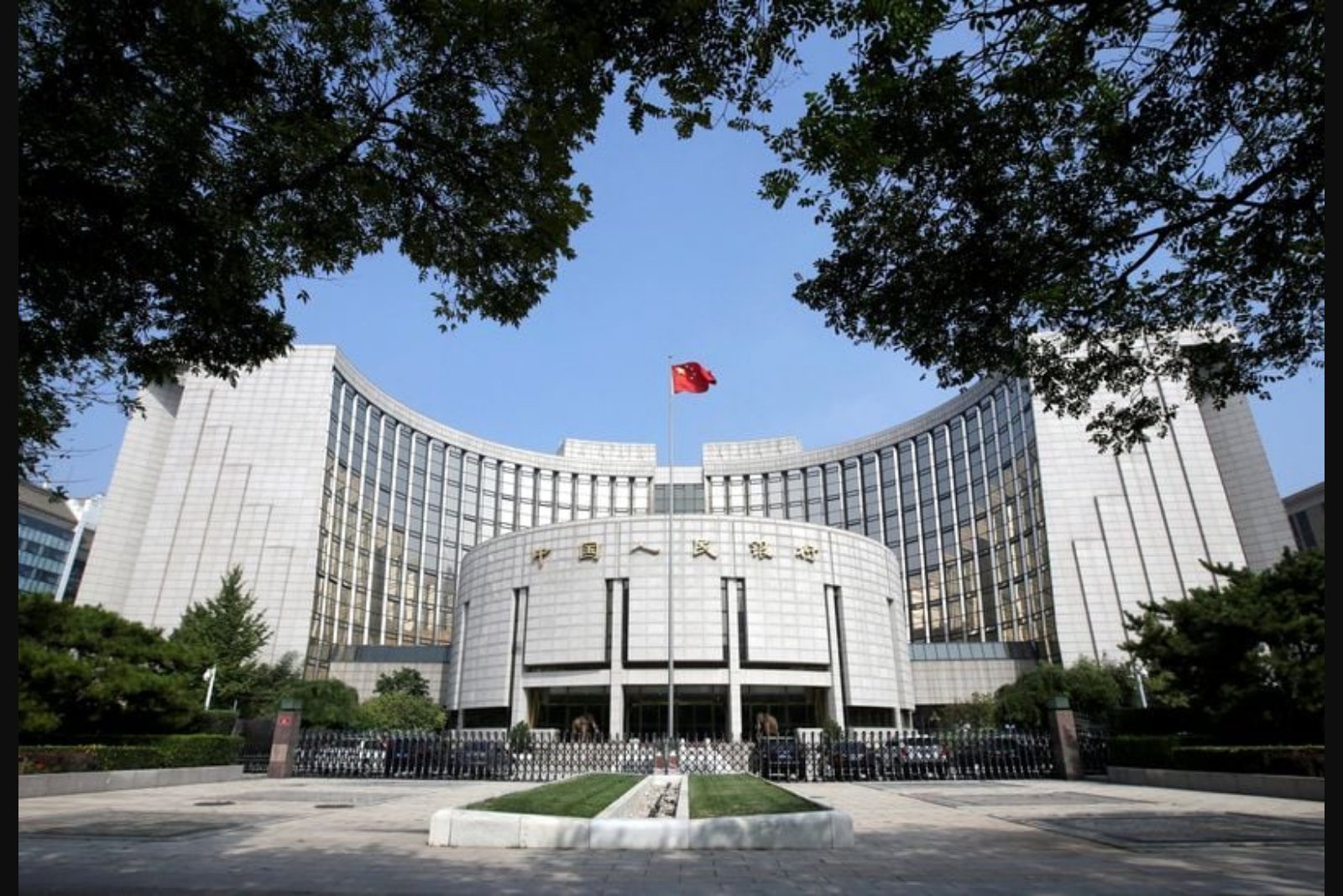
China's central bank has moved to exert closer control over short-term money markets, announcing measures aimed at pulling overnight borrowing costs into closer alignment with its benchmark seven-day reverse repo rate. The People’s Bank of China (PBOC) disclosed the initiative on Wednesday, saying it would increase the variety of overnight reverse repo operations and optimise the use of temporary overnight repo and reverse repo agreements to better manage short-term liquidity conditions.
PBOC governor Pan Gongsheng outlined the steps at the annual Lujiazui Forum, framing the adjustments as changes designed to strengthen the central bank's ability to steer short-end rates and respond to volatility in funding markets.
Summary of the move
The PBOC will broaden the menu of overnight reverse repo operations and fine-tune temporary overnight repo and reverse repo arrangements, with the stated goal of improved short-term liquidity management. The announcement explicitly links overnight borrowing costs more closely to the seven-day reverse repo rate, and signals a more active use of short-tenor market operations.
Analysts' and economists' reactions
Market participants and economists responded with a range of interpretations about the significance of the change and its potential to shift the focal point of monetary policy.
LI HAO, SENIOR PORTFOLIO MANAGER, XIAMEN STILL WATER INVESTMENT MANAGEMENT, XIAMEN
"It remains unclear whether the seven-day reverse repo rate or the overnight rate will serve as the benchmark policy rate, though international comparisons suggest the overnight rate will eventually prevail. "A key concern is the stability of the overnight funding market, and any switch may have to wait until the overnight DR001 stabilises, operates reliably as a market rate for a period, and gains broad acceptance."
DONG XIMIAO, CHIEF ECONOMIST, CMB-CHINA UNICOM CONSUMPTION FINANCE, SHANGHAI
"Measures to improve the short-end interest rate control mechanism represent a crucial step in the transition of China’s monetary policy toward a price-based approach, with the core objective being to enhance the central bank’s ability to precisely control short-term interest rates."
MARCO SUN, CHIEF FINANCIAL MARKET ANALYST, MUFG (CHINA), SHANGHAI
"In the future, the central bank cannot limit itself to managing the banking system; it must also more directly manage market liquidity, the cost of capital, and financial market stability. "Therefore, as I understand it, the core message of this speech is that the PBOC is gradually shifting from ’managing the credit cycle’ to ’managing the market-driven financial cycle.’"
XING ZHAOPENG, SENIOR CHINA STRATEGIST, ANZ, SHANGHAI
"These measures strengthen the seven-day reverse repo rate as the official policy benchmark. Both the interest rate corridor and the RMB Repo for foreign and international monetary authorities (FIMA) are linked to this rate. We expect overnight reverse repo operations to resemble the 14-day and 28-day tenors, with multiple rates in American auctions."
WANG QING, CHIEF MACROECONOMIC ANALYST, GOLDEN CREDIT RATING INTERNATIONAL, BEIJING
"More supportive measures may be introduced in the future to reduce volatility in overnight interest rates. Expanding the range of overnight reverse repo operations and shifting the policy rate anchor will enhance the stability of short-end market interest rates, facilitating the transmission of monetary policy along the yield curve. However, interest rate levels themselves will not change as a result; they will continue to be driven primarily by (policy) rate hikes and cuts."
MING MING, CHIEF ECONOMIST, CITIC SECURITIES, BEIJING
"Compared to the temporary overnight repo and reverse repo tools established in 2024, this move has, on the one hand, narrowed the upper and lower limits of the interest rate corridor, further strengthening the central bank’s control over money market rates; and, on the other hand, clarified the benchmark status of the overnight rate DR001."The statement that operations will be conducted ’when DR001 remains consistently below or above the operation rate of the corresponding tool’ clarifies the proactive nature of the central bank’s interest rate corridor mechanism. Furthermore, the reference to the ’operating rate of the corresponding tool’ suggests that further observation is needed to determine the positioning of the overnight and seven-day reverse repo tool rates as key policy rates in the future."
ZHOU HAO, CHIEF ECONOMIST, GUOTAI JUNAN INTERNATIONAL, HONG KONG
"To improve monetary policy management, the overnight rate remains more effective than the seven-day rate. In the future, the overnight and seven-day rates may function as a dual policy toolkit; theoretically, there should not be a significant difference between the two rates."
What the changes mean
The PBOC's stated actions indicate a willingness to use overnight market operations more flexibly as a tool for short-term liquidity management. Officials emphasised expanding overnight reverse repo options and refining temporary overnight repo agreements so the central bank can respond more precisely to intraday and short-tenor pressures in funding markets. Several market commentators interpreted the steps as a possible tilt toward making the overnight rate more central to policy signalling, though some noted the seven-day reverse repo remains linked to other policy mechanisms.
Analysts drew attention to the potential mechanics: expanding overnight-tenor operations could narrow the interest rate corridor and make short-end rates less volatile, but they stressed the ultimate levels of interest rates will still reflect conventional policy decisions on rate hikes and cuts rather than the operational changes themselves.
Conclusion
The PBOC's announcement reflects a technical shift in how it will manage short-term liquidity and interest rates, placing greater emphasis on overnight operations and tighter alignment with the seven-day reverse repo. Market participants are now weighing whether that shift signals a longer-term change in the benchmark that guides monetary policy, or whether both overnight and seven-day rates will operate together as complementary tools.