
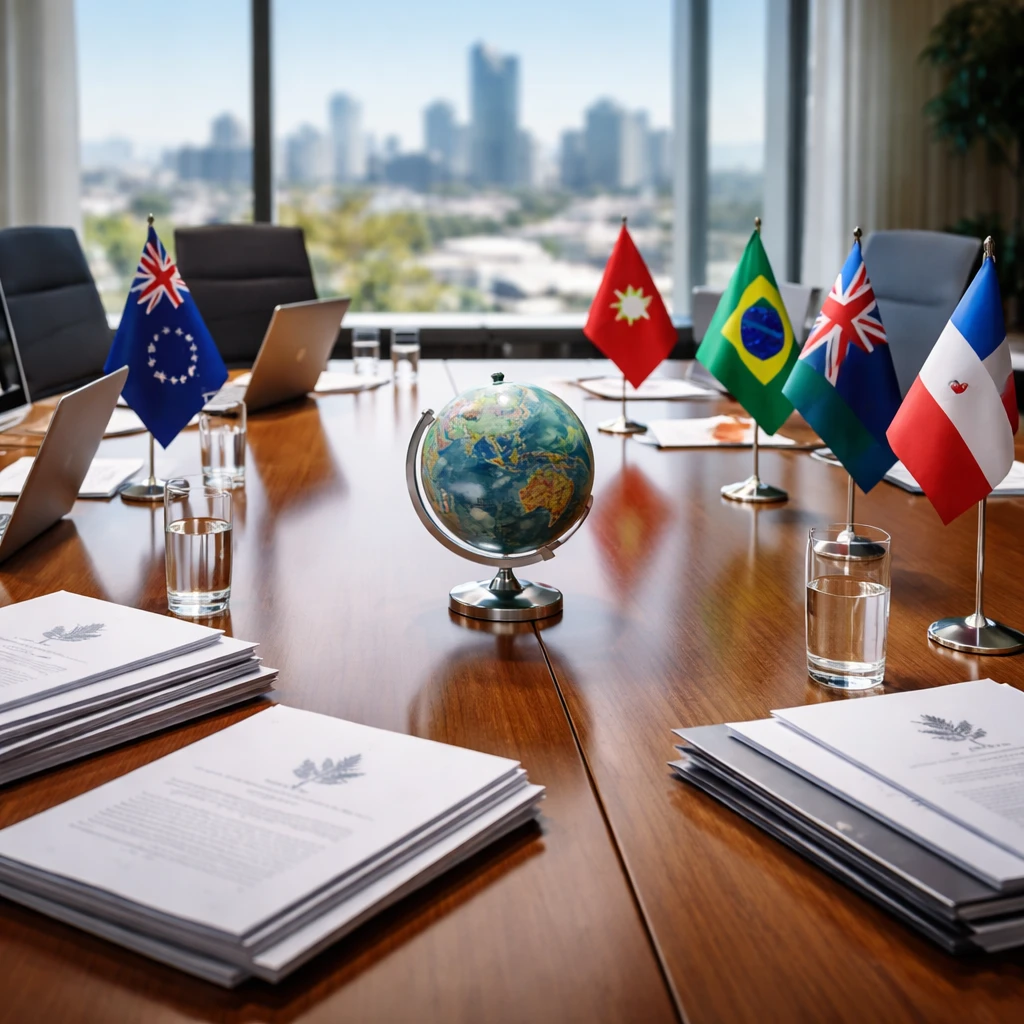
New Zealand’s governing National Party is advancing a strategic push to expand its international trade footprint, pledging to commence negotiations for seven new free trade agreements if it secures a victory in the November general election. According to statements from Trade Minister Todd McClay, the initiative would aim to diversify the country’s export markets and capture long-term growth opportunities for domestic producers.
The initial five-year agenda would prioritize trade discussions with Brazil, Switzerland, Argentina, Bangladesh, Nigeria, Uruguay, and the European Free Trade Association. The EFTA bloc is composed of Iceland, Liechtenstein, Norway, and Switzerland. While these targeted markets currently represent a relatively modest portion of New Zealand’s export portfolio—totaling approximately NZ$1.8 billion, or roughly $1 billion USD—the government views them as significant prospects for future expansion.
Looking beyond the immediate five-year timeline, Wellington has indicated plans to explore additional trade partnerships over the subsequent decade. Potential candidates for these later negotiations include South Africa, Turkey, and Sri Lanka. This forward-looking strategy complements recent trade achievements, such as the free trade agreement with India finalized in April, which is anticipated to provide a substantial boost to agricultural exports. Additionally, the agreement with the European Union became operative in 2024, further strengthening New Zealand’s trade position.
Government data released last month highlights a shift in export destinations, showing that the EU has surpassed Australia to become New Zealand’s third-largest market for primary exports. This development underscores the growing importance of diversified trade routes for the national economy.
The announcement arrives as New Zealand prepares for its general election on November 7. Trade policy is expected to be a central issue in the campaign. The National Party, which currently leads a coalition government, has faced mounting pressure following a recent opinion poll that revealed its support levels have dropped to their lowest point since 2021. The trade expansion pledge appears designed to revitalize the party’s electoral prospects by emphasizing economic growth and market access.
Key Economic and Market Impacts:
- Export Diversification: The push for new trade agreements targets a broad range of economies, from advanced markets like Switzerland and the EFTA bloc to emerging economies such as Brazil, Argentina, and Bangladesh. This strategy aims to reduce reliance on traditional partners and open new revenue streams for New Zealand’s agricultural and primary export sectors.
- Agricultural Sector Growth: With recent agreements like the one with India poised to boost agricultural exports, the National Party’s trade agenda directly supports the farming industry. New Zealand’s primary exports stand to benefit from enhanced market access and reduced trade barriers in these newly targeted regions.
- Political Economic Strategy: The trade expansion plan is positioned as a core element of the National Party’s election platform. By emphasizing economic diversification and long-term growth, the party seeks to address voter concerns and potentially reverse declining poll numbers ahead of the November 7 vote.
Risks and Uncertainties:
- Political Viability: The National Party’s current poll numbers are at their lowest since 2021, indicating potential electoral challenges. If the party fails to secure a win, the ambitious trade negotiation agenda may not be implemented, leaving long-term export diversification plans in limbo.
- Market Absorption Capacity: While the targeted markets represent significant growth potential, their current export contribution is modest at NZ$1.8 billion. Successfully scaling exports to these regions requires sustained effort and may face competitive or regulatory hurdles, particularly in less familiar markets like Nigeria or Bangladesh.
- Election Outcome Dependency: The entire trade expansion strategy hinges on the November 7 general election results. Any shift in political power could alter the direction of New Zealand’s trade policy, introducing uncertainty for businesses and investors planning long-term international commitments.
Topical Tags:
- Trade
- New Zealand
- Economy
- Election
- Exports
News Wire Title:
New Zealand National Party Pledges Seven New Trade Agreements in Election Push
Sentiment:
Neutral
Impact:
Medium