
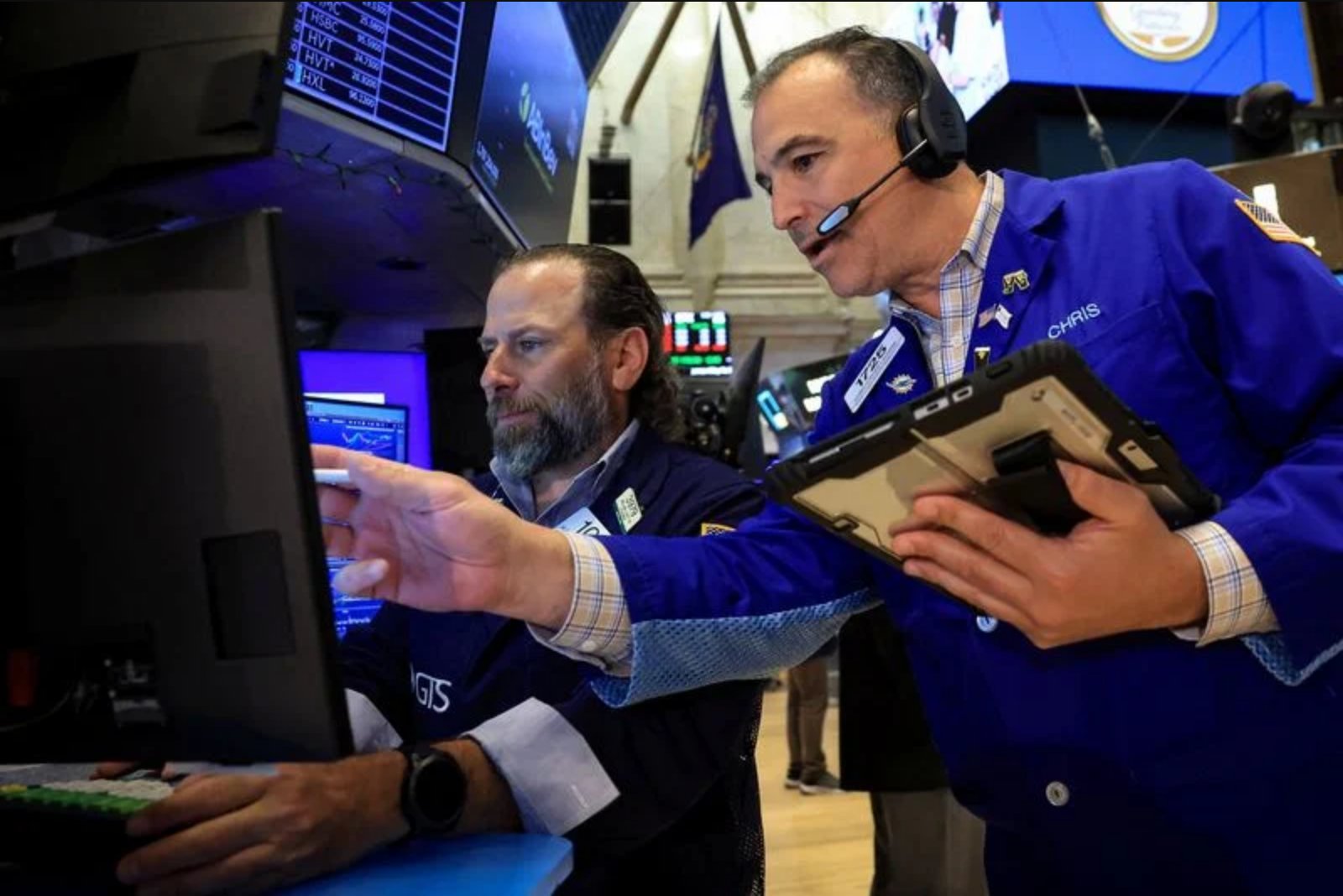
Wall Street equity markets concluded June with a notable divergence between monthly and quarterly performance. While individual months saw losses across major U.S. benchmarks, the S&P 500 and the Nasdaq Composite achieved their strongest quarterly percentage gains in years. Europe's STOXX 600 index also participated in this robust quarterly growth, marking a significant turnaround in market sentiment over the three-month period.
Technological equities and artificial intelligence-related stocks were the primary catalysts for this quarterly surge. Leading semiconductor and chip manufacturers experienced substantial daily gains, underscoring the continued investor appetite for technology exposure. SanDisk, AMD, Marvell, and Intel all recorded advances ranging from 6.0% to 10.9% on the day. Intel posted a 5.95% increase, while Marvell gained 7.22%. AMD advanced 7.62%, and SanDisk reached a 10.84% increase. These moves contributed to the Nasdaq Composite rising 1.52% and the S&P 500 climbing 0.78% to cap the trading day.
Foreign exchange and bond markets reflected shifting global dynamics. The U.S. dollar strengthened against the Japanese yen, pushing the yen to a 40-year low. The USD/JPY pair rose 0.07% to 162.63. Simultaneously, U.S. Treasury yields increased, with the benchmark 10-year yield rising 2.06%. Despite this daily rise, the 10-year yield is set for a monthly drop of 0.22%, indicating a complex yield curve environment. European markets saw the STOXX 600 index remain essentially flat at 0.00% for the day.
Commodities presented a mixed picture, with oil prices remaining largely unchanged. However, oil recorded its steepest quarterly loss since 2020, highlighting pressure on energy revenues. Gold, a traditional safe-haven asset, saw its largest quarterly loss in 13 years, falling 0.42% for the day. Crude oil prices dropped 1.02%, while another energy commodity rose marginally by 0.05%.
Market Outlook and Policy Shifts
The strong quarterly performance sets the stage for a challenging second half of 2026. Markets will now confront a series of critical tests regarding the sustainability of artificial intelligence spending, elevated earnings expectations, and a changing interest rate outlook. The U.S. Federal Reserve is navigating this landscape under the chairmanship of Kevin Warsh, which is expected to influence monetary policy direction. Analysts suggest that AI spending, corporate earnings reports, and the Fed's policy stance will likely be the dominant forces driving stocks through the remainder of the year.
Geopolitical and Trade Developments
Geopolitical uncertainties continue to cloud the global outlook. U.S. envoys, including Jared Kushner and Steve Witkoff, arrived in Doha on Tuesday to engage in preliminary discussions regarding the path forward for U.S.-Iran peace talks. These technical discussions, focusing on regional security and other matters, follow weekend airstrikes that tested the interim accord signed on June 17 between the United States and Iran. No high-level meeting with Iranian officials is currently scheduled, though issues could be elevated to senior levels according to Qatar's Foreign Ministry spokesperson.
Simultaneously, significant trade developments are unfolding in North America. President Trump is expected to announce on Wednesday that the United States will not extend the U.S.-Mexico-Canada Agreement. This declaration initiates a decade-long process to wind down the 32-year-old free trade zone. The announcement triggers a six-year review session as part of a "sunset clause" negotiated during the first Trump administration. Despite starting this long-term process, the declaration is not expected to immediately alter the contentious negotiations surrounding the pact's future structure.
Key Economic Data and Events
Investors are bracing for a dense calendar of economic data releases and policy events that could drive market volatility. Key indicators to watch include the U.S. ISM PMI for June, U.S. Challenger layoffs data, and the U.S. ADP National Employment Report. Other critical data points include U.S. construction spending for May, Euro zone and UK PMI reports, Netherlands Q1 GDP, and Netherlands retail sales for May. Consumer sentiment will be tracked through Japan consumer confidence and UK house prices. Global retail activity will be monitored via Switzerland retail sales for May.
Policy events will also command attention. U.S. Federal Reserve Chair Kevin Warsh is scheduled to participate in a policy panel before the ECB Forum. Market participants will closely monitor developments in the Middle East, potential yen intervention by Japanese authorities, and energy market movements. Social media posts from President Trump remain a factor that markets watch for potential implications.
The interplay between technological innovation, monetary policy shifts, and geopolitical tensions creates a complex environment for capital allocation. While the quarterly gains demonstrate resilience, the upcoming data and policy decisions will test the durability of this rally. The sectoral rotation between technology, energy, and broader industrial markets remains a focal point for analysts assessing the direction of the economy.