
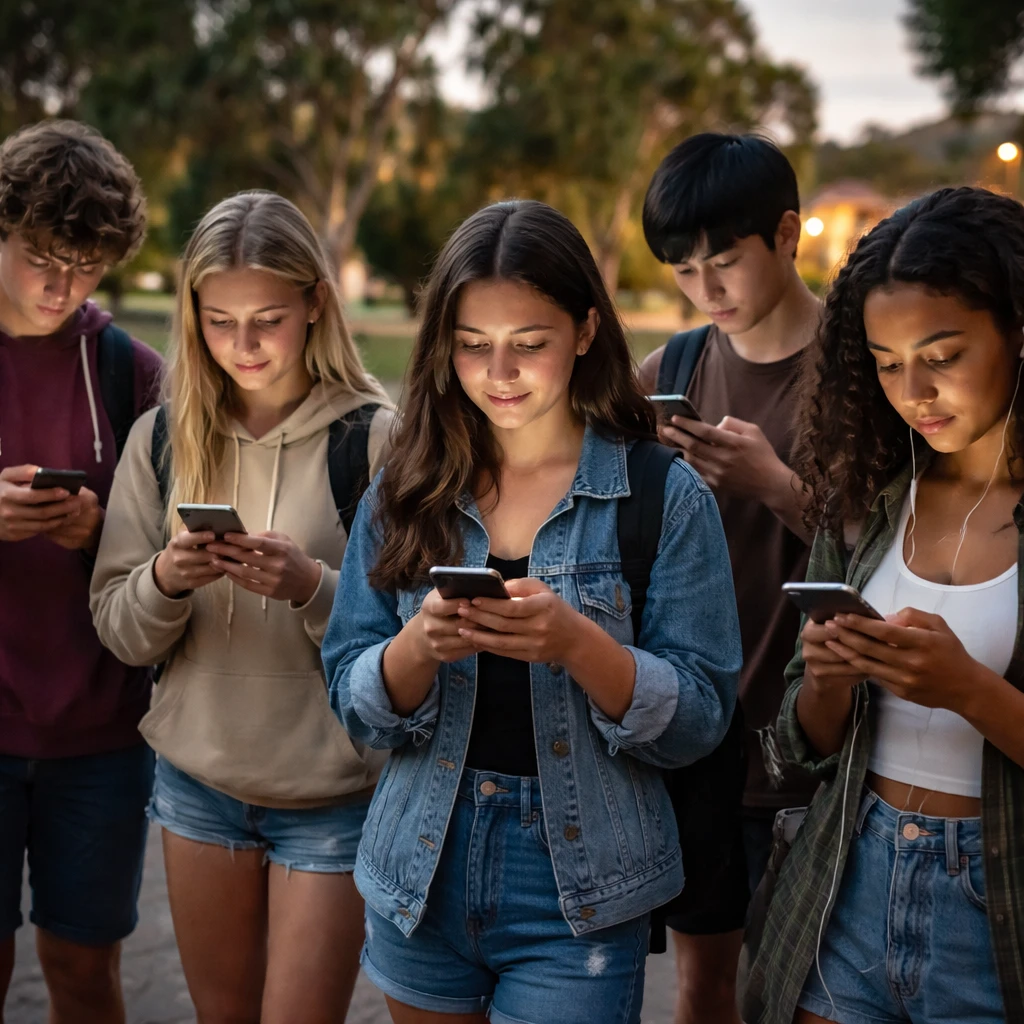
More than eight in 10 Australian teenagers continued to use social media three months after a national ban on accounts for under-16s came into effect, according to a study published by the country’s internet safety regulator.
The report, released on Friday, concluded that the persistence of teenage social media activity was driven largely by failures among the platforms to implement reliable age-verification measures. While fewer children reported owning accounts, frequency of use among those aged 10 to 15 remained broadly similar to levels recorded before the ban, and parental awareness of children’s online habits fell.
eSafety found that account ownership among children in the surveyed age group declined to 42% from 52% recorded prior to the ban. Despite that reduction, the proportion of young people using at least one age-restricted platform stood above 81% three months after implementation, down only slightly from nearly 86% before the restrictions were enforced.
Daily or more frequent usage also registered only a marginal drop. About 58% of teenagers said they used social media every day or more often, compared with roughly 60% before the ban took effect.
"Most under-16s who had social media accounts before commencement were able to either retain them or create new ones at the three-month mark, with social media platforms’ failure to implement effective age assurance measures cited as the main reason," eSafety said in a statement.
The regulator noted several mechanisms by which under-16s remained on the services: some children reported the platforms did not check their age, others said their accounts listed them as 16 or older, and some said automated checks incorrectly assessed them as above the age threshold.
eSafety said the study’s findings were broadly consistent with snapshot data it published in late March. Following that update, the regulator opened investigations into potential non-compliance by five platforms: Meta’s Facebook and Instagram, Snapchat, TikTok and Google’s YouTube.
In response to ongoing compliance concerns, the government announced in June it would double the maximum financial penalty it can impose on technology firms that do not uphold the ban. At the same time, it strengthened eSafety’s powers to gather information, enabling the agency to compel social media companies to provide evidence of measures taken to prevent under-16s from obtaining accounts.
Meta, Snapchat, TikTok and Google did not immediately reply to requests for comment on the report.
The study was prepared by a global advisory panel of university researchers and compared data collected from more than 4,000 children and families both before the ban began and at the three-month mark. Australia’s minimum age restriction for social media accounts came into force on December 10 last year, enacted as a world-first measure amid concerns about the effects of social media on the mental and physical health of children and young people.
The report is the first release as part of a two-year evaluation of the ban’s outcomes and implementation. It documents early trends in account ownership, usage frequency and parental awareness, and highlights shortcomings in platform age-assurance systems that regulators say need to be addressed for the policy to achieve its stated objectives.
eSafety said it had observed some improvements by industry since its March update, but that significant concerns remained about the compliance of the five named platforms. The regulator’s ongoing investigations and the government’s increased enforcement powers indicate continuing scrutiny of major social media companies’ approaches to age verification and account controls for children under 16.