
What happened
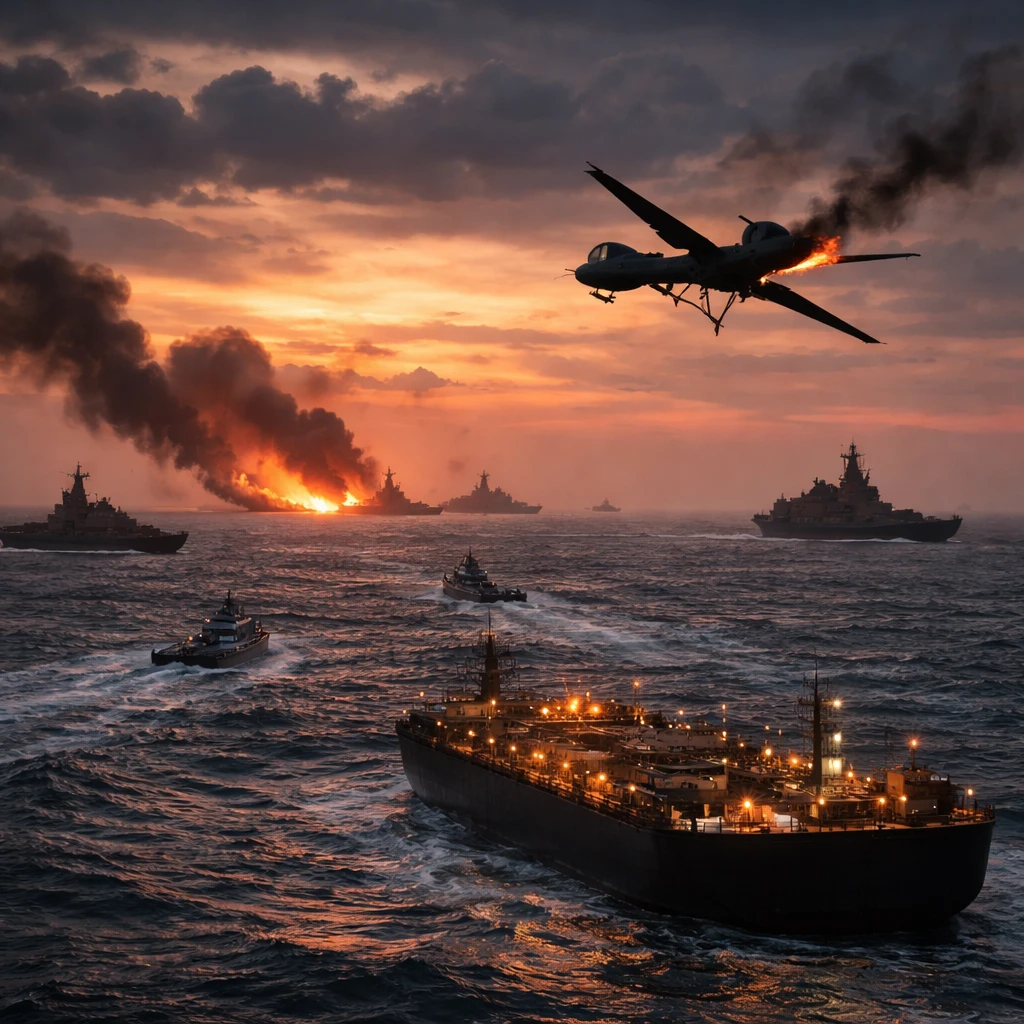
Iranian armed forces announced on Wednesday that they launched attacks on U.S. military positions in Kuwait and Bahrain, saying the strikes were in response to recent American attacks inside Iran and to Washington's move to rescind a sanctions waiver on Iranian oil. The paramilitary Islamic Revolutionary Guards Corps said in a statement cited by state media that it had struck 85 U.S. military sites and shot down an American MQ-9 drone.
Statements from Iranian commands
The Khatam al-Anbiya Central Headquarters, a branch of Iran's military apparatus, described the U.S. strikes on locations in southern Iran as a "blatant act of aggression." The command added that "under no circumstances will we allow interference in the affairs or management of the Strait of Hormuz."
U.S. military response and claims
Earlier, the Pentagon said its strikes were carried out in reaction to recent Iranian attacks on commercial vessels attempting to pass through the Strait of Hormuz, a key route for global oil shipments that runs along part of Iran's southern coast. U.S. Central Command reported that it had struck more than 80 targets in Iran and also engaged more than 60 IRGC small boats in and around the strait.
Sanctions and economic measures
The U.S. Treasury Department's Office of Foreign Assets Control revoked a general license that had authorized the production, delivery, and sale of crude oil, petrochemical products, and petroleum products of Iranian origin. The move followed the U.S. military actions and is one of the measures Washington cited in recent days.
Attacks on commercial shipping
Tehran has not claimed responsibility for attacks on Tuesday that struck vessels off the coast of Oman, incidents that involved a Saudi oil tanker and a Qatari ship loaded with liquefied natural gas. Earlier reports cited by maritime authorities said two tankers were hit by unknown projectiles and a third vessel was struck by a drone, with no casualties reported.
Political reaction in Tehran
Mohammad Bagher Ghalibaf, speaker of Iran's parliament and lead negotiator, accused Washington of violating a 14-point memorandum of understanding signed in June. Writing on X, Ghalibaf said U.S. actions were "violating Iranian adjustments" in the strait, which had been reopened under the preliminary deal's terms.
Diplomacy and ceasefire status
Despite the renewed exchanges of strikes, a senior U.S. official told The Wall Street Journal that Washington still regards the ceasefire pact as being in effect. Still, the tit-for-tat strikes have put at risk talks aimed at reaching a permanent agreement to end hostilities and have threatened a fragile rebound in oil flows through the Strait of Hormuz.
Negotiations were reportedly paused to allow for funeral ceremonies honoring former Iranian Supreme Leader Ayatollah Ali Khamenei, who was killed in a barrage at the onset of a joint U.S.-Israeli assault on Iran in late February.
Market and maritime advisories
Against this backdrop of renewed violence and diplomatic strain, oil prices moved higher, recovering some of the losses seen after the framework peace deal was signed on June 17. Earlier in the conflict, a sharp uplift in crude prices following the start of hostilities prompted concerns about potential inflationary effects for economies worldwide.
The United Kingdom Maritime Trade Operations said it had received reports of attacks on three separate oil tankers in and around the Strait of Hormuz. The agency described the incidents and later raised its threat level for the Gulf region from "substantial" to "severe."
Context and implications
The events outlined by Iranian military sources and U.S. Central Command depict an escalation that touches military, commercial, and diplomatic realms. Claims from both sides about the scale of strikes and engagements have amplified regional tensions and affected markets dependent on the safe passage of energy shipments through the Strait of Hormuz.