
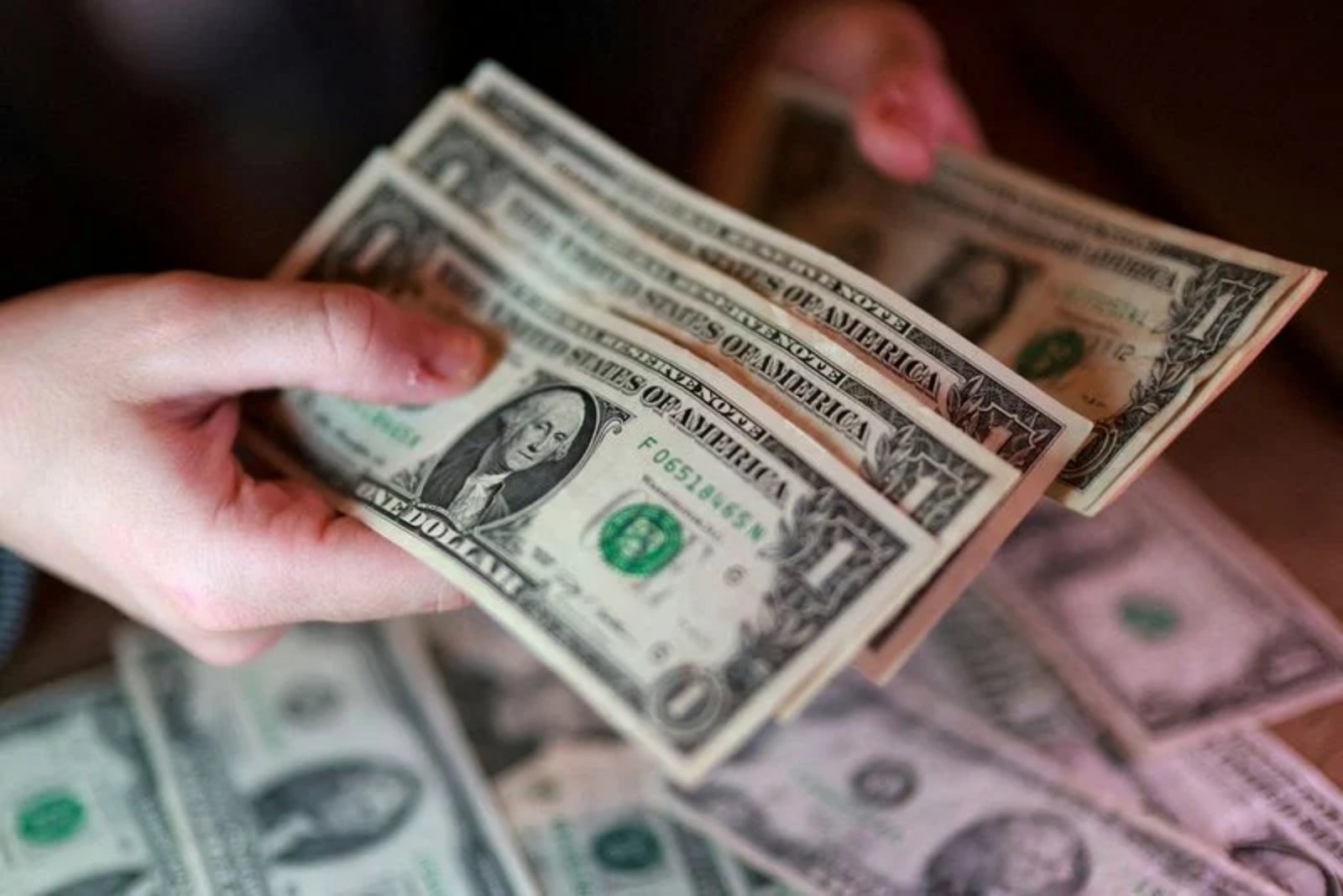
The greenback demonstrated resilience during Wednesday's trading session, holding its ground against primary peer currencies. This stability follows a series of geopolitical developments, specifically U.S. military strikes against Iran, while the financial community remains focused on upcoming American inflation data to determine the Federal Reserve's next moves regarding interest rates.
The recent escalation in tensions stems from Tuesday, when the U.S. military conducted strikes against Iranian targets. This action followed a statement from President Donald Trump indicating that Tehran had successfully shot down a U.S. Apache helicopter within the Strait of Hormuz. The incident has complicated efforts toward peace and placed additional strain on an already delicate ceasefire between the two nations. While addressing the matter, President Trump sought to minimize the severity of the event, describing the helicopter situation as "not a big deal" and noting that the pilot remained unharmed.
Despite the breakdown of the weekend's ceasefire and these military actions, some economic analysts maintain a cautious outlook on the escalation. Harry Ottley, an economist at Commonwealth Bank of Australia, noted in an analytical report that the conflict is still being assessed as following a de-escalatory path.
Currency Market Movements
The dollar index, which tracks the greenback's value against various currencies like the euro and the yen, saw a marginal increase of 0.01% to reach 100.02. In comparison, other major currencies experienced slight declines:
- The euro fell by 0.05%, trading at $1.1537.
- Sterling decreased by 0.04%, landing at $1.337.
- The Australian dollar dipped 0.1% to $0.7021 against the dollar.
- The New Zealand dollar saw a decline of 0.17%, reaching $0.5812.
A significant factor influencing these movements is the perception that the U.S. economy possesses greater insulation from energy-related shocks than its international counterparts. This perceived resilience has bolstered safe-haven demand for the dollar during the ongoing Iran conflict, while simultaneously putting downward pressure on both the euro and the Japanese yen.
Japanese Economic Outlook
In Japan, the yen continued to experience weakness, drifting 0.03% lower against the dollar to a level of 160.38 per dollar. This specific level is widely regarded as a critical threshold where official intervention might occur. Current market pricing suggests that a potential interest rate hike by the Bank of Japan at its June 16 policy meeting is almost entirely accounted for, meaning such an action may not be sufficient to reverse the yen's current downward trend.
Tony Sycamore, a market analyst at IG, suggested that for a significant shift to occur, Governor Kazuo Ueda would need to provide hawkish commentary. Specifically, signals that the Bank of Japan could accelerate its next rate hike from December to September—potentially including a third hike before the end of the year—would be required. Without such signals, Sycamore noted that the Ministry of Finance might find it necessary to utilize official funds to defend the currency.
Adding to the complexity in Japan, recent data revealed that wholesale prices surged by 6.3% for the year ending in May. This figure surpassed expectations and points toward rising price pressures linked to the conflict in the Middle East.
Focus on Inflation and Central Bank Policy
The spotlight now turns to the United States, where the release of the Consumer Price Index (CPI) for May is expected. This data is viewed as a vital indicator for determining if the Federal Reserve will move toward interest rate hikes later this year, especially following last week's robust employment data. Akihiko Yokoo, a senior analyst at Mitsubishi UFJ Bank, noted that investors are looking to see if high oil prices will begin to impact the services sector and other areas of the economy. Should inflationary pressures intensify, the dollar could see increased buying interest.
Looking ahead, markets are also anticipating the European Central Bank's upcoming policy meeting on Thursday, where a rate hike of 25 basis points is broadly anticipated by market participants. While a potential peace agreement between the U.S. and Iran could provide some market relief, current trends of strong growth and persistent inflation suggest that expectations for further U.S. interest rate increases remain elevated.