
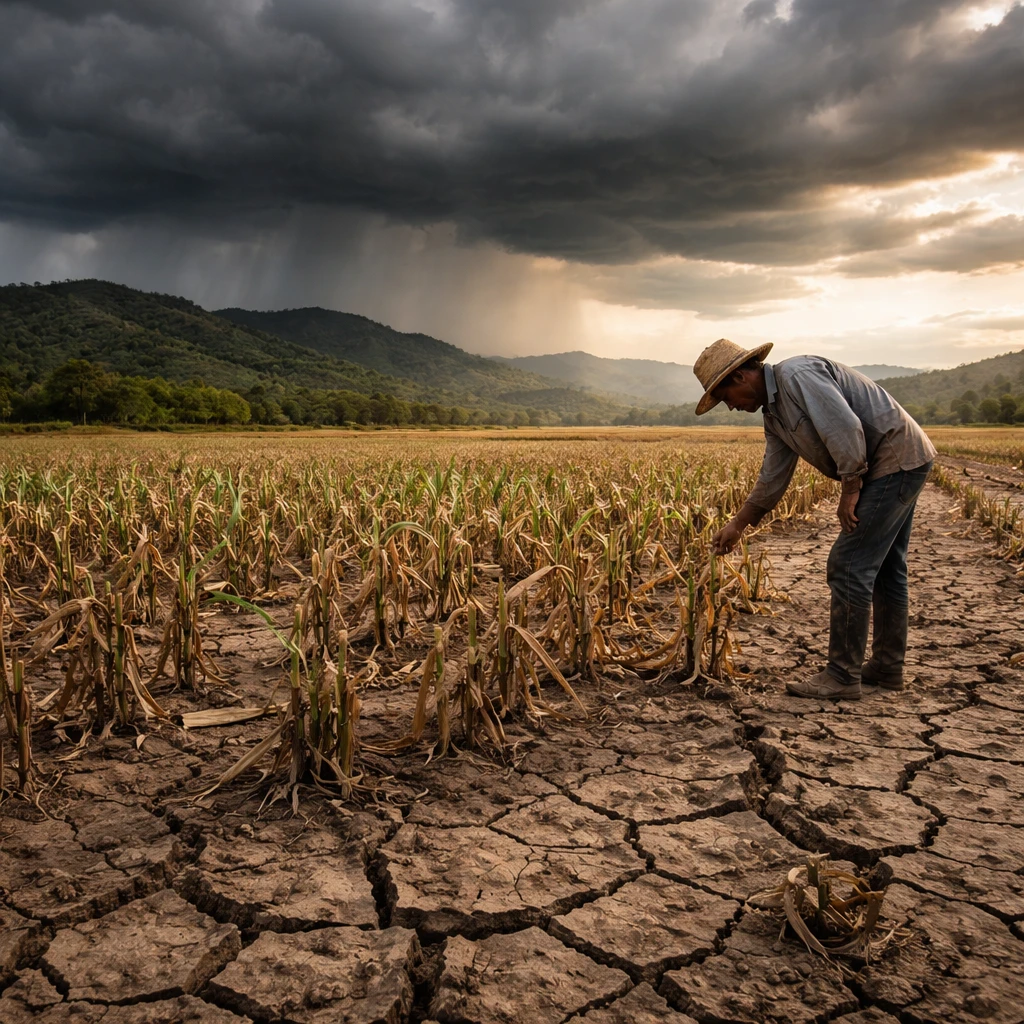
Emerging economies that are already feeling the strain from the Middle East conflict now face an additional headwind: a likely powerful El Niño that could push up food costs and slow growth. The U.S. National Oceanic and Atmospheric Administration is putting the odds at 81% that a very strong El Niño will persist through the October-December period, making it a contender to rank among the strongest events since 1950 and earning the label in markets of a "super El Niño."
El Niño, a climate pattern that recurs every two to seven years, typically shifts rainfall and temperature patterns around the globe. Forecasters expect the current episode to bring drought to parts of Asia while delivering heavy precipitation across segments of South America. Those contrasting outcomes create a dual set of risks for emerging economies: reduced agricultural output where drought bites, and flood-related damage or disruption where rains intensify.
Why emerging markets are vulnerable
Emerging markets tend to have larger household spending shares devoted to food and a more significant portion of GDP reliant on agriculture. That combination magnifies the economic consequences when weather shocks threaten harvests and food supplies. Central banks in these economies could feel compelled to maintain tighter monetary settings if food inflation proves persistent.
"We came into this year with many central banks thinking they had space to cut. And now we see central banks stopping cutting, and some of them are hiking," said Gillian Edgeworth, a fixed income portfolio manager at Wellington Management. "I don’t think we’re moving to a world where there’s rapid rate cuts in emerging markets in the second half of the year."
India - monsoon risks and policy implications
India's exposure is notable because the country's agriculture relies heavily on the summer monsoon, which normally delivers roughly 70% of annual rainfall. The national meteorological agency has warned that this year's rains could be the weakest in more than a decade. Such an outcome would threaten crop yields and raise the prospect of higher domestic food prices.
India is the world's largest rice exporter and the second-largest sugar producer. Historically, larger government food stockpiles have helped the country withstand El Niño episodes. Nonetheless, with inflation currently above the central bank's 4% target, analysts say a very strong El Niño could prompt policymakers to tighten monetary policy rather than ease.
Asia broadly - energy, fertilizer and currency tensions
Across much of Asia, elevated energy and fertilizer costs are already weighing on external balances and growth, complicating efforts by central banks to defend currencies and control inflation. Several Asian central banks - including those of the Philippines, Indonesia, South Korea, Pakistan and Sri Lanka - have already raised interest rates at least once this year.
Market participants warn that a severe El Niño could keep borrowing costs higher across the region into the start of next year. "El Niño is just going to make inflation more sticky," said Gary Tan, an equity portfolio manager at Allspring Global Investments. "People are forecasting rate hikes for the second half of the year, especially for the South Asian countries, which are kind of the most impacted by El Niño such as India, Indonesia, Vietnam, Thailand."
Weaker currencies add another layer of vulnerability: should food and energy prices climb further, the cost of imports will rise in local terms. Observers note that Indonesia's rupiah and India's rupee are near record lows, while Thailand's baht, South Korea's won, the Philippine peso and Sri Lanka's rupee are on track for declines this year.
Latin America - Colombia and Peru in the spotlight
In Latin America, Colombia stands out as particularly exposed to the weather shifts associated with El Niño. Below-average rainfall can depress food supplies and raise electricity prices because the country depends substantially on hydropower. When reservoir levels fall, utilities may need to switch to more expensive thermal generation, lifting electricity bills and feeding into headline inflation.
Analysts caution that a pronounced El Niño could oblige Colombia's central bank to keep policy restrictive for longer than planned. "Colombia is most exposed to higher food and energy inflation triggered by El Niño disruptions," said Dan Pan, an economist at Standard Chartered. "BanRep is currently facing the greatest challenge as El Niño fuels further inflation, in addition to the outsized minimum wage hike and higher oil prices."
Peru's central bank has similarly warned that inflation could overshoot its target this year and growth could be dented, pointing to high oil prices and possible El Niño impacts on fishing and agriculture. By contrast, Argentina may see benefits from increased rainfall if it materializes, potentially supporting grain output, export revenues and foreign-exchange inflows.
Central banks in Brazil, Mexico and Chile are adopting a wait-and-see posture as they evaluate how any El Niño-driven shifts in prices and output will affect inflation and growth in their economies.
Africa and emerging Europe - uneven effects
The expected effects of this El Niño across Africa are likely to vary significantly by subregion. Several East and Southern African economies, among them Kenya and South Africa, are vulnerable to weather-induced disruptions to agricultural production. Drought conditions in these areas could strain food supplies, slow agricultural output and push up food inflation.
South Africa's central bank has repeatedly pointed to El Niño as a potential source of inflationary pressure. Food prices were a primary channel through which the last major El Niño episode fed into inflation. Yet in a July policy meeting the central bank surprised markets by holding interest rates steady, rather than delivering the 25 basis point hike some investors expected.
Ratings agency S&P Global has warned that the credit profiles of some African sovereigns could come under pressure if climate-related shocks intensify and weigh on growth, public finances and external balances.
By contrast, the historical footprint of El Niño on central and eastern Europe has been relatively limited. Investors continue to expect interest-rate cuts in countries such as Poland, Hungary and Romania during the year.
Implications for policy and markets
The combination of a strong probability of a very powerful El Niño and already tight global conditions creates a complex environment for emerging market policymakers and investors. Central banks may need to delay easing or even re-tighten policy in the face of sticky food and energy inflation. For markets, the principal channels of concern include agricultural commodity prices, electricity costs in hydropower-dependent countries, currency depreciation in import-reliant economies and the potential for slower growth where production is disrupted.
How these risks play out will depend on the geographic distribution and intensity of rainfall anomalies over the coming months, the resilience of domestic food stocks and energy systems, and policy responses by central banks and fiscal authorities.