
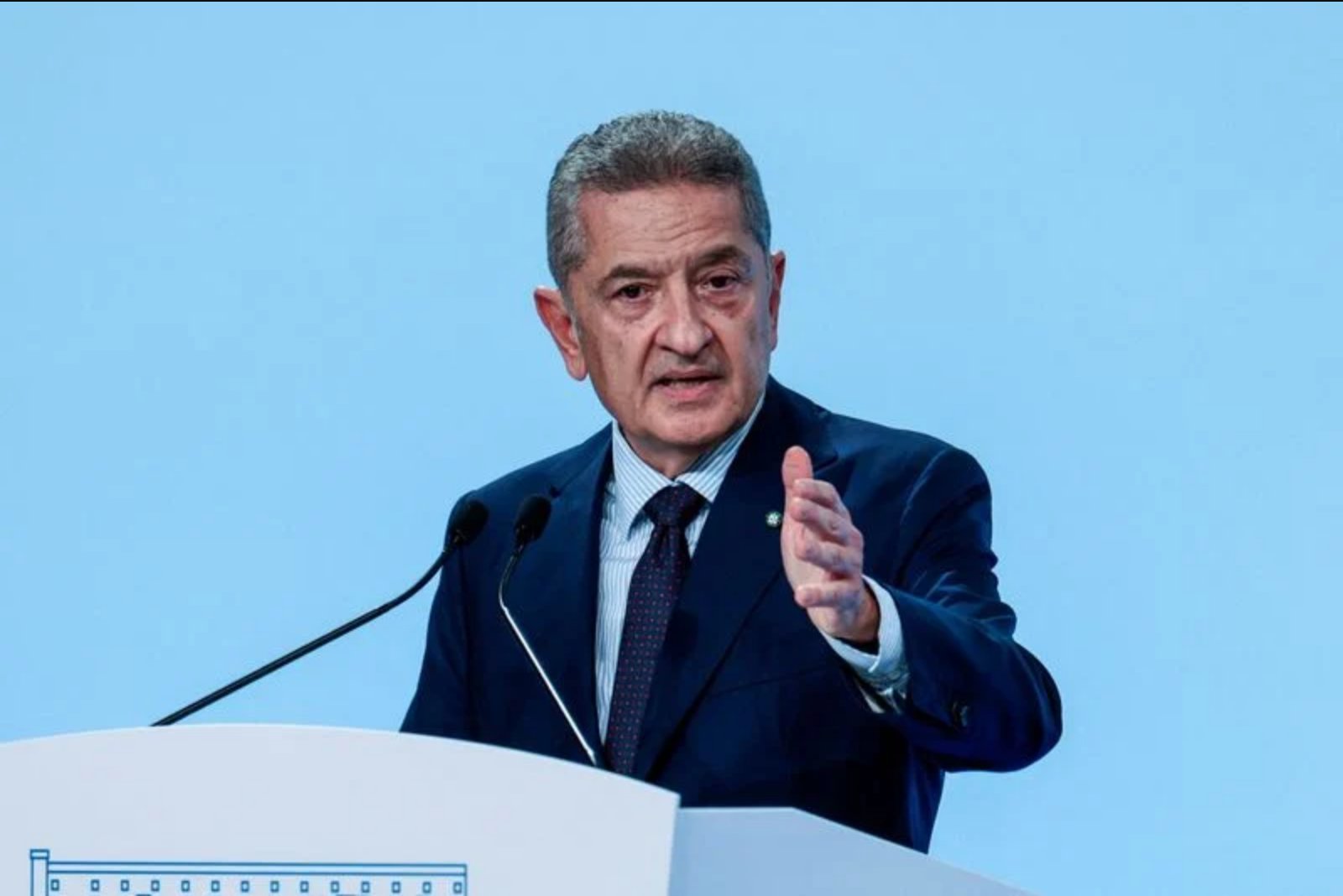
Speaking at a research conference in Rome on monetary policy transmission, Fabio Panetta, a member of the European Central Bank Governing Council and governor of the Bank of Italy, said the euro zone's economic outlook remains fragile and requires careful, flexible policymaking.
Panetta described the current global environment as entering a "Great Reconfiguration" and said that upside risks to inflation coexist with downside risks to growth. He said this mix of risks calls for constant monitoring of geopolitical developments, energy markets, supply chains, wages and inflation expectations.
Addressing the implications for interest-rate strategy, Panetta argued that monetary policy should not be committed to a predetermined path but instead be tested against a range of scenarios given the deep shifts underway. He said that the June interest rate decision "was judged to be robust across a range of scenarios. This reflects a key principle of policy making under uncertainty."
Panetta also pointed to the possibility that talks between the United States and Iran may lower energy prices compared with what had been expected in June, when the ECB became the world's first major central bank to raise interest rates in response to the Iran-war induced energy shock. Policymakers are now debating whether a follow-up move is required to contain price pressures.
The governor listed a set of transformational forces framing the latest energy shock: geopolitical fragmentation, artificial intelligence and digital finance, population ageing and climate change. He said those broad developments are the backdrop against which central bankers must judge the robustness of policy choices.
Panetta’s remarks underscore the tension facing central banks: containing inflation without unduly harming growth, while adapting to rapid structural changes in the global economy. He emphasized that this environment demands ongoing surveillance of market and real-economy indicators across energy, labour and supply-chain channels.
Clear summary
Fabio Panetta said the euro zone outlook is fragile as upside inflation risks coexist with downside growth risks. He urged that monetary policy decisions be assessed across scenarios given major global shifts, noting the June rate rise was judged robust across scenarios and that energy-price dynamics could change if US-Iran talks progress.