
Economy June 30, 2026 01:03 PM

ECB rate move could wait until September if energy prices stay low, says Dolenc

Slovenian central bank governor signals that recent drop in energy costs may ease pressure for an immediate hike, keeping July decision in doubt

By Leila Farooq
Share
Twitter Reddit Facebook LinkedIn

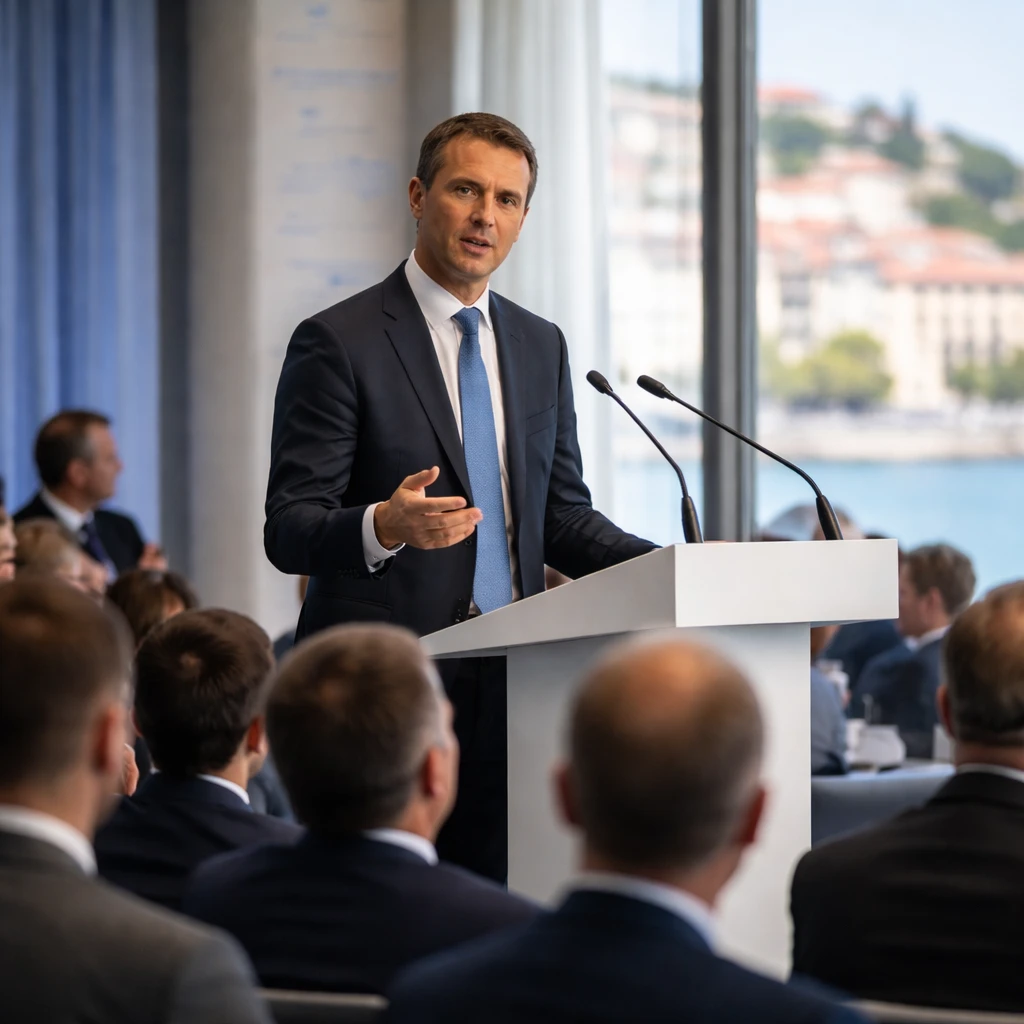
Slovenian central bank governor Primoz Dolenc said at the ECB Forum on Central Banking in Sintra that a quicker-than-expected fall in energy prices could allow the European Central Bank to postpone its next interest rate decision until the September projections. He stressed the bank will follow incoming data, noting inflation has not yet shown clear second-round effects and market volatility could alter the outlook before July.

ECB rate move could wait until September if energy prices stay low, says Dolenc
Summarize with
ChatGPT Perplexity Claude Grok Gemini

Key Points

  • A faster-than-expected decline in energy prices could allow the ECB to delay its next rate decision until the September projections - impacts: energy sector, broader economy, fixed-income markets.
  • The ECB raised interest rates in June to prevent energy-driven inflation from spreading - impacts: households, businesses, and financial markets.
  • Policymakers are weighing a potential July rate increase against waiting until September, keeping market participants attentive to incoming data and volatility - impacts: bond markets and short-term interest rate expectations.

At the ECB Forum on Central Banking in Sintra, Portugal, Slovenian central bank governor Primoz Dolenc said that recent developments in energy markets may permit the European Central Bank to delay its next interest rate decision until September.

Dolenc cited a faster-than-expected decline in energy prices as the key reason the bank might be able to wait. The ECB raised rates in June with the specific aim of preventing inflationary pressure stemming from higher energy costs from spreading more broadly through the economy.

"The latest developments in the energy market are more benign than it was expected just a few weeks ago," Dolenc said. He added that if the current energy-price environment persists and levels remain around where they are now, "then the pressure on us to act will ease and we could afford to wait until fresh projections in September to decide on the appropriate policy calibration."

Policymakers remain divided over whether to press ahead with another rate increase at the July meeting or to postpone further tightening until the ECB's September projections, Dolenc said. The bank's own June 11 forecasts had been constructed on the assumption that oil prices would stay elevated for years, a backdrop that supported the decision to raise rates in June.

Market pricing has already moved below the bank's milder scenario for the remainder of the year, according to Dolenc's remarks. He also noted that, to date, inflation readings have not shown clear evidence that higher energy costs are creating second-round effects across the broader economy.

Dolenc cautioned that the bank will base future decisions on incoming data and that the outlook could still change before the July meeting, particularly given the elevated volatility in markets. That caveat leaves room for either path - an additional July increase or a pause until September - depending on how conditions evolve.


Context and implications

Dolenc's comments underline the ECB's data-dependent approach: a sustained, lower energy-price profile could reduce near-term pressure on policy, while an uptick in volatility or signs of second-round inflation effects would prompt reconsideration before any decision.

Risks

  • Inflation readings have not yet shown clear second-round effects from higher energy costs - uncertainty remains on whether inflation will broaden and persist, affecting consumer prices and wage-setting.
  • Elevated market volatility could change the outlook before the July meeting and force the ECB to alter its plans - risk to markets sensitive to interest-rate expectations such as bonds and short-term funding markets.
  • June 11 projections assumed oil prices would remain elevated for years, but market pricing has fallen below the bank's milder scenario for the rest of the year - risk that forecasting assumptions and market developments diverge, complicating policy calibration.

More from Economy

ECB could pause rate hikes in July if Mideast tensions subside, says Dolenc Jun 30, 2026 Supreme Court term delivers major conservative wins while curbing some presidential powers Jun 30, 2026 Mercosur Opens Trade Negotiations with Japan, Signals Interest in China Jun 30, 2026 Brazil Rolls Back Emergency Diesel Support as Fiscal Pressure Builds Jun 30, 2026 ECB Weighs Raising Unpaid Reserve Requirement to Ease Its Interest Burden Jun 30, 2026