
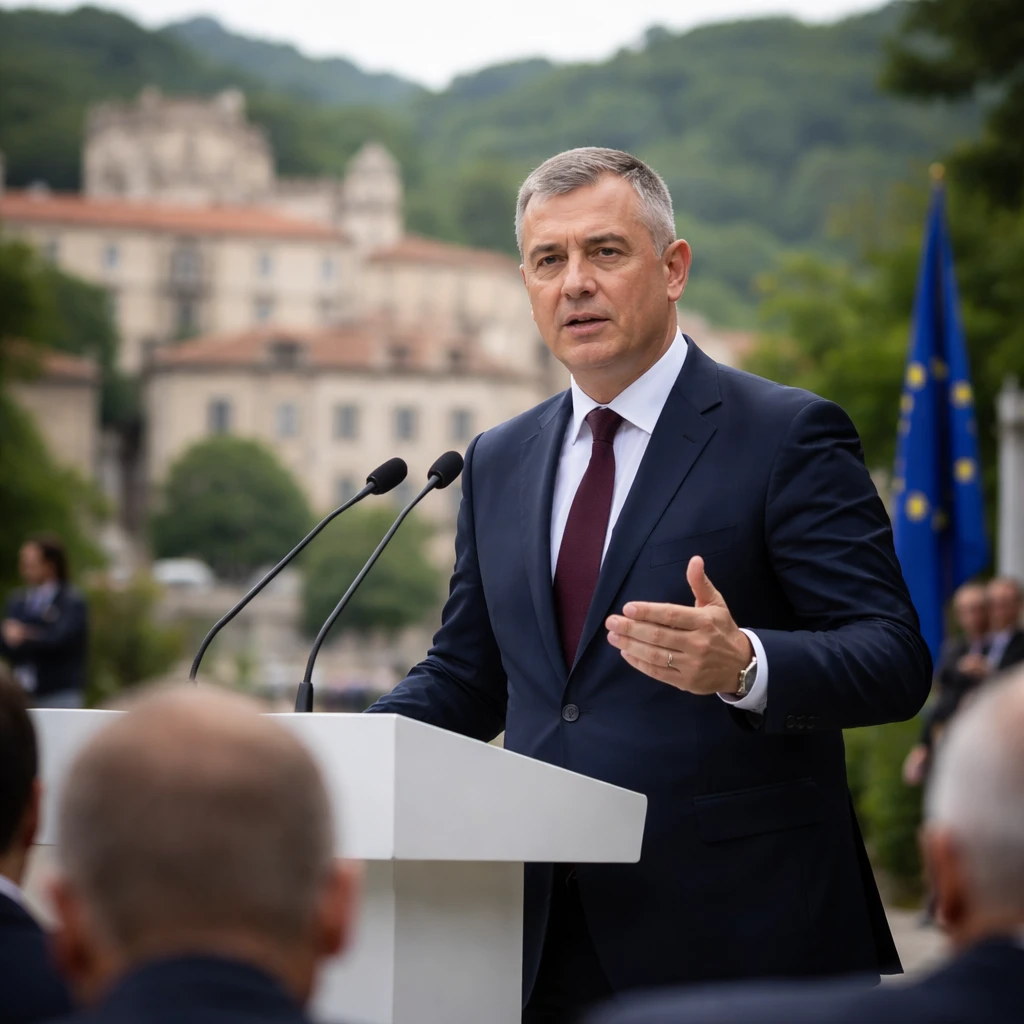
Primoz Dolenc, a member of the European Central Bank's Governing Council, said Tuesday that the bank could opt to keep interest rates unchanged at its July policy meeting if the Middle East situation does not worsen and energy prices remain relatively subdued. Dolenc made his remarks at the ECB's annual forum in Sintra, Portugal.
Dolenc set out a conditional framework for a pause: energy costs would need to remain near current levels, fluctuations in commodity markets should not spread more broadly, and second-round inflation effects must not arise. "I do not believe there is any urgency to consider further policy tightening if oil and gas prices remain subdued," he said.
He added that, based on the information available at present, a "wait-and-see approach until September could be appropriate." That comment followed the ECB's decision earlier this month to raise rates - the bank's first increase since 2023 - and comes amid market expectations for another quarter-point rise before year-end.
Policymakers are monitoring how developments such as US-Iran peace talks and lower energy prices are influencing inflation across the euro area. Several officials gathered at the Sintra forum signaled that the price shock generated by the conflict persists, and that the full economic consequences of months of elevated energy costs remain uncertain.
Dolenc cautioned that conditions can alter quickly. With several weeks remaining before the next policy decision, he said markets continue to show instability and the geopolitical situation has not fully stabilized. "We have seen over the past few days that hostilities have resumed," he noted. "While everyone hopes for a lasting resolution, I do not believe the conflict will be resolved anytime soon. As a result, uncertainty remains elevated."
On recent inflation data, which indicated slower price growth in the euro zone's three largest economies, Dolenc urged restraint. He said he would not give undue weight to those figures alone and stressed the need for further evidence that inflationary pressures are easing on a sustained basis. "We will need further evidence to be confident that inflationary pressures are easing on a sustained basis," he said.
He also warned that a renewed policy response could become necessary if oil prices climb materially above the assumptions that underpinned the ECB's projections in early June. "A renewed policy response could become warranted if oil prices were to rise significantly above the assumptions underlying our projections in early June," he said.
Context and implications
Dolenc's remarks frame the next policy decision as contingent on factors largely tied to energy markets and geopolitical developments. They suggest the ECB is prepared to refrain from further tightening in July if risks subside, yet remains ready to act should energy prices or inflation expectations shift upward.