
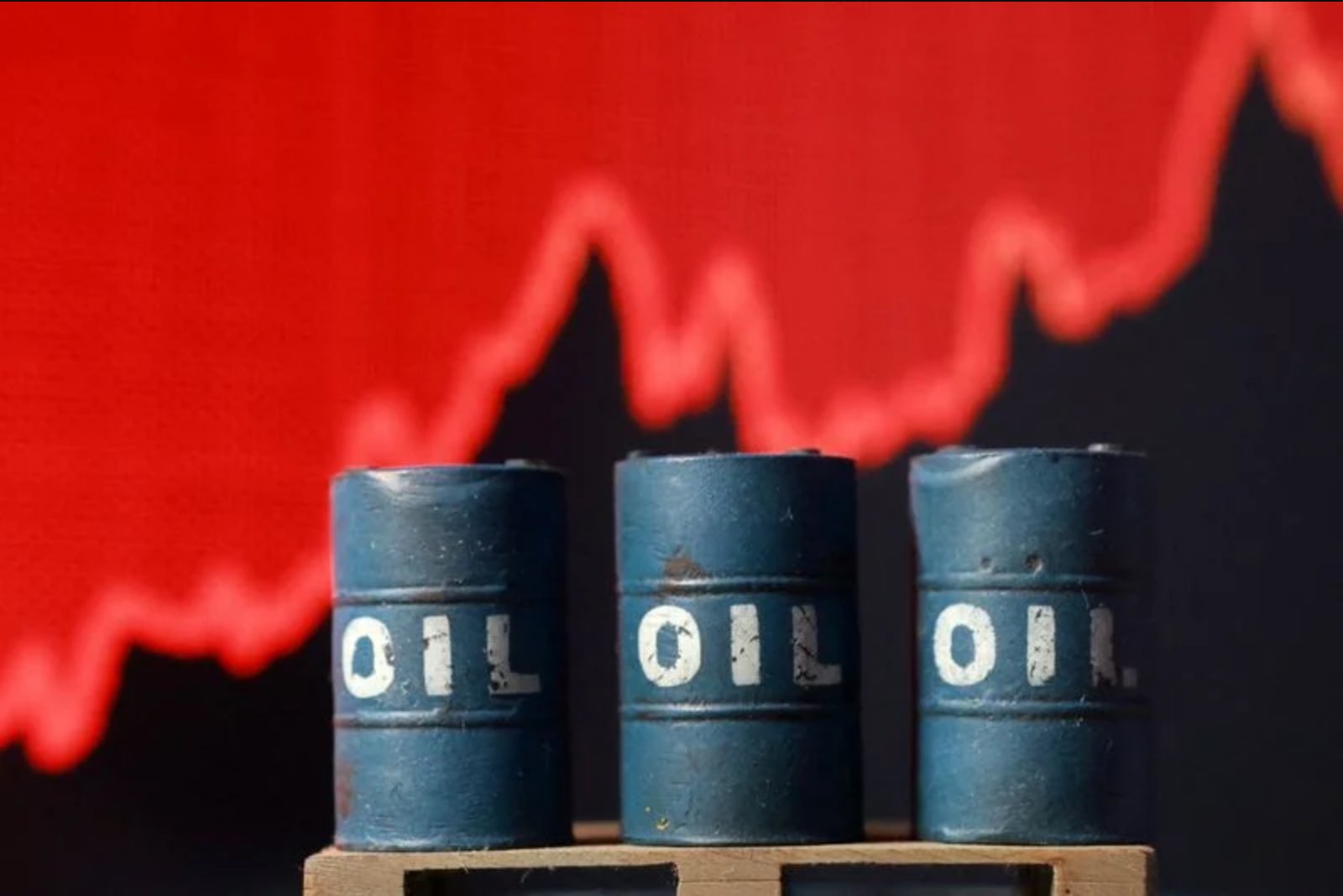
Oil prices climbing past $120 a barrel last spring cut U.S. economic output by an estimated three-tenths of a percentage point, according to research from the Federal Reserve Bank of Dallas. The study links the price surge to a roughly 15% reduction in world oil supplies after a U.S.-backed war with Iran closed the Strait of Hormuz shipping lanes, a development that unsettled global commodity markets, tightened availability in some regions and weighed on overall demand.
Dallas Fed economists Lutz Kilian, Michael Plante and Alexander W. Richter constructed a model to capture the many channels through which a supply shock affects national accounts. Their analysis finds that the net effect on U.S. output was relatively small compared with similar supply interruptions in the 1970s and 1980s.
The researchers estimate that economic activity outside the United States fell about 1.7% as a result of the war. They note that for the United States the result of an oil price increase is two sided: households and businesses face higher costs for products such as gasoline, while domestic oil producers and their investors receive higher revenues. That asymmetry partially offsets the drag from more expensive fuel and energy inputs.
The study highlights two structural shifts that reduced U.S. vulnerability to energy shocks. First, the United States has transitioned from heavier dependence on imported oil to a net exporter position, which moderates the pass-through from global price spikes. Second, improvements in energy efficiency mean the economy spends a much smaller share of output on oil than it did in past decades.
Kilian, Plante and Richter note that a comparable disruption in the 1980s would have had a dramatically larger effect. A supply change like the one observed last spring, had it occurred in that earlier era, would have sliced roughly 5.6% off U.S. GDP, while the rest of the world would have seen an estimated 6% decline.
The difference in historical impact reflects how much more of U.S. GDP was devoted to oil in previous decades. The researchers point out that the United States spent about 8% of GDP on oil in the 1970s and 1980s, compared with roughly 3% today, amplifying the economic sensitivity to supply shocks in the earlier period.
The Dallas Fed findings are consistent with recent economic indicators showing limited damage to the U.S. outlook following the conflict. Job growth has accelerated in recent months and consumer spending has been relatively unscathed, despite higher fuel prices. Federal Reserve officials have expressed concern about the price effects of the oil shock, but they also view the impact on inflation as potentially transitory.
Measured over the first quarter, the U.S. economy expanded at an annual rate of about 1.6%. The Dallas Fed study suggests that while the oil shock did shave growth, the overall hit to output was modest because of the offsetting benefits to domestic energy producers and the lower share of GDP devoted to oil today.
Implications for markets and sectors
- Consumers - faced with higher gasoline costs as a direct channel of the price shock.
- Energy producers and equity holders - received gains from higher oil prices, cushioning aggregate domestic output.
- Inflation-sensitive sectors - saw potential upward pressure on prices, though Fed officials expect effects may be short lived.