
Economy September 1, 2026 03:16 PM

Carney: U.S. Needs to Drop the Posturing for Trade Talks to Resume

Canadian leader says Washington must move past memes and tough rhetoric before negotiations can restart following collapse of talks over last-minute demands

By Maya Rios
Share
Twitter Reddit Facebook LinkedIn

Canadian Prime Minister Mark Carney said the United States must stop posturing and engage seriously if trade negotiations are to restart. Ottawa halted a negotiation over a pact intended to prevent additional U.S. tariffs on August 21, 2026, citing unacceptable last-minute U.S. demands. Tensions have been amplified by public comments and actions from President Donald Trump, while U.S. officials counter that a viable deal had been on the table. Carney reiterated that a mutually beneficial agreement that respects Canadian sovereignty remains possible but said recent U.S. behavior has not been constructive.

Carney: U.S. Needs to Drop the Posturing for Trade Talks to Resume
Summarize with
ChatGPT Perplexity Claude Grok Gemini

Key Points

  • Canada ended talks on a pact to avoid additional U.S. tariffs on August 21, 2026, citing unacceptable last-minute U.S. demands. - Sectors impacted: auto, broader trade.
  • Prime Minister Mark Carney said Washington must stop posturing - including public memes and sharp rhetoric - and engage seriously for negotiations to resume. - Sectors impacted: diplomacy, trade relations.
  • U.S. officials dispute parts of Canada’s explanation and maintain that a good deal had been available; Canada rejected the terms as inadequate, especially for the highly integrated auto sector. - Sectors impacted: auto, manufacturing.

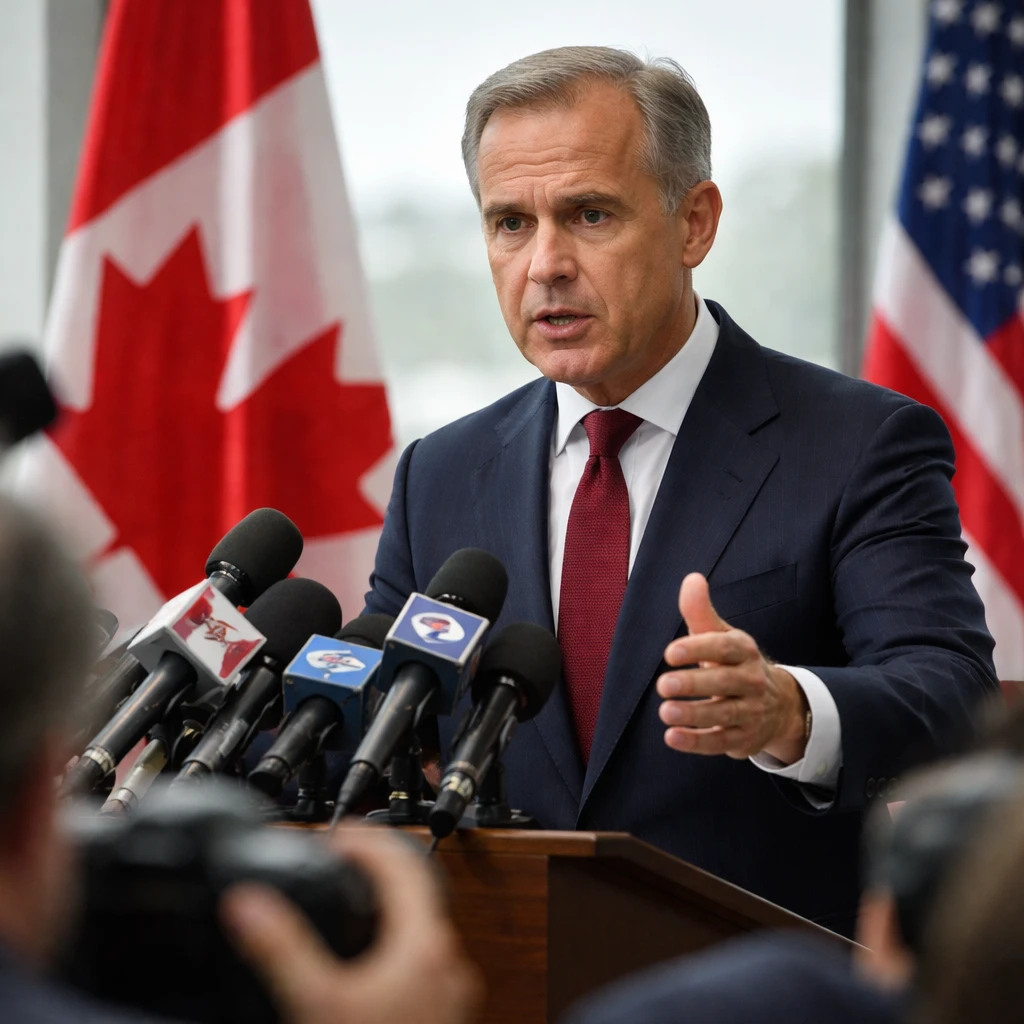
Canadian Prime Minister Mark Carney said on Tuesday that the United States needs to cease the tough-guy tactics and take a more earnest approach before trade talks between the two countries can resume.

Canada walked away from negotiations aimed at preventing additional U.S. tariffs on August 21, 2026, pointing to last-minute demands from the American side that Ottawa found unacceptable. The breakdown ended a process intended to reach an agreement that would have averted further U.S. levies.

Since the negotiations stalled, President Donald Trump has made a series of provocative public moves directed at Canada. Among them, he proposed renaming Lake Ontario to "Lake America," labeled Canada’s leaders "the worst" he deals with, reiterated assertions that Canada is exploiting the United States, and posted an AI-generated image showing Canadian geese styled with his hair marching under a U.S. flag.

Carney said a deal that benefits both countries and protects Canadian sovereignty is still attainable, but only if the tone and behavior from Washington change. He characterized recent U.S. conduct as unhelpful.

"And when the Americans stop doing memes, stop throwing shade, stop trying to be tough and start being serious about having those discussions, we can have those discussions," Carney told reporters, adding that recent actions were "not constructive."

U.S. officials have pushed back on parts of Canada’s account of why the talks failed, saying there had been a good deal available. Ottawa, however, never accepted the proposed terms as sufficient, including provisions affecting the highly integrated auto sector, Carney said.


Carney’s remarks underscore the combination of diplomatic friction and substantive negotiation disagreements that led to the collapse of talks. While both sides have signaled the possibility of further discussion, disagreement remains over whether the previous U.S. offer would have addressed Canada’s core concerns.

The public exchanges and contested accounts of the negotiations leave the path forward unclear. Carney emphasized that a constructive return to talks depends on a change in tone from the U.S. side and on terms that Ottawa views as adequate, particularly for industries with cross-border integration.

Risks

  • Negotiations remain stalled after the August 21, 2026 breakdown, creating continued uncertainty for cross-border industries, notably the auto sector.
  • Escalating public rhetoric and symbolic actions from the U.S. side could hinder diplomatic goodwill and complicate efforts to rebuild trust necessary for substantive talks.
  • Disagreement over whether prior U.S. proposals were adequate indicates a persistent impasse on key terms, leaving the timing and content of any renewed agreement uncertain.

More from Economy

OpenAI Flags New Model 'Astra' as Requiring Extra Safety Measures After Internal Testing Sep 1, 2026 Bank of Israel Signals Potential for More Rate Cuts if Inflation Holds Steady Sep 1, 2026 IAEA Says Inspectors Denied Access as Iran's Uranium Stocks Remain Unverified Sep 1, 2026 U.S. Strikes IRGC Targets Inside Iran After Attacks on Shipping in Strait of Hormuz Sep 1, 2026 U.S. Urges G20 to Tackle Trade Imbalances, Spotlight Falls on China and Rising Bond Yields Sep 1, 2026