
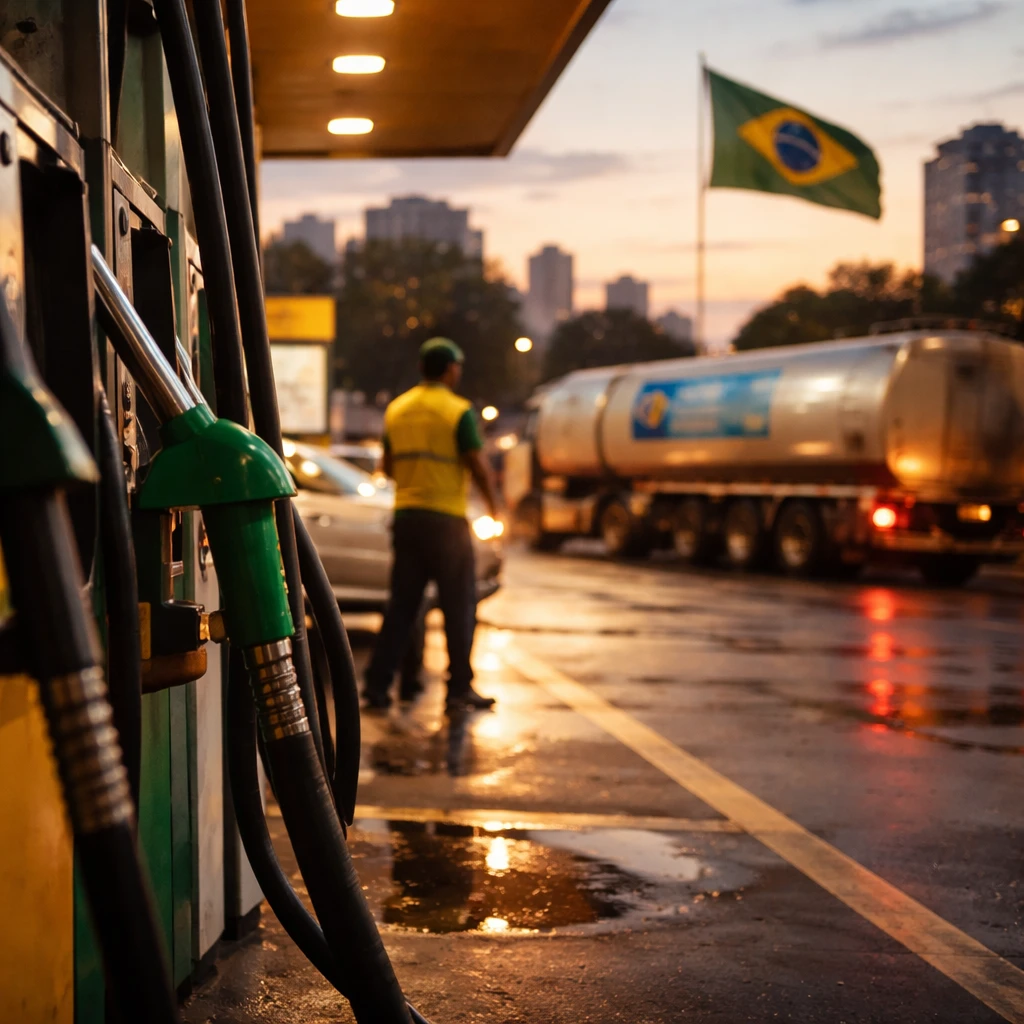
Brazil's government has pushed back a scheduled decision on eliminating a gasoline subsidy, Finance Minister Dario Durigan said on Thursday, attributing the move in part to higher oil prices tied to the U.S.-Israeli war against Iran.
The National Energy Policy Council had been due to rule on the subsidy on Wednesday, but the meeting was postponed because of the conflict in the Middle East, Durigan said in remarks to a local radio station.
"We have always known that war in the Middle East is characterized by constant uncertainty," Durigan said. "I was going to remove the gasoline subsidy this week, but I will consider a potential removal next week."
In addition to the delay, Durigan said the ethanol proportion blended into gasoline will be raised to 32% from 30% in the coming days. He reiterated that Brazil also wants to see an increase in the biodiesel blend in diesel this year.
Context and immediate actions
The postponement means the government will defer any final choice on the subsidy removal until at least next week, allowing additional time to monitor oil market developments linked to the conflict cited by Durigan. The announced change to the ethanol mix - from 30% to 32% - is scheduled to take effect in the near term, according to his statement.
Policy signals
Durigan's comments convey two clear policy signals: first, that the timing of subsidy removal is being adjusted in response to international market volatility; second, that the government intends to modify fuel composition domestically, increasing ethanol content in gasoline and expressing a goal to lift biodiesel blending in diesel before the end of the year.
Implications for markets and sectors
While the minister tied the decision delay to oil price movements related to the conflict in the Middle East, his announcements also highlight domestic fuel policy levers - ethanol and biodiesel blending - that the government is prepared to deploy in the near term. These measures intersect with the energy, agriculture, and transport sectors through demand for biofuels and fuel supply dynamics.
Durigan's radio remarks make clear that the government is monitoring external uncertainty and adjusting its domestic timeline accordingly, while moving forward with planned alterations to fuel blends.