
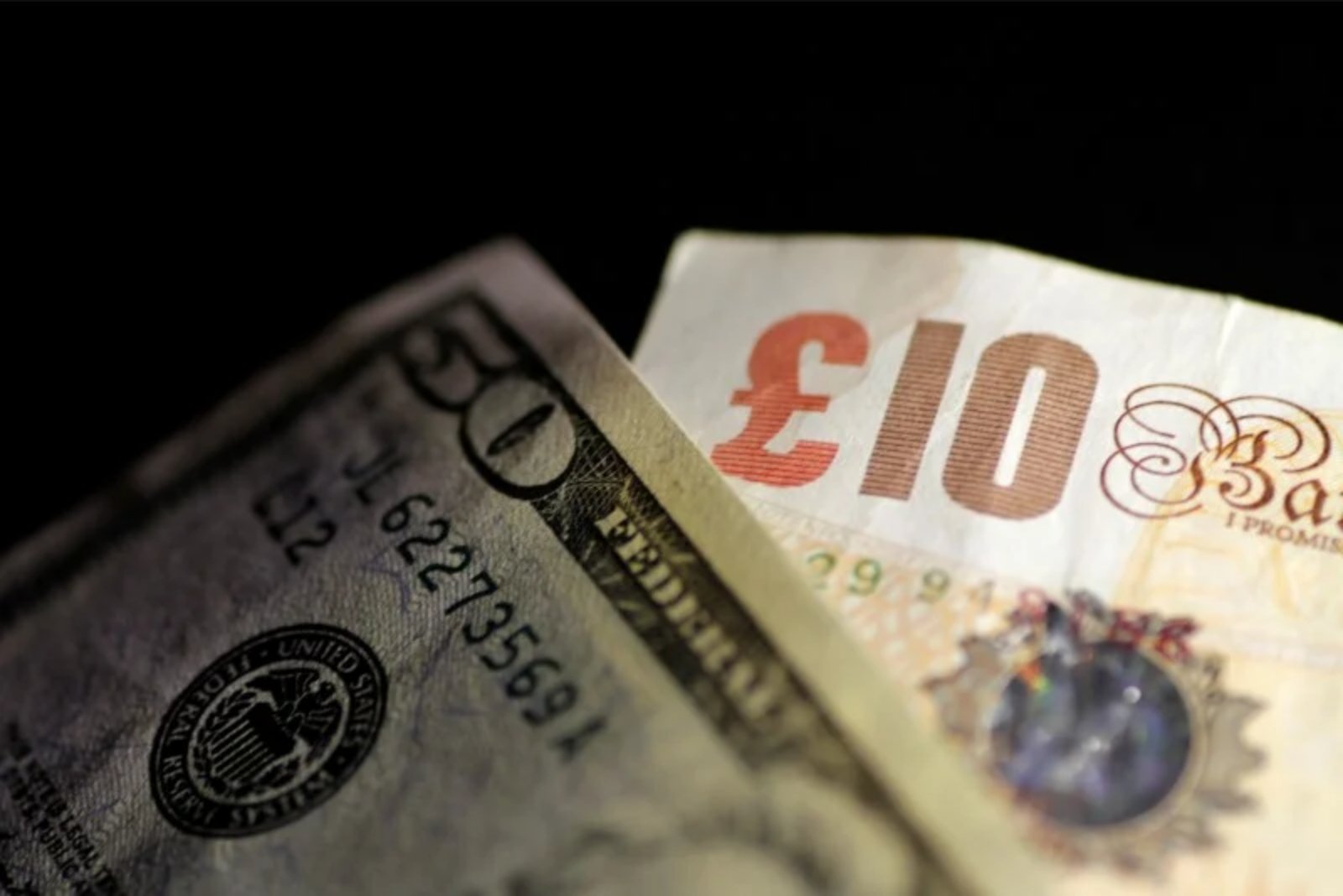
Sterling edged up on Thursday alongside the euro as renewed hostilities in the Middle East and firmer oil briefly pushed Brent past $80 per barrel, strengthening views that the Federal Reserve will remain restrictive for longer and keeping the dollar generally supported.
At 07:57 ET (11:57 GMT), GBP/USD was trading at 1.3390, a rise of 0.03%. EUR/USD was quoted at 1.1429, up 0.11%.
Market participants said the dollar drew support after US forces struck infrastructure targets in northern Iraq overnight - the first such operation since early April - an action that coincided with a short-lived jump in Brent crude above $80 a barrel.
"Higher energy prices will provide fuel for the Fed hawks and keep the dollar supported on dips - particularly against the low yielders," said Chris Turner, Global Head of Markets at ING, adding that the DXY, then trading near 101, could return toward the 101.50 area.
Minutes from Wednesday’s Federal Open Market Committee meeting showed Fed officials treating either a delayed rate cut or an immediate hike as "equally credible" outcomes, a stance the minutes linked to Chair Kevin Warsh’s more opaque communications approach.
Attention in markets now turns to comments from New York Fed President John Williams, considered dovish, who was scheduled to speak later on Thursday. Traders also have June US consumer price index data due next Tuesday and Chair Kevin Warsh’s testimony to the House on Wednesday on their radar.
Drivers behind sterling’s move
ING highlighted that the recent uptick in sterling is not being propelled by UK-specific economic fundamentals. Instead, the move echoes an earlier pattern from the start of the Gulf crisis in early March, where geopolitical flare-ups produced sharper adjustments in the front end of the sterling money-market curve than in the euro area. That dynamic tended to leave EUR/GBP on the offered side.
Turner also pointed to the long-term downtrend in GBP/CHF as showing signs of turning, with 1.10 cited as a potential next stop for the pair if elevated energy prices persist. The Swiss franc has been lagging due to market expectations that the Swiss National Bank would be the last among G10 central banks to hike.
Euro response and rate expectations
ING observed that the euro has "held up remarkably well" despite the oil spike, noting that euro swap rates have risen 7-8 basis points more than short-dated US rates amid growing bets that the European Central Bank will raise rates again in September. Money markets were pricing an ECB move at about +22 basis points.
Minutes from the ECB’s June 11 meeting were due later on Thursday and were expected to be read as hawkish. Even so, ING said the Fed narrative was likely to be the dominant theme and that EUR/USD could surrender early gains and drop back below the 1.14 level if that dynamic continued.
ING’s near-term scenario targets the DXY at around 101.50 and EUR/USD back under 1.14, conditional on the dollar story maintaining its lead. A more sustained market shift away from that outlook would require either a noticeable dovish tilt from John Williams and next week’s CPI outcome, or a de-escalation in Gulf tensions that eases pressure on Brent and, by extension, the Fed’s hawkish stance.
Market context and near-term watchpoints
- Geopolitical developments in the Gulf region and movements in oil prices remain key drivers for currency and rate expectations.
- Speeches by central bank officials and upcoming US CPI data are poised to shape short-term moves in the dollar, euro, and sterling.
- Money-market pricing and swap-rate differentials between Europe and the US are influencing cross-currency dynamics.