
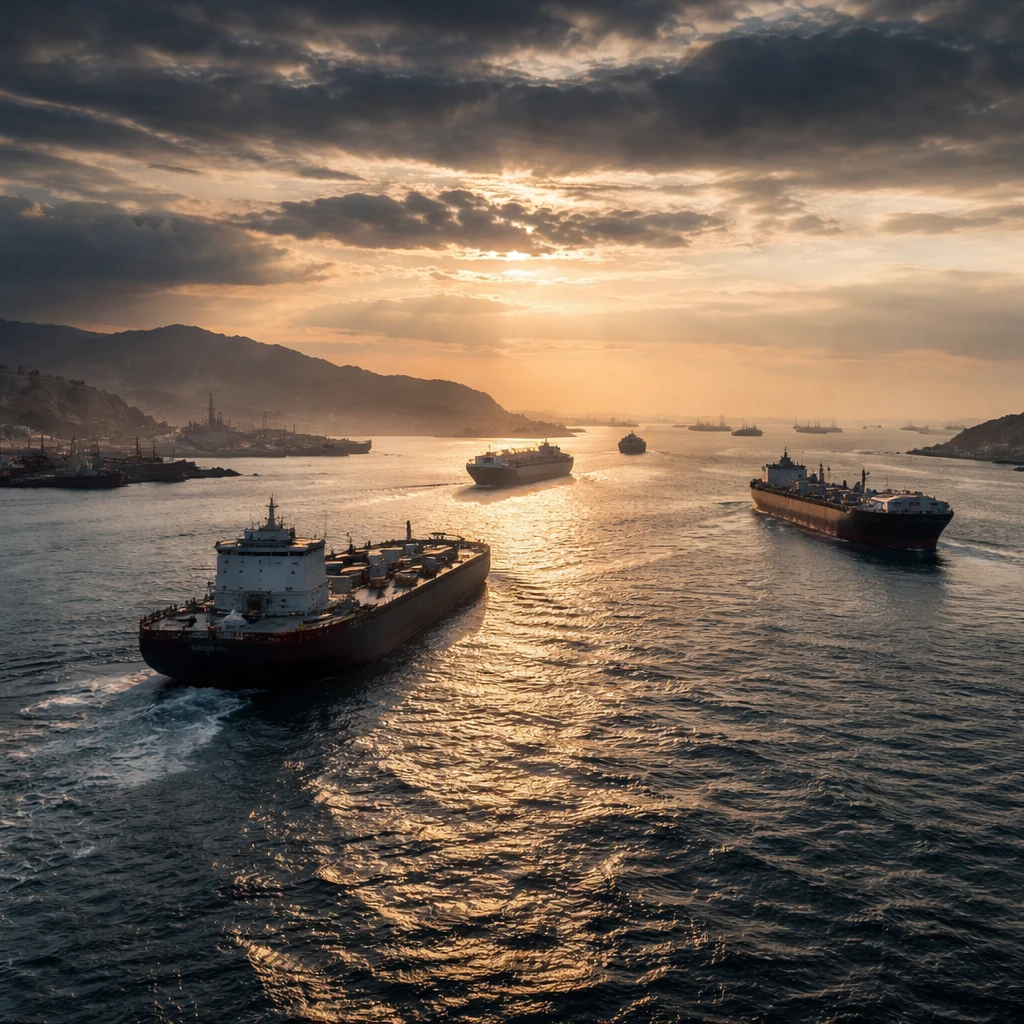
Treasury Secretary Scott Bessent said at the G20 that the Strait of Hormuz - long regarded as the world’s most important maritime oil chokepoint - could become a "worthless piece of water" within two years. Speaking to international officials, Bessent framed a broad campaign to economically isolate Iran that leans heavily on a surge in U.S. energy production.
Bessent tied the prediction about Hormuz to recent growth in U.S. oil output, which he said has increased "1.6 to 2.2 million barrels per day since President Trump took office." He argued this rise in production will hasten the development of overland pipelines that could bypass the Persian Gulf, and he predicted that within 24 months such infrastructure could be sufficient to make the strait geopolitically irrelevant.
The Treasury chief paired the assessment of the waterway’s future with an announcement of tougher financial measures targeting Tehran. He described a "zero tolerance" policy aimed at enforcing a comprehensive economic blockade on Iran and warned that the United States is prepared to impose sanctions on global airline leasing companies that support Iranian aviation operations.
Bessent said Treasury officials have already located offshore accounts in the British Virgin Islands that shelter Iranian assets. He further warned that a new series of crackdowns aimed at financial institutions deemed complicit would be rolled out "over the next two weeks."
On the subject of seized assets, Bessent noted Iran holds the world’s "third-largest energy reserves" and suggested that funds taken from the regime could be redirected either to the Iranian people or to compensate victims of terror.
He indicated the administration’s blockade strategy is gaining international backing, citing unified support from the European Union, the European Central Bank, the United Kingdom, the United Arab Emirates, and Bahrain. Bessent also confirmed that Washington is engaged in private, backchannel discussions with Beijing to seek Chinese cooperation.
Beyond Middle East containment, Bessent shifted to broader economic themes, highlighting the recent dominance of the U.S. bond market. He also pointed to what he described as a Western Hemisphere economic resurgence, naming Argentina as leading a "generational opportunity."
Clear summary
At the G20, Treasury Secretary Scott Bessent forecast that an acceleration in U.S. oil production and the construction of overland pipelines will render the Strait of Hormuz strategically obsolete within two years. He announced tightened financial measures against Iran, including sanctions threats to airline lessors, identification of offshore accounts in the British Virgin Islands, and an imminent wave of enforcement actions against financial institutions. Bessent said seized Iranian funds could be repurposed to benefit the Iranian people or compensate terror victims, and he reported broad international support for the U.S. approach while pursuing private talks with China.
Key points
- Bessent expects the Strait of Hormuz to lose strategic relevance within two years due to higher U.S. oil output and planned overland pipeline development, removing a longstanding maritime chokepoint.
- The Treasury announced a "zero tolerance" policy aimed at economically isolating Iran, including potential sanctions on global aircraft leasing companies and targeted financial crackdowns over the next two weeks.
- The administration says it has identified Iranian assets in offshore accounts in the British Virgin Islands and proposed that seized funds might be redirected to the Iranian people or to compensate victims of terror.
Risks and uncertainties
- The timeline for pipelines and infrastructure to bypass the Strait of Hormuz is presented as a projection within 24 months; the realization of that outcome is uncertain and central to the strategic claim.
- Implementation of the announced sanctions and financial crackdowns depends on international cooperation, including private discussions with Beijing, and the extent of that cooperation is not specified.
- Redirecting seized funds raises legal and logistical questions; the exact mechanisms for seizure and redistribution were not detailed in the remarks.