
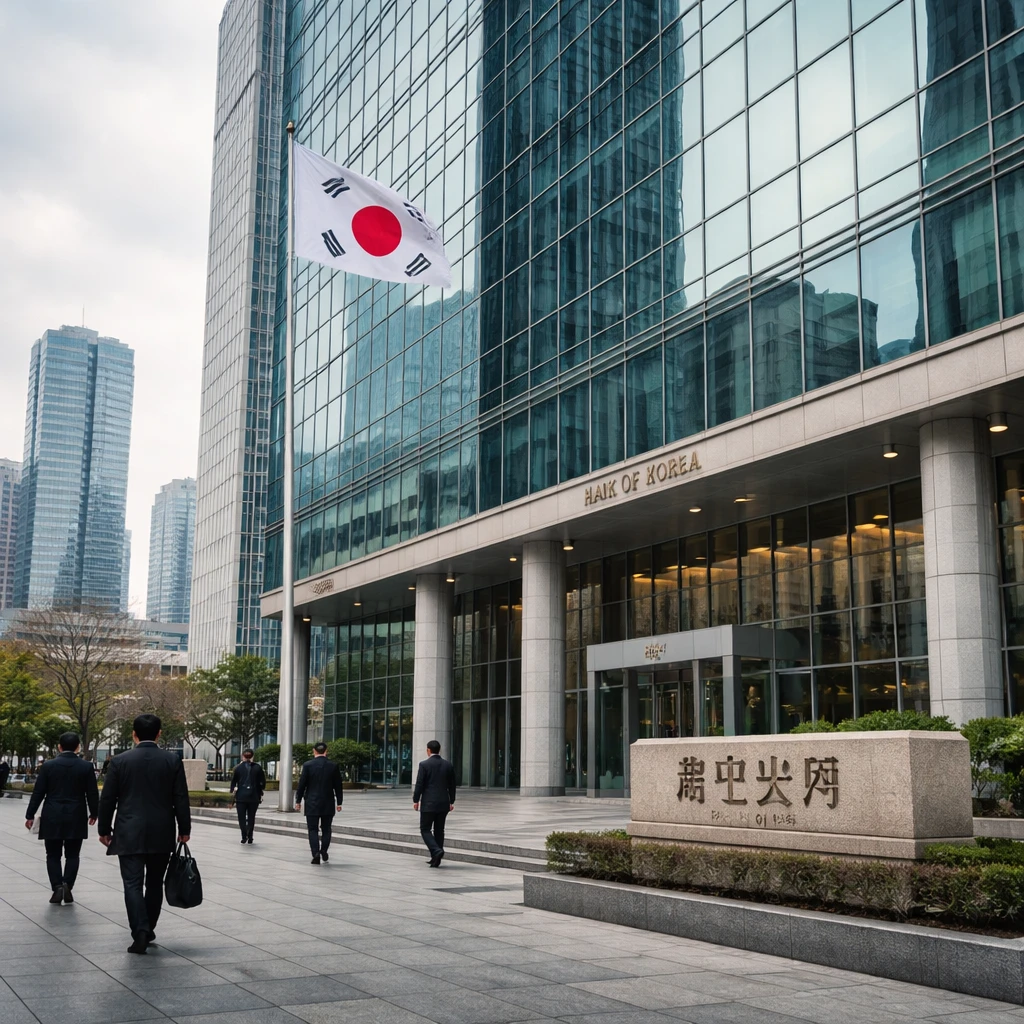
The Bank of Korea raised its benchmark interest rate by 25 basis points to 2.75% on Thursday, a decision that was anticipated by the vast majority of economists surveyed. Of 37 economists polled by Bloomberg, 36 predicted a rate increase while one expected no change.
In announcing the decision, the central bank highlighted inflationary pressures that have pushed headline consumer prices to 3.2% year-over-year in June - the highest reading in more than two years and clearly above its 2.0% target. Core inflation, which strips out volatile items, has climbed to 2.5% from 2.0% at the start of 2026, prompting particular concern from policymakers.
Officials noted that price gains for fuel and transport remain high, although these components have shown signs of stabilization in recent months. Despite that moderation, the central bank identified the broadening rise in core inflation as the more worrying development for policy.
Given the inflation trajectory, Bank of Korea officials signaled that additional rate increases are likely. Projections presented by the bank indicate inflation will remain above the 2.0% target through the remainder of the year, while economic growth is expected to persist at a strong pace - conditions the bank views as supporting further monetary tightening.
Governor Shin is scheduled to hold a press conference later on Thursday to discuss the decision and the central bank will publish the full policy statement, which will provide more detail on the board's assessment and the economic outlook.
For markets and economic participants, the move reinforces an environment of elevated interest rates alongside above-target inflation. The bank's emphasis on core inflation and the expectation of continued tightening underline the priority placed on steering underlying price pressures back toward target.
What to watch next
- The governor's press conference for details on the bank's assessment of inflation drivers and the timing of any further hikes.
- The full policy statement for updated projections and clarifications on the outlook for growth and inflation.