
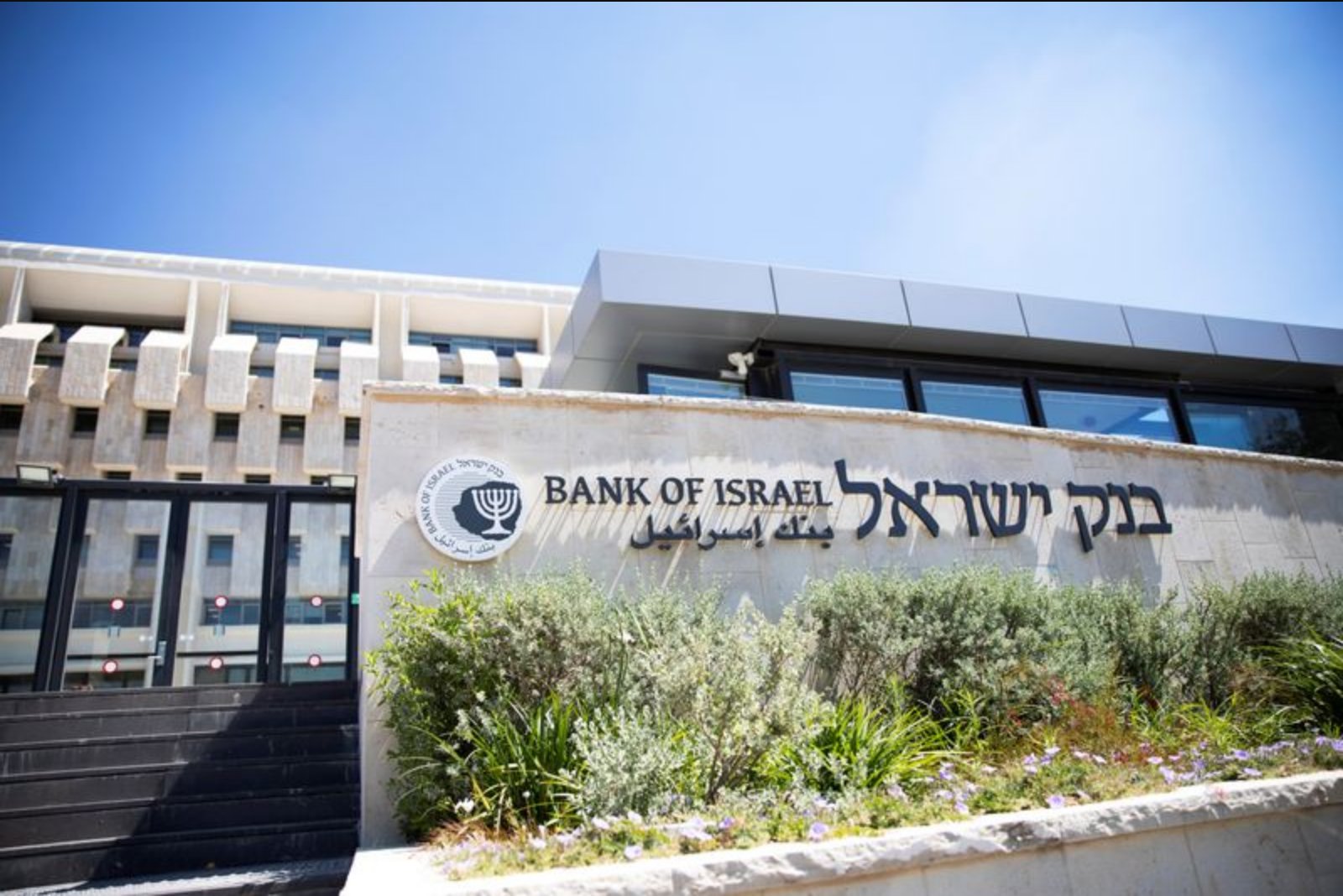
The Bank of Israel is widely expected to reduce interest rates next week after temporarily pausing monetary easing, according to a poll of economists published on Wednesday. Forecasters cited steady inflation, a strong local currency and the persistence of a ceasefire with Iran as reasons the central bank could move to lower its benchmark rate.
The policy decision will be taken on Monday at 4 p.m. local time (1300 GMT). In the Reuters poll, 10 of 13 economists projected a 25 basis-point cut that would take the benchmark rate to 3.75%. Three economists in the survey predicted the rate would remain unchanged at 4.0%.
April data showed annual inflation at 1.9%, which sits within the government target range of 1-3% and is being cited as a key rationale for policymakers to consider loosening policy. Market pricing reflected expectations for further easing, with traders seeing the policy rate around 1.7% in a year's time.
Other economic developments supporting a rate reduction include a notably strong shekel and signs of fiscal improvement. The dollar-shekel exchange rate stood at about 2.92, close to a 33-year low of 2.89 reached on Tuesday. Separately, the budget deficit narrowed to 3.8% of gross domestic product in April, a development that some economists say creates room for easier monetary policy.
Economic activity in the first quarter was hit by the 40-day conflict with Iran, leaving GDP down an annualised 3.3%. The fighting began on February 28 with U.S. and Israeli airstrikes on Iran and was halted by a ceasefire on April 8. The U.S. has warned fighting could resume if Iran does not abandon its nuclear programme; some economists referenced that risk as a justification for keeping rates on hold this month.
Bank of Israel staff projections contained in the poll point to two additional rate cuts by early 2027 and forecast economic growth of 3.8% in 2026. For context on recent policy moves, the central bank reduced rates in November and January but left them unchanged in February and March.
Implications for markets and the economy
A near-term return to rate reductions would affect borrowing costs, financial markets and the exchange rate. The poll results indicate a clear tilt toward easing, but a minority of economists remain cautious and favour holding rates steady amid geopolitical uncertainty.