
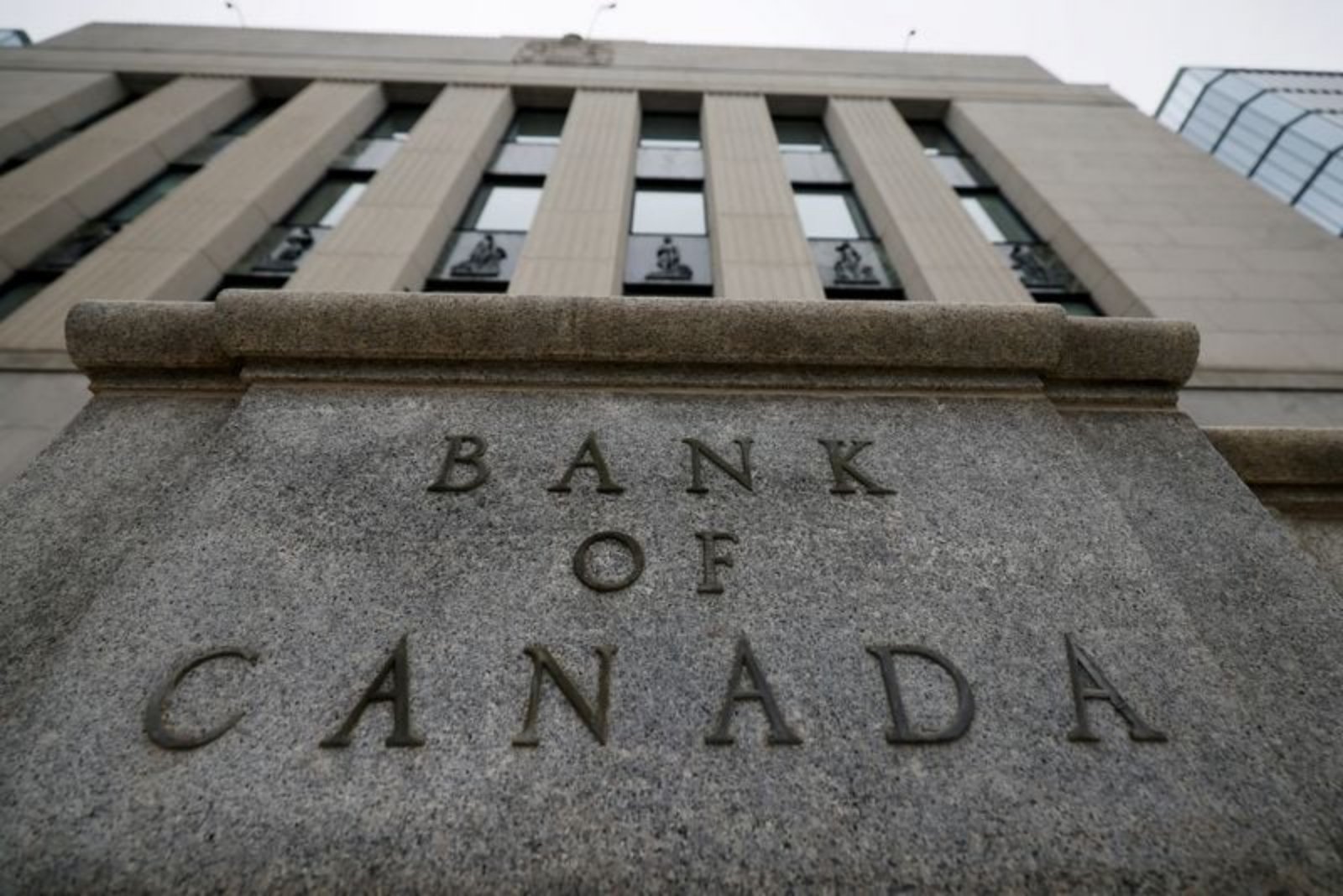
The Bank of Canada is widely expected to leave its key policy rate unchanged on Wednesday, maintaining the overnight rate at 2.25% for a fifth consecutive meeting as policymakers weigh mixed economic signals.
Inflation readings and labour market strength have argued for tighter policy, but those forces are counterbalanced by evidence that Canada’s economy weakened in the first quarter and entered a technical recession. The split in data has made the central bank's path more uncertain, with several external factors adding to the complexity.
Trade tensions with the United States have had visible effects on certain Canadian industries. U.S. tariffs on steel, aluminum and autos have been associated with job losses and postponed investment decisions among affected sectors, although the broader economy has not yet shown widespread spillovers from those disruptions.
Geopolitical developments have also influenced the domestic picture. The article notes that the U.S.-backed war with Iran has pushed gasoline prices higher, tightening household budgets. At the same time, because Canada is a net exporter of crude oil, the country has seen increased revenues from higher energy prices.
One major policy uncertainty highlighted by economists is the upcoming review of the North American free trade agreement - the United States-Mexico-Canada Agreement (USMCA). That review is cited as the biggest source of uncertainty hanging over the economy, with the potential to influence business decisions and spending.
On the outlook for inflation, Randall Bartlett, deputy chief economist at Desjardins Group, emphasised the balance of risks facing the central bank. "There are two-sided risks around the inflation forecast for Canada, and the Bank of Canada has to walk a fine line between trying to set a monetary policy to balance those risks," Bartlett said. He added that "the higher energy prices resulting from the Iran war could potentially feed into core inflation, while the ongoing disruption as the USMCA review approaches could entrench the uncertainty and hit expenditures, complicating predictions for where inflation could land." Bartlett also predicted the BoC will keep rates on hold for the remainder of 2026.
A Reuters poll of economists found 34 respondents expect the Bank of Canada to keep its overnight rate unchanged at the June 10 decision. More than 80% of those polled - 28 of 34 economists - forecast that the BoC would leave rates on hold through the rest of the year, a view similar to a Reuters poll conducted in April.
Despite the consensus among economists, money markets still place some probability on further tightening. Futures are pricing in one 25-basis-point rate hike in December, a stance supported by a recent robust Canadian jobs report. Statistics showed that Canada’s unemployment rate fell to a five-month low in May as hiring strengthened, reinforcing expectations that labour-market-driven inflation pressures could persist.
Countering that labour-market strength, other data pointed to a slowdown in output: Canada entered a technical recession in the first quarter, a development that has given policymakers reason to tread carefully.
Nathan Janzen, assistant chief economist at RBC, captured the dilemma facing the central bank: "There have been enough cracks in growth and labor market data for the BoC to remain cautious about changing policy rates too quickly in one direction or another," he wrote in a report.
The Bank of Canada is scheduled to announce its policy decision at 9:45 a.m. EDT (1345 GMT). The central bank's choice will be watched closely by markets and by sectors sensitive to rates, energy prices and trade policy.
Context and implications
With inflation and labour-market strength on one side and slowing growth and trade-related uncertainty on the other, the BoC faces a finely balanced decision. The central bank's announcement will influence borrowing costs, energy and manufacturing sector revenues, and business investment timelines tied to the USMCA review.